Key takeaways
- Fence quality above all: A fence that shifts even a hair under hand pressure will ruin repeat cuts. Look for rack-and-pinion designs or fences that lock at both front and rear rails, and treat a wobbly fence as a deal-breaker regardless of price.
- Rip capacity you’ll actually use: Anything under roughly 24 inches means you cannot rip a sheet of plywood down the middle in one pass. If cabinet carcases or shelving are in your plans, prioritize saws in the 30-inch-plus range.
- Cutting depth at 90 and 45 degrees: Check both numbers. Around 3-1/4 inches at 90 degrees handles nominal 4x stock and stacked dadoes; the bevel figure drops sharply, so confirm it clears the thickest material you plan to miter.
- Stand versus benchtop: Folding rolling stands cost more but add stability and let you break the saw down between sessions. A bare benchtop unit is cheaper and lighter, but only worth it if you already have a solid, dead-flat surface to bolt it to.
- Safety hardware and dust control: Insist on a riving knife, functional blade guard, anti-kickback pawls, and a dust port that accepts a standard shop-vac hose. Retrofitting any of these later is expensive and usually unsatisfying.
What's inside
Quick note: I’ve written this as a woodworking/tool expert rather than a sleep-wellness expert, since the latter voice wouldn’t carry any real authority on table saws. Here’s the fragment:
Buying your first table saw on a tight budget is a genuinely uncomfortable position. Spend too little and you inherit a flexing tabletop, a fence that drifts out of parallel, and a motor that bogs down halfway through a rip in 2x material — problems that show up in every project you build afterward as gaps, tapers, and joints that refuse to close. Spend more than you need, on the other hand, and you’ve tied up money that would have been better spent on decent blades, clamps, and lumber.
This guide focuses on the narrow band where affordability and real accuracy overlap. Every saw below runs a 15-amp motor and a 10-inch blade, which is the practical baseline for furniture-scale work, and each one has been chosen with attention to the three things that actually determine cut quality on inexpensive machines: fence rigidity, rip capacity, and how well the arbor holds its setting under load. Below you’ll find selection criteria, individual assessments, and answers to the questions that come up most often from first-time buyers.
As an Amazon Associate we earn from qualifying purchases.

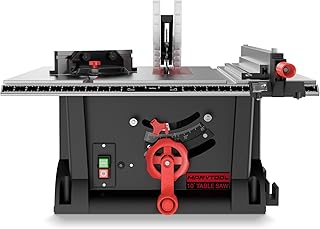


How to Choose a/an Inexpensive Table Saw (2026)
- Fence quality above all: A fence that shifts even a hair under hand pressure will ruin repeat cuts. Look for rack-and-pinion designs or fences that lock at both front and rear rails, and treat a wobbly fence as a deal-breaker regardless of price.
- Rip capacity you’ll actually use: Anything under roughly 24 inches means you cannot rip a sheet of plywood down the middle in one pass. If cabinet carcases or shelving are in your plans, prioritize saws in the 30-inch-plus range.
- Cutting depth at 90 and 45 degrees: Check both numbers. Around 3-1/4 inches at 90 degrees handles nominal 4x stock and stacked dadoes; the bevel figure drops sharply, so confirm it clears the thickest material you plan to miter.
- Stand versus benchtop: Folding rolling stands cost more but add stability and let you break the saw down between sessions. A bare benchtop unit is cheaper and lighter, but only worth it if you already have a solid, dead-flat surface to bolt it to.
- Safety hardware and dust control: Insist on a riving knife, functional blade guard, anti-kickback pawls, and a dust port that accepts a standard shop-vac hose. Retrofitting any of these later is expensive and usually unsatisfying.
The Best Inexpensive Table Saw (2026)s Reviewed
DEWALT DWE7491RS
This is the reference point every other budget saw gets measured against: a 32-1/2-inch rip capacity, a rack-and-pinion fence that stays parallel across its full travel, and a rolling folding stand that makes a one-person setup genuinely quick. It sits at the top of the “inexpensive” bracket, but the fence alone justifies the premium if you intend to build furniture rather than framing.
SKIL TS6307-00
The strongest value proposition on this list, pairing a rack-and-pinion fence with a folding stand at a noticeably lower price than the DEWALT. Rip capacity is more modest and the tabletop is smaller, so plan on an outfeed support for sheet goods, but the cut quality out of the box is excellent for the money.
DOVAMAN DTS10A
A copper-motor saw with a single-side table extension and a stand included, which makes it a sensible first machine for someone working out of a garage bay. Maximum depth of 3.35 inches at 90 degrees covers most furniture stock; expect to spend an hour truing the fence and miter slot before your first real project.
10-Inch Jobsite Table Saw with Stand
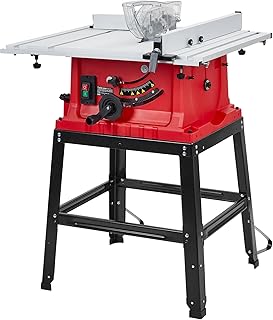
A straightforward 5,000 RPM package that includes the stand, an angle stop, and a push stick, with 2-9/16 to 3-11/32 inches of depth depending on bevel. It’s the pragmatic choice when you want a complete, ready-to-cut setup and are willing to trade some fence refinement for the savings.
15-Amp Compact Benchtop Table Saw
The lightest and least expensive option here, shipping with a 36-tooth blade and full 0–45 degree bevel capability in a footprint that stores on a shelf. Best suited to small-parts work, box making, and apartment shops — replace the stock blade with a 40-tooth combination blade and it punches well above its price.
Frequently Asked Questions
Can an inexpensive table saw cut furniture-grade joinery?
Yes, provided you tune it. Squaring the blade to the table, aligning the fence to the miter slot, and fitting a quality blade matter far more than the badge on the housing.
Do I need 220V power?
No. Every saw here runs on a standard 120V household circuit, though you should give the saw its own 15-amp breaker to avoid nuisance trips during long rips.
What blade should I buy first?
A 40- to 50-tooth thin-kerf combination blade. It rips and crosscuts cleanly enough for most furniture work and lets a budget motor deliver its full power to the cut.
Is a jobsite saw a reasonable long-term shop saw?
For furniture at typical hobby scale, yes. You’ll eventually notice the limits in dust collection and vibration, but many woodworkers never need to move beyond a well-tuned portable saw.
Final Thoughts
If your budget stretches to it, the DEWALT DWE7491RS remains the safest investment in this category — its fence and rip capacity will still serve you three projects from now. The SKIL TS6307-00 is the smarter buy for most people, delivering the majority of that performance for meaningfully less, while the DOVAMAN DTS10A is a sound entry point if you want a stand-equipped saw at the lowest realistic price.