Key takeaways
- Measured decibels, not marketing adjectives: Look for a published rating in the low 40s dB or below. That sits near the level of a quiet library and blends into ambient household noise instead of punching through it.
- Cycle pattern over raw output: A machine producing 26 lbs a day in long, steady runs is gentler on sleep than one producing 38 lbs in short, startling bursts. Fewer, smoother cycles mean fewer arousal triggers.
- Ice type and its sound signature: Nugget and pellet ice falls softly and chews without cracking. Solid bullet cubes are louder both when they drop into the bin and when they hit a glass at midnight.
- Placement and plumbing: Countertop units let you position the machine away from bedroom walls and shared floors. Undercounter and freestanding models are quieter in use but permanently sited — decide before you drill.
- Maintenance you’ll actually do: Self-cleaning modes, descaling packs, and scale-inhibiting filters matter because a limescaled machine works harder, runs hotter, and gets noticeably louder over its lifespan.
What's inside
Ask most people what wakes them at 3 a.m. and they’ll blame their phone, their partner, or their dog. In my work with clients on sleep environments, the culprit is often quieter and stranger: the kitchen. A compressor kicking on, a bin of cubes collapsing, the sudden clatter of a drop cycle two rooms away — these are the micro-arousals that fragment sleep without ever fully waking you. And in the open-plan homes most of us now live in, an appliance chosen for the kitchen is really an appliance chosen for the bedroom.
There’s a second, more useful side to this. Cold water is one of the most reliable levers for evening wind-down and morning alertness, and a household that can produce ice on demand tends to drink more water and less of everything else. So the goal isn’t to avoid an ice maker — it’s to choose one that earns its place acoustically as well as functionally. Below I’ve evaluated the leading countertop and undercounter brands of 2026 through that lens: decibel behavior, cycle rhythm, standby noise, and how each machine fits the rooms where rest actually happens.
As an Amazon Associate we earn from qualifying purchases.



How to Choose an Ice Maker (2026)
- Measured decibels, not marketing adjectives: Look for a published rating in the low 40s dB or below. That sits near the level of a quiet library and blends into ambient household noise instead of punching through it.
- Cycle pattern over raw output: A machine producing 26 lbs a day in long, steady runs is gentler on sleep than one producing 38 lbs in short, startling bursts. Fewer, smoother cycles mean fewer arousal triggers.
- Ice type and its sound signature: Nugget and pellet ice falls softly and chews without cracking. Solid bullet cubes are louder both when they drop into the bin and when they hit a glass at midnight.
- Placement and plumbing: Countertop units let you position the machine away from bedroom walls and shared floors. Undercounter and freestanding models are quieter in use but permanently sited — decide before you drill.
- Maintenance you’ll actually do: Self-cleaning modes, descaling packs, and scale-inhibiting filters matter because a limescaled machine works harder, runs hotter, and gets noticeably louder over its lifespan.
The Best Ice Maker Brands (2026) Reviewed
GE Profile Opal 2.0 Ultra Nugget Ice Maker
The benchmark for anyone prioritizing calm: nugget ice means a soft, almost muffled drop cycle, and the WiFi scheduling lets you set production to finish before your wind-down window rather than during it. The 0.75-gallon side tank and scale-inhibiting filter keep it running smoothly enough to stay quiet over the long term.
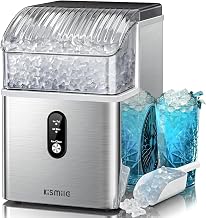
Kismile Nugget Ice Maker Countertop
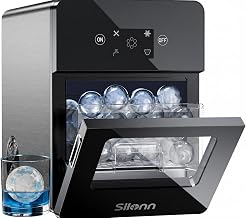
At a rated 43 dB, this is the model I most often suggest for studio apartments and homes where the kitchen shares a wall with a bedroom. First ice in around seven minutes and one-touch self-cleaning make it low-friction to live with, and the 35 lbs/day output is ample for a household of three or four.
GE Profile Opal MINI PRO Nugget Ice Maker
A smaller footprint with almost no output penalty — 36 lbs a day from a machine that tucks into a corner rather than dominating the counter. Top-fill loading is the underrated feature here: no lifting, no tank wrestling, and less clattering around at odd hours.
GE Profile Opal Ultra Countertop Nugget Ice Maker
The full-gallon XL side tank is the reason to pick this over its siblings; longer intervals between refills mean fewer interruptions and less handling noise across the week. Smart connectivity and 38 lbs/day make it the most capable countertop nugget machine on this list.
EUHOMY Countertop Ice Maker Machine
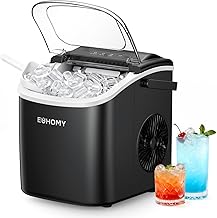
The pragmatic choice for RVs, guest rooms, and second kitchens: nine cubes in roughly six minutes, 26 lbs a day, and a genuinely portable body with a handle. It produces harder bullet cubes, so it’s louder at the drop — site it away from where anyone sleeps.
Frequently Asked Questions
Will an ice maker actually disturb my sleep?
It can, particularly if it sits within about 20 feet of a bedroom or on a shared floor. The issue is rarely volume — it’s the abruptness of drop cycles, which the brain registers as novel sound even during deep sleep.
Should I just unplug it overnight?
You can, but most modern units hold ice reasonably well in an insulated bin and simply stop producing once full. Scheduling production via app is a better solution than nightly unplugging, which stresses the compressor.
Is nugget ice really quieter than cubed?
Yes, meaningfully so. Nugget ice is compacted flakes rather than frozen blocks, so it lands with a thud rather than a crack — both in the bin and in your glass.
Does drinking ice water before bed help or hurt sleep?
Modest sips are fine and can ease the dry mouth that disrupts sleep. Large volumes of anything within an hour of bed invite nighttime bathroom trips, which are far more disruptive than mild thirst.
Final Thoughts
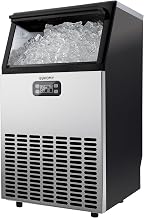
If sleep quality is part of your decision, the GE Profile Opal 2.0 Ultra is the most complete pick — quiet nugget ice, real capacity, and scheduling you can build a routine around. The Kismile Nugget is the value play for small or acoustically tight homes, and the EUHOMY Commercial Ice Maker is the right call only when volume genuinely outranks quiet, as in a garage bar or entertaining space well away from bedrooms.