Key takeaways
- Light control above all: Adjustable louvers are the single most valuable feature for sleep purposes — open them wide at 7 a.m. for the bright light exposure that sets your body clock, then close them at dusk to create the dim, enclosed feeling that cues melatonin release. Fixed slatted roofs give you dappled shade but no schedule.
- Thermal behavior, not just shade: Aluminum sheds heat quickly and stays touchable; cedar and other timbers absorb and re-radiate warmth into the evening, which is lovely in April and counterproductive in July. Match the material to your climate’s evening temperatures, since core body cooling is what actually initiates sleep.
- Insect exclusion: Integrated netting isn’t a luxury — a single mosquito is enough to fragment a nap or drive you back indoors under bright lights. If a model includes zip-on netting and curtains, treat that as a functional upgrade rather than décor.
- Water management: Built-in gutters and drainage channels determine whether light rain is soothing background noise or a soaking. Rain sound is one of the more reliably calming acoustic environments; you want to be under it, not in it.
- Footprint and permanence: Size the structure so a lounger or daybed fits without crowding the seating. Habits form around dedicated space — a pergola you have to reconfigure each time will not become part of your evening routine.
What's inside
As a sleep-wellness practitioner, I spend most of my week talking people out of their bedrooms. Not literally — but the fastest lever most adults have for better sleep isn’t a new mattress or another supplement. It’s light: bright, unfiltered morning light to anchor the circadian clock, and a genuinely dim, cool, unstimulating hour before bed. The problem is that modern homes offer neither. Interiors are dim by day and blazing by night, and the one space that could fix both — the backyard — is usually unusable. Too hot at 2 p.m., too buggy at 9 p.m., too exposed the moment weather turns.
A pergola solves a sleep problem disguised as a furniture problem. The right structure gives you filtered daylight you’ll actually sit under, an afternoon nap zone that stays 10–15°F cooler than open patio, and a screened, softly lit evening room where you can wind down without a single blue-lit screen. Below I’ve assessed six of 2026’s strongest outdoor pergolas specifically through that lens: light control, thermal comfort, insect exclusion, and how well each one holds up as a nightly habit anchor rather than a summer novelty.
As an Amazon Associate we earn from qualifying purchases.


How to Choose a/an Outdoor Pergola (2026)
- Light control above all: Adjustable louvers are the single most valuable feature for sleep purposes — open them wide at 7 a.m. for the bright light exposure that sets your body clock, then close them at dusk to create the dim, enclosed feeling that cues melatonin release. Fixed slatted roofs give you dappled shade but no schedule.
- Thermal behavior, not just shade: Aluminum sheds heat quickly and stays touchable; cedar and other timbers absorb and re-radiate warmth into the evening, which is lovely in April and counterproductive in July. Match the material to your climate’s evening temperatures, since core body cooling is what actually initiates sleep.
- Insect exclusion: Integrated netting isn’t a luxury — a single mosquito is enough to fragment a nap or drive you back indoors under bright lights. If a model includes zip-on netting and curtains, treat that as a functional upgrade rather than décor.
- Water management: Built-in gutters and drainage channels determine whether light rain is soothing background noise or a soaking. Rain sound is one of the more reliably calming acoustic environments; you want to be under it, not in it.
- Footprint and permanence: Size the structure so a lounger or daybed fits without crowding the seating. Habits form around dedicated space — a pergola you have to reconfigure each time will not become part of your evening routine.
The Best Outdoor Pergolas (2026) Reviewed
Louvered Pergola 10′ x 13′ Aluminum with Steel Roof
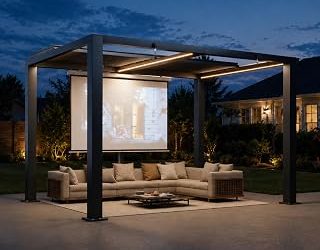
The reinforced steel roof and 10′ x 13′ footprint make this the most versatile all-rounder here — large enough for a recliner plus two chairs, and the louvers let you run a genuine light schedule from dawn brightness to dusk enclosure. Aluminum’s fast heat dissipation means the space is comfortable well before sunset, which matters if you’re trying to establish a consistent wind-down window.
Aoxun Louvered Pergola 10×16
Thickened 3.8″ posts and a patented assembly design make this the most confidence-inspiring louvered build in its size class, and the built-in drainage keeps the deck underneath dry enough to use in light rain. The 10×16 proportion suits a long, narrow arrangement — a daybed at one end and a table at the other — which is ideal if you want distinct nap and dinner zones.
12′ x 16′ Pergola with Louvered Roof, Curtains & Netting
This is my top pick for anyone whose real goal is a screened evening room: adjustable louvers, curtains, netting, and an integrated gutter system in one package, covering every environmental variable that typically interrupts outdoor rest. At 12′ x 16′ it’s genuinely a room, and the dark gray frame reads as low-glare rather than reflective.
Jocisland 20′ x 20′ Cedar Wood Gazebo
A permanent, rot-resistant cedar pavilion with a sloped galvanized roof — the sensory experience is warmer and quieter than metal, and rainfall on the steel is pleasantly muffled rather than sharp. Its solid roof means no light adjustability, so treat it as a shaded retreat rather than a circadian tool.
BlueWish 12′ x 14′ Cedar Pergola with Slatted Trellis Roof
The slatted trellis produces the dappled, moving shade that most people find genuinely restorative, and it’s the natural choice if you plan to train vines overhead for seasonal density. Accept that you’re trading precise light control for atmosphere and a lower price of entry.
Frequently Asked Questions
Can napping under a pergola hurt my night sleep?
Not if you keep it short and early. A 20-minute nap before mid-afternoon, taken in shade rather than darkness, generally leaves nighttime sleep pressure intact — longer or later naps are where problems start.
Do louvers really make a difference for circadian health?
Yes, because they let one space serve two opposite purposes. Open louvers deliver the high-intensity morning light that sets your internal clock; closed louvers at dusk cut ambient brightness sharply, reinforcing the evening signal.
What lighting should I install under a pergola?
Warm, low, downward-facing light — under 2200K if possible, positioned below eye level. Overhead white floodlights undo the entire benefit of the space after dark.
Is a hardtop or louvered roof better?
Hardtops win on rain protection and simplicity; louvers win on flexibility and light management. If you intend to use the space daily and year-round, louvers earn their premium.
Final Thoughts
For most households, the 12′ x 16′ Louvered Pergola with Curtains & Netting is the strongest choice — it controls light, temperature, insects, and rain in a single structure, which is exactly what turns an outdoor area into a reliable rest habit. The Aoxun Louvered Pergola 10×16 is the better value if you already have a sheltered aspect, and the Jocisland 20′ x 20′ Cedar Gazebo is worth the investment for anyone prioritizing permanence and a warmer, quieter atmosphere over adjustable daylight.