Key takeaways
- UV rating over fabric colour: Look for a stated UPF figure rather than assuming dark canopies block more. UPF 50+ means roughly 98% of UV is stopped, which is what makes an afternoon rest under cover restorative instead of depleting.
- Insect sealing: Netting is only useful if it closes fully. Check the mesh density (260 GSM textilene is a strong benchmark) and whether panels zip to the ground or simply drape and gap at the corners.
- Permanent versus portable: Cedar and aluminium hardtop structures stay up year-round and handle snow load; pop-up canopies pack away in minutes. Decide honestly whether you’ll be moving it, because a heavy frame you have to disassemble each autumn will simply stop getting used.
- Water management: Integrated gutters and sloped roof geometry keep runoff off your seating rather than dripping through the middle. This matters more than most buyers expect in wet climates.
- Anchoring and wind ratings: Post thickness, footing hardware, and published wind resistance figures separate a structure that lasts a decade from one that folds in a storm. Anchor to a hard surface wherever possible.
What's inside
As a sleep-wellness practitioner, I spend most of my week talking about mattresses, light exposure, and evening wind-down routines — and almost every consultation eventually drifts outdoors. People want to nap in the garden, read in the afternoon without squinting, and eat dinner outside without being driven indoors by mosquitoes at dusk. What stops them is rarely motivation. It’s the absence of a shaded, sheltered spot that feels genuinely comfortable. Bare patios run hot, glare keeps the nervous system alert, and biting insects make any attempt at rest short-lived. A gazebo solves all three at once, which is why I’ve started recommending one as seriously as I’d recommend blackout curtains.
The trouble is that “gazebo” covers everything from a nylon shade you fold into a duffel bag to a cedar pavilion bolted to a concrete pad. This guide sorts the current market by what it actually delivers: how much UV it blocks, how well it seals out insects, whether it survives winter, and how quickly you can set it up when the weather turns good. Below are the brands and models worth your money in 2026, plus the criteria I use when clients ask me which one to buy.
As an Amazon Associate we earn from qualifying purchases.




How to Choose a Gazebo Brand (2026)
- UV rating over fabric colour: Look for a stated UPF figure rather than assuming dark canopies block more. UPF 50+ means roughly 98% of UV is stopped, which is what makes an afternoon rest under cover restorative instead of depleting.
- Insect sealing: Netting is only useful if it closes fully. Check the mesh density (260 GSM textilene is a strong benchmark) and whether panels zip to the ground or simply drape and gap at the corners.
- Permanent versus portable: Cedar and aluminium hardtop structures stay up year-round and handle snow load; pop-up canopies pack away in minutes. Decide honestly whether you’ll be moving it, because a heavy frame you have to disassemble each autumn will simply stop getting used.
- Water management: Integrated gutters and sloped roof geometry keep runoff off your seating rather than dripping through the middle. This matters more than most buyers expect in wet climates.
- Anchoring and wind ratings: Post thickness, footing hardware, and published wind resistance figures separate a structure that lasts a decade from one that folds in a storm. Anchor to a hard surface wherever possible.
The Best Gazebo Brands (2026) Reviewed
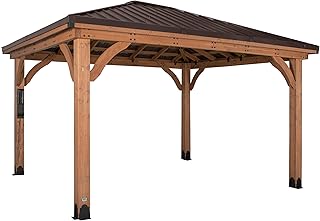
Backyard Discovery Barrington 14′ x 12′ Cedar Gazebo
This is the most complete outdoor rest space on the list: real cedar posts, a galvanised steel hip roof rated for snow support, and a built-in PowerPort so you can run a fan or a low-warmth lamp without trailing an extension cord across the lawn. At 14 by 12 feet it comfortably fits a daybed or lounge set, which is exactly what turns a garden feature into somewhere you’ll actually doze off.
PURPLE LEAF 10′ x 14′ Gazebo with Drainage System
The standout here is the engineering around water and airflow — a genuine drainage system, 4.7-inch posts, and a vented design that lets a breeze pass through instead of trapping heat underneath. The 260 GSM textilene netting is dense enough to keep midges out at dusk while staying breathable, which is the combination that makes evening use pleasant rather than stuffy.
AirWire 10′ x 12′ Hardtop Aluminium Gazebo
Aluminium framing means no staining, no rot, and very little seasonal maintenance, and the double galvanised steel roof handles heavy rain quietly — worth noting if you’re sensitive to noise while resting. Curtains and netting come included, so you can shift from open shade to a fully enclosed retreat in seconds.
Backyard Discovery Arcadia 14′ x 12′ Cedar Gazebo
Mechanically similar to the Barrington but with a single-slope roof that suits contemporary homes and sheds water decisively in one direction. Same cedar construction, snow support, wind resistance, and PowerPort — pick this one on roofline preference and how it sits against your house.
Modern Shade 10×12 Wood Gazebo
A well-priced entry into permanent cedar structures, with a double galvanised steel roof, yard-dyed curtains, and a mosquito net supported by sturdy hooks. The curtain-plus-net layering is genuinely useful: you can cut low evening glare and insects independently depending on conditions.
COOS BAY 11×11 Pop Up Gazebo
The right answer if you rent, travel, or only need shade occasionally — UPF 50+ protection across 121 square feet, water-resistant fabric, mesh netting, and setup measured in minutes. Not a winter structure, but excellent value for summer afternoons.
Frequently Asked Questions
Can I really nap comfortably in a gazebo?
Yes, and a short daytime rest of 20 to 30 minutes under deep shade can genuinely restore alertness. The keys are full UV coverage, insect exclusion, and airflow — heat and bites are what usually cut outdoor rest short, not noise.
Will daytime outdoor resting hurt my night sleep?
Keep it brief and early. A nap before mid-afternoon rarely interferes with night-time sleep, whereas long or late naps reduce the sleep pressure you need by bedtime. Bright morning light in the same spot is, if anything, helpful for your circadian rhythm.
Hardtop or soft canopy?
Hardtop metal roofs last longer, handle snow, and need less attention. Soft canopies cost less and store away, but expect to replace the fabric every few seasons with heavy sun exposure.
Do I need to anchor it?
Always. Anchor permanent gazebos into concrete, decking, or ground footings per the manufacturer’s instructions, and use stakes or weighted plates on pop-ups. Wind damage is by far the most common failure mode.
Final Thoughts
For a year-round outdoor retreat you’ll genuinely rest in, the Backyard Discovery Barrington is my first recommendation — cedar build quality, snow-rated roof, and a power outlet where you need it. If drainage, ventilation, and serious insect netting matter most, the PURPLE LEAF 10′ x 14′ is the smarter buy, while the AirWire hardtop aluminium gazebo is the low-maintenance choice for anyone who’d rather not sand and seal wood each spring.