Key takeaways
- Lie angle and sag: The most restful hammocks hang with roughly a 30-degree sag from each anchor point, which lets your body settle into a shallow, spine-friendly curve rather than a banana. Pulling a hammock drum-tight feels sturdier but pinches the shoulders and forces the calves upward — the two fastest routes to a stiff neck and a cut-short nap.
- Bed width over bed length: Length rarely limits comfort; width does. A bed under about 50 inches keeps the edges wrapped tight around your arms, while 55 inches and up lets you lie diagonally, which flattens your body position noticeably and is the single biggest upgrade most sleepers can make.
- Fabric behavior in heat and damp: Cotton rope breathes beautifully and stays cool in humid air, but it holds moisture and will mildew if left out through a wet week. Quilted polyester dries quickly and cushions pressure points; ripstop nylon breathes least but packs smallest and shrugs off rain.
- Frame stability and motion transfer: If you’re sharing, look for a heavy-gauge steel frame with a wide footprint and balance ropes or straps — these damp the side-to-side roll that turns a two-person hammock into a seesaw. Check stated capacity honestly: 450 to 500 pounds covers two adults with real margin, and margin is what keeps the frame from flexing under you.
- Setup and storage reality: Tool-free assembly and a carrying bag matter more than they sound. A hammock you can break down in five minutes gets stored dry, lasts years longer, and actually travels; one that requires a wrench and two people stays out in the weather until it fails.
What's inside
Most people shop for a hammock the way they shop for a beach towel — by color, by price, by whatever ships fastest. Then they lie down and discover the truth: the fabric bunches at the shoulders, the frame creaks with every shift, and the bed sags so deeply that their hips sit six inches below their knees. That’s not a relaxation problem, it’s a sleep-mechanics problem. A hammock that fails to support the spine in a gentle, continuous curve will wake you before your nervous system ever downshifts, which defeats the entire purpose of lying outside in the first place.
I evaluate outdoor loungers the way I’d evaluate a mattress: by how well they hold the body neutral, how much motion they transfer, and whether they invite a genuine nap or merely a fidget. This guide looks at six outdoor hammocks worth your attention in 2026 — freestanding models you can set up on a patio in ten minutes, quilted two-person beds for existing posts, and a featherweight parachute option for the trail. Below you’ll find the picks themselves, then a framework for choosing between them, honest notes on each, and answers to the questions I hear most often.
As an Amazon Associate we earn from qualifying purchases.




How to Choose a/an Outdoor Hammock (2026)
- Lie angle and sag: The most restful hammocks hang with roughly a 30-degree sag from each anchor point, which lets your body settle into a shallow, spine-friendly curve rather than a banana. Pulling a hammock drum-tight feels sturdier but pinches the shoulders and forces the calves upward — the two fastest routes to a stiff neck and a cut-short nap.
- Bed width over bed length: Length rarely limits comfort; width does. A bed under about 50 inches keeps the edges wrapped tight around your arms, while 55 inches and up lets you lie diagonally, which flattens your body position noticeably and is the single biggest upgrade most sleepers can make.
- Fabric behavior in heat and damp: Cotton rope breathes beautifully and stays cool in humid air, but it holds moisture and will mildew if left out through a wet week. Quilted polyester dries quickly and cushions pressure points; ripstop nylon breathes least but packs smallest and shrugs off rain.
- Frame stability and motion transfer: If you’re sharing, look for a heavy-gauge steel frame with a wide footprint and balance ropes or straps — these damp the side-to-side roll that turns a two-person hammock into a seesaw. Check stated capacity honestly: 450 to 500 pounds covers two adults with real margin, and margin is what keeps the frame from flexing under you.
- Setup and storage reality: Tool-free assembly and a carrying bag matter more than they sound. A hammock you can break down in five minutes gets stored dry, lasts years longer, and actually travels; one that requires a wrench and two people stays out in the weather until it fails.
The Best Outdoor Hammock (2026)s Reviewed
Portable Outdoor Hammock with Stand, Balance Ropes
The balance ropes are the quiet standout here — they stop the roll that makes most single-person stands feel tippy, so you can shift position without bracing. The included pillow is soft enough to keep the cervical spine supported rather than tilting the chin forward, and the whole rig packs into its bag for off-season storage.
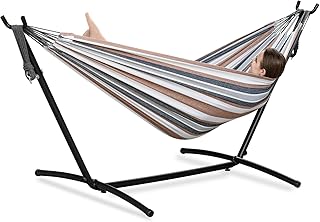
Double Outdoor Hammock with Stand, Dark Gray
Cotton rope over a polyester pad is my favorite combination for hot, sticky evenings: air moves freely underneath while the pad keeps the woven cord from imprinting your back. It’s a two-person bed that stays genuinely cool, though I’d bring it under cover during long stretches of rain.
Double Hammock with Stand for Outside (Coffee)
At 9 feet with a 450-pound rating, this one earns its “space saving” label without feeling compromised — the steel frame stays planted, and assembly is straightforward enough for one person. A solid choice for a mid-sized patio where footprint matters as much as comfort.
ANAGOO Double Hammock with Stand, 500 lbs
The 500-pound capacity and balance strap make this the most reassuring two-person option in the group; there’s almost no frame flex, which translates directly into less motion transfer when your partner moves. Tool-free assembly means it can migrate from patio to garden with minimal fuss.
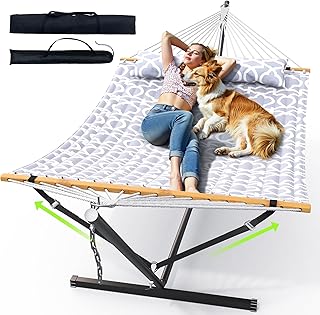
Sunnydaze Quilted Double Hammock
If you already have trees or posts, this is the comfort pick: a 74″ x 55″ quilted bed wide enough to lie diagonally, with a spreader-free drape that keeps the spine neutral. The quilting cushions hips and shoulders in a way rope simply can’t, and the pillow finishes the setup.
Frequently Asked Questions
Can you actually sleep a full night in an outdoor hammock?
Yes, and many people sleep better in one — the gentle sway shortens sleep onset, and back sleepers often report less pressure than on a mattress. The keys are lying diagonally in a wide bed, adding a thin pad or blanket underneath for warmth, and keeping your head slightly elevated.
Do I need a stand, or should I hang from trees?
A stand gives you consistent geometry and freedom of placement, which is why every freestanding model above is easier to get right. Trees work well if they’re roughly 12 to 15 feet apart and you use wide straps, but tree spacing is fixed and rarely ideal.
How long can a hammock stay outside?
Through a dry season, comfortably; through a wet one, not without consequences. Bring the fabric in after prolonged rain, let it dry fully before folding, and expect roughly double the lifespan compared with leaving it exposed year-round.
Is a camping hammock comfortable enough for the backyard?
A parachute-nylon hammock like the lightweight camping model listed above is excellent for a two-hour afternoon and unbeatable for packability, but it breathes less and offers no cushioning. For habitual napping at home, a quilted or rope bed will serve you better.
Final Thoughts
For most buyers, the ANAGOO Double Hammock with Stand is the best all-around choice — the 500-pound frame and balance strap deliver the stability that makes real rest possible for two people. If you already have solid anchor points, the Sunnydaze Quilted Double is the most comfortable bed here by a clear margin, while the Portable Outdoor Hammock with Balance Ropes is the smartest pick for a solo sleeper who wants a stable, packable setup without dedicating the whole patio to it.