Key takeaways
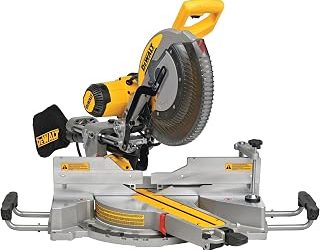
- Match diameter and arbor exactly: Most full-size cabinet and contractor saws take a 10-inch blade with a 5/8-inch arbor; compact jobsite saws often use 8-1/4 inch, and sliding miters take 12-inch with a 1-inch bore. A blade that’s too large won’t reach full depth, and shimming an arbor is never worth the risk.
- Let tooth count follow the task: Roughly 24–40 teeth clears chips fast for ripping thick stock without bogging or burning; 60 teeth is the sweet spot for general crosscutting; 80–100 teeth delivers near-sanded edges on plywood, melamine, and trim.
- Understand the grind: An alternate top bevel (ATB) grind slices wood fibers cleanly and is what you want for crosscuts and sheet goods. Flat-top (FTG) teeth chisel material out and rip faster. Combination blades split the difference honestly but excel at neither.
- Inspect the plate, not just the teeth: Laser-cut expansion slots, anti-vibration cutouts, and a thin-kerf body reduce heat, noise, and deflection — a genuine benefit if your saw is under 2 HP or sits in an attached garage where a quieter cut matters to the rest of the house.
- Buy sets deliberately: Multi-packs are excellent value if the included tooth counts map to work you actually do. If you only ever cut plywood, one great 80-tooth blade beats three average ones.
What's inside
Anyone who has fed a nice piece of walnut into a table saw and pulled out a board with burn marks, splintered edges, and a kerf that wanders knows the frustration: the saw usually isn’t the problem. The blade that shipped in the box was built to be adequate at everything, which in practice means it’s mediocre at the cuts furniture actually demands — clean crosscuts on veneered plywood, glue-ready rips in hardwood, tearout-free shoulders on a face frame. Swap that blade for the right one and the same saw suddenly feels like a machine worth twice the money.
This guide sorts through the table saw blades worth owning in 2026, with an emphasis on finish quality for furniture and cabinet work rather than rough construction. Below you’ll find our picks, a short buying framework covering tooth count, arbor fit, grind geometry, and plate quality, plus honest notes on where each blade earns its keep — and where a cheaper option will disappoint you.
As an Amazon Associate we earn from qualifying purchases.



How to Choose a Saw Blade For Table Saw (2026)
- Match diameter and arbor exactly: Most full-size cabinet and contractor saws take a 10-inch blade with a 5/8-inch arbor; compact jobsite saws often use 8-1/4 inch, and sliding miters take 12-inch with a 1-inch bore. A blade that’s too large won’t reach full depth, and shimming an arbor is never worth the risk.
- Let tooth count follow the task: Roughly 24–40 teeth clears chips fast for ripping thick stock without bogging or burning; 60 teeth is the sweet spot for general crosscutting; 80–100 teeth delivers near-sanded edges on plywood, melamine, and trim.
- Understand the grind: An alternate top bevel (ATB) grind slices wood fibers cleanly and is what you want for crosscuts and sheet goods. Flat-top (FTG) teeth chisel material out and rip faster. Combination blades split the difference honestly but excel at neither.
- Inspect the plate, not just the teeth: Laser-cut expansion slots, anti-vibration cutouts, and a thin-kerf body reduce heat, noise, and deflection — a genuine benefit if your saw is under 2 HP or sits in an attached garage where a quieter cut matters to the rest of the house.
- Buy sets deliberately: Multi-packs are excellent value if the included tooth counts map to work you actually do. If you only ever cut plywood, one great 80-tooth blade beats three average ones.
The Best Saw Blade For Table Saw (2026)s Reviewed
FOXBC 10-Inch 80-Tooth Ultra Finish Blade
This is the blade to reach for when the cut will be visible in the finished piece — 80 ATB teeth leave edges on birch ply and hardwood that need little more than a light scuff before finishing. It is deliberately not a ripping blade, so feed slowly in thick stock and let the tooth count do the work.
10-Inch 80T Carbide-Tipped Blade for Wood, Plastic and Composite
A versatile fine-finish option that handles acrylic, laminate, and composite decking as gracefully as it handles poplar, thanks to carbide tips that resist the heat these materials generate. A sensible pick for anyone whose projects wander beyond solid wood.
10-Inch 3-Pack: 32T, 60T and 80T
The most complete answer for a one-saw home shop, covering framing rips, everyday crosscuts, and ultra-fine finish work without a single blade compromise. Buying all three at once also encourages the habit that actually improves results most: changing blades instead of forcing one to do everything.
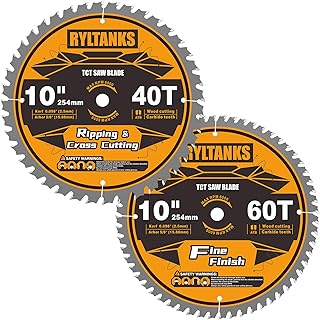
10-Inch 2-Pack: 40T Ripping/Crosscut and 60T Fine Finish
The leaner, more focused set — the 40-tooth blade rips and crosscuts hardwood confidently, while the 60-tooth handles plywood and trim. If you don’t do rough framing, this pairing covers around 90% of furniture-building cuts.
FOXBC 8-1/4 Inch 60-Tooth Fine Finish Blade
Purpose-built for compact jobsite saws, where the stock blade is usually the weakest component in the whole tool. The diamond knockout arbor adds fitment flexibility, and 60 fine-finish teeth transform these small saws into legitimate cabinet-grade machines.
Frequently Asked Questions
How many teeth do I need for cutting plywood?
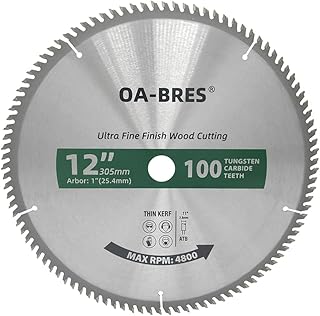
Aim for 80 teeth on a 10-inch blade, or 100 on a 12-inch. High tooth counts take smaller bites, which is what prevents the veneer from chipping out along the edge.
Will a thin-kerf blade work on my saw?
Yes, and it’s often the better choice on saws under 2 HP because it removes less material and demands less power. Just make sure your riving knife or splitter matches the thinner kerf.
Can I use a miter saw blade on a table saw?
Only if the diameter, arbor size, and maximum RPM rating all match your saw. Many blades are explicitly rated for both, but never assume — check the printed specs on the plate.
When should I replace rather than sharpen a blade?
Quality carbide-tipped blades can be professionally sharpened several times. Replace when teeth are chipped or missing, or when the plate shows warping or heat discoloration.
Final Thoughts
If you want one blade for beautiful, ready-to-finish cuts, the FOXBC 10-Inch 80-Tooth is the straightforward choice. For a genuinely complete setup, the 10-Inch 3-Pack in 32T, 60T and 80T covers everything from framing to fine joinery for less than most premium single blades, while owners of compact saws should start with the FOXBC 8-1/4 Inch 60-Tooth — it’s the single cheapest upgrade that will make your saw feel new.