Key takeaways
- Tooth count and task: Roughly 24–40 teeth for ripping thick stock, 60 teeth for general crosscuts and finish work, and 80 teeth for veneered plywood, melamine, and trim where chip-out is unforgivable. High tooth counts remove material slowly and can scorch if you push hardwood through them.
- Arbor and diameter fit: Most full-size saws take a 10-inch blade on a 5/8-inch arbor, while compact and jobsite models often use 8-1/4 inch. Never shim a blade to fit an undersized arbor, and check that your riving knife or splitter matches the blade’s kerf.
- Kerf width: Thin-kerf blades (around 0.09 inch) reduce strain on saws under two horsepower and waste less expensive lumber. Full-kerf blades track straighter in deep rips but need real motor power behind them.
- Plate and carbide quality: Look for laser-cut expansion slots, a tensioned steel plate, and anti-vibration features. These control heat-related warping, which is the actual cause of most burning and drift — and they meaningfully reduce the shriek and hum a cheap blade produces.
- Coatings and single blade versus a set: Anti-friction coatings resist pitch buildup and make cleaning simple. If you work in varied materials, a two- or three-blade set usually costs less than two blades bought separately and saves you from compromising on every cut.
What's inside
Every workshop has a moment of reckoning: you feed a clean board through the saw, and what comes out the other side has burn marks, torn grain, or a cut edge that will need ten minutes of sanding before it deserves glue. Nine times out of ten the blade is the culprit, not the saw. A mid-range contractor saw with a well-matched blade will outperform a premium cabinet saw wearing the stamped steel disc that came in the box. Yet blade selection is where most furniture builders guess — grabbing whatever tooth count is on the shelf and hoping for the best.
This guide sorts through the 2026 table saw blade market with an eye toward furniture work specifically: hardwood rips, plywood crosscuts, and the glue-ready edges that panel work demands. We look at tooth geometry, kerf width, plate quality, and the vibration and noise characteristics that separate a blade you enjoy using from one that makes the whole shop flinch. Whether you need a single do-everything blade or a small rotation for different tasks, there is a sensible option below.
As an Amazon Associate we earn from qualifying purchases.




How to Choose a Saw Blades For Table Saw (2026)
- Tooth count and task: Roughly 24–40 teeth for ripping thick stock, 60 teeth for general crosscuts and finish work, and 80 teeth for veneered plywood, melamine, and trim where chip-out is unforgivable. High tooth counts remove material slowly and can scorch if you push hardwood through them.
- Arbor and diameter fit: Most full-size saws take a 10-inch blade on a 5/8-inch arbor, while compact and jobsite models often use 8-1/4 inch. Never shim a blade to fit an undersized arbor, and check that your riving knife or splitter matches the blade’s kerf.
- Kerf width: Thin-kerf blades (around 0.09 inch) reduce strain on saws under two horsepower and waste less expensive lumber. Full-kerf blades track straighter in deep rips but need real motor power behind them.
- Plate and carbide quality: Look for laser-cut expansion slots, a tensioned steel plate, and anti-vibration features. These control heat-related warping, which is the actual cause of most burning and drift — and they meaningfully reduce the shriek and hum a cheap blade produces.
- Coatings and single blade versus a set: Anti-friction coatings resist pitch buildup and make cleaning simple. If you work in varied materials, a two- or three-blade set usually costs less than two blades bought separately and saves you from compromising on every cut.
The Best Saw Blades For Table Saw (2026)s Reviewed
FOXBC 10-Inch 80-Tooth Ultra Finish Blade
This is the blade to reach for when the cut face is the finished face: 80 teeth leave a surface on plywood and hardwood edges that needs little more than a scuff before finishing. Feed slowly and keep it clean, because that tooth density is unforgiving of impatience in thick maple or oak.
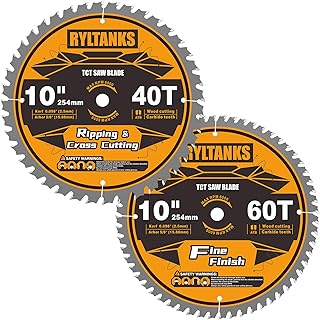
Luckyway 10-Inch 60T and 32T Two Pack
A smart entry point for anyone building a blade rotation on a budget, pairing a fast 32-tooth ripper with a 60-tooth finisher so you are not asking one blade to do contradictory jobs. Cut quality is genuinely good for the money, and swapping between the two takes less time than sanding out a bad cut.
DEWALT 10-Inch 40-Tooth Fine Finish (DWA11040)
If you want one blade permanently mounted, this is the most defensible choice: 40 teeth with fine-finish geometry ripping hardwood without bogging and crosscutting cleanly enough for most furniture joinery. The carbide holds its edge through real use, and it runs notably smoother and quieter than budget blades of the same tooth count.
FOXBC 8-1/4 Inch 60-Tooth Fine Finish
Purpose-built for the compact jobsite saws that have taken over small shops, with a diamond knockout arbor that fits both common configurations. Sixty teeth is the right call at this diameter, where blade speed is high and finish quality matters more than raw ripping capacity.
10-Inch 32T, 60T and 80T Three Pack
The most complete answer for a hobbyist furniture shop: framing, fine finish, and ultra-fine finish covered in one purchase for less than most single premium blades. Buying the range at once removes the temptation to force the wrong blade through a cut simply because it is already installed.
Frequently Asked Questions
How often should I change or sharpen a blade?
Judge by performance rather than hours. Increased feed resistance, burning on straight rips, and a rougher cut face all signal dull carbide. Quality blades can be professionally sharpened several times before replacement becomes the better value.
Will a higher tooth count always give a better cut?
No. Too many teeth in thick hardwood traps sawdust in the gullets, generates heat, and produces burn marks. Match tooth count to material thickness and the type of cut you are making.
Do thin-kerf blades compromise accuracy?
Rarely on furniture-scale work. On saws with limited power they actually improve results by reducing motor bogging. Just confirm your splitter thickness matches to avoid binding.
Why is my blade so loud, and does it matter?
Excessive noise usually reflects plate flex and vibration, not power. A tensioned, laser-slotted plate runs quieter and cuts straighter — worth caring about if your shop shares walls with anyone’s bedroom.
Final Thoughts
For most furniture builders, the DEWALT 40-tooth fine finish blade is the right single purchase, handling rips and crosscuts with equal composure. Add the FOXBC 80-tooth when veneered panels and visible edges enter the picture, or skip straight to the 32T/60T/80T three pack if you would rather own the full range now and never compromise on a cut again.