Key takeaways
- Measure the gap, not the counter: Aim for 10–12 inches between the seat top and the underside of your counter. Standard kitchen islands (36 inches) pair with 24–26 inch counter stools; a 42-inch bar needs 29–30 inch seats. Too little clearance and your thighs press upward, which restricts circulation and makes lingering uncomfortable.
- Favor a real backrest for evening seating: Backless stools are elegant and awful after twenty minutes. If your island doubles as a homework desk or a nightly conversation spot, choose a back that supports the lumbar curve so your postural muscles can stand down.
- Check where your feet land: Unsupported feet create a slow ache and constant micro-fidgeting. Either pick a stool with a genuine footrest ring or confirm your counter has a toe recess your heels can use.
- Match upholstery to how the room is used: Woven linen breathes better and feels warmer against skin in cool kitchens; faux and bonded leather wipe clean in seconds, which matters if children, pets, or turmeric are involved.
- Take weight ratings and frame material seriously: A stool that flexes or creaks makes you brace unconsciously. Look for welded metal frames or solid wood legs, floor-protecting feet, and a stated capacity comfortably above your heaviest regular sitter.
What's inside
Most people shop for bar stools thinking about the room, not the hour. But the kitchen island is where the day actually ends: the late tea, the last emails, the twenty minutes of talking before anyone brushes their teeth. As someone who spends most of my working life on sleep behavior, I’ve come to believe the seat you occupy between 8 and 10 p.m. quietly shapes how well you shut down. A stool that digs into your thighs, forces your shoulders forward, or leaves your feet dangling keeps your nervous system in low-grade alert — and that arousal follows you upstairs.
The other problem is more ordinary: counter stools are sold by finish and photographed in perfect light, so buyers guess on height, misjudge seat depth, and end up with something they perch on rather than settle into. This guide takes a different route. I’ve evaluated the current crop of kitchen and island stools on the things that determine whether you actually relax in them — seat geometry, back and arm support, footrest position, stability under real weight, and how much visual noise they add to a room you’d like to feel calm in. Below are the models worth your attention in 2026.
As an Amazon Associate we earn from qualifying purchases.



How to Choose Kitchen Bar Stools (2026)
- Measure the gap, not the counter: Aim for 10–12 inches between the seat top and the underside of your counter. Standard kitchen islands (36 inches) pair with 24–26 inch counter stools; a 42-inch bar needs 29–30 inch seats. Too little clearance and your thighs press upward, which restricts circulation and makes lingering uncomfortable.
- Favor a real backrest for evening seating: Backless stools are elegant and awful after twenty minutes. If your island doubles as a homework desk or a nightly conversation spot, choose a back that supports the lumbar curve so your postural muscles can stand down.
- Check where your feet land: Unsupported feet create a slow ache and constant micro-fidgeting. Either pick a stool with a genuine footrest ring or confirm your counter has a toe recess your heels can use.
- Match upholstery to how the room is used: Woven linen breathes better and feels warmer against skin in cool kitchens; faux and bonded leather wipe clean in seconds, which matters if children, pets, or turmeric are involved.
- Take weight ratings and frame material seriously: A stool that flexes or creaks makes you brace unconsciously. Look for welded metal frames or solid wood legs, floor-protecting feet, and a stated capacity comfortably above your heaviest regular sitter.
The Best Kitchen Bar Stools of 2026, Reviewed
26″ Modern Barrel Counter Stools, Set of 2
The barrel silhouette wraps the lower back and both sides, which is why it reads as an armchair rather than a stool — ideal for anyone who winds down at the island. A 450-pound rating and linen upholstery make this the most genuinely restful pick here, though the enclosed shape needs a little breathing room visually.
DUMOS Faux Leather Counter Stools, Set of 4
An armless, low-profile design that tucks fully under the counter, which keeps traffic paths clear in a narrow kitchen. The wipeable faux leather and modest back are a sensible compromise for busy family islands where stools get used hard and cleaned often.
LUE BONA Barrel Counter Stools, Set of 3
The same enveloping barrel geometry as the top pick, but in a set of three with black metal frames — useful for the many islands that seat an odd number. The dark frame under beige linen gives the arrangement definition without visual clutter.
Raynesys 24″ Bonded Leather Counter Stools, Set of 2
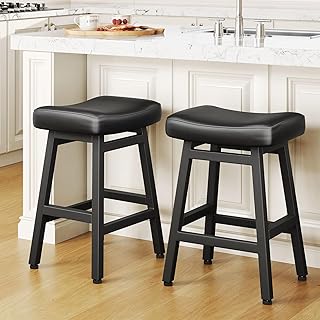
The curved seat is the story: it cradles the sit bones instead of flattening them, which reduces the shifting that makes lower stools tiring. All-black bonded leather over heavy-duty legs suits darker or industrial kitchens, and assembly is refreshingly quick.
COLAMY Mid Century Counter Stools, Set of 2
Tapered wood legs and a softly upholstered back make this the warmest-looking option, and warm materials genuinely help a kitchen feel like a place to slow down. Best for homes where the island sits in view of a dining or living space.
Frequently Asked Questions
What stool height do I need for a standard kitchen island?
Most islands measure 36 inches, which calls for a 24–26 inch counter stool. Measure from the floor to the counter underside and subtract 10–12 inches for the ideal seat height.
Are stools with backs really worth it?
If anyone sits longer than a quick coffee, yes. Backrests let your spinal muscles relax, which is the difference between a seat you leave and a seat you stay in.
Linen or leather upholstery?
Linen feels warmer and more breathable; faux or bonded leather cleans instantly. Choose based on who sits there and what they’re holding.
Does kitchen seating actually affect sleep?
Indirectly but meaningfully. Comfortable, low-stimulation evening spaces encourage a calmer transition to bed, while physical discomfort keeps arousal elevated late into the night.
Final Thoughts
For genuine evening comfort, the 26″ Modern Barrel set is my first recommendation, with the LUE BONA barrel trio as the answer for islands seating three. If your kitchen is high-traffic and spills are routine, the DUMOS faux leather set of four delivers cleanability and clearance without sacrificing back support.