Key takeaways
- Noise level first: Anything advertised near 60 dBA runs at conversation volume; unrated direct-drive units routinely hit 85–95 dBA. If your garage adjoins living or sleeping space, treat 70 dBA as your ceiling and wear muffs above it.
- CFM over PSI: Detailing work — air blowers, dusters, short bursts through crevices — consumes volume, not pressure. Look for at least 2.0 CFM at 90 PSI for comfortable blow-drying, and more if you plan to run a polisher or sandblaster.
- Tank size and cycling: A larger tank doesn’t make more air, it simply buys quiet gaps between motor starts. Four to eight gallons is the sweet spot for detailing: enough reserve to finish a fender without the pump kicking in constantly.
- Oil-free versus oiled: Oil-free pumps eliminate the risk of lubricant mist reaching fresh paint or an interior, and they need almost no upkeep. Oiled pumps last longer under heavy industrial load, which most detailers never reach.
- Portable or plumbed: Decide honestly whether you need shop air or just tire pressure. A cordless inflator lives in the trunk and handles seasonal PSI checks; a tank-based unit is what you want for drying, dusting, and tool use.
What's inside
Anyone who has run a compressor in an attached garage at 7 a.m. knows the real cost of the wrong machine: a shrieking motor that rattles through the drywall, wakes the household, and turns a satisfying Saturday detail into an argument. Noise is the most under-weighted spec in this category. Detailers obsess over CFM and tank size, then discover their new “bargain” pancake unit registers somewhere between a shop vac and a leaf blower — and that it cycles on every ninety seconds, all morning, right under a bedroom floor. Sound exposure that fragments rest has knock-on effects far beyond irritation, and a garage that shares a wall with a sleeping space deserves the same acoustic respect as the bedroom itself.
This guide approaches air compressors the way a sleep-wellness consultant approaches any household appliance: performance first, but decibels treated as a hard requirement rather than a footnote. Below you’ll find quiet-running stationary units for blow-drying panels, purging trim seams, and running air tools, alongside genuinely useful portable inflators for tire pressure — the unglamorous step that makes wheel work and road-test photos come out right. Each pick is assessed on airflow, duty cycle, maintenance burden, and how tolerable it is to stand beside for an hour.
As an Amazon Associate we earn from qualifying purchases.


How to Choose a/an Air Compressor For Auto Detailing (2026)
- Noise level first: Anything advertised near 60 dBA runs at conversation volume; unrated direct-drive units routinely hit 85–95 dBA. If your garage adjoins living or sleeping space, treat 70 dBA as your ceiling and wear muffs above it.
- CFM over PSI: Detailing work — air blowers, dusters, short bursts through crevices — consumes volume, not pressure. Look for at least 2.0 CFM at 90 PSI for comfortable blow-drying, and more if you plan to run a polisher or sandblaster.
- Tank size and cycling: A larger tank doesn’t make more air, it simply buys quiet gaps between motor starts. Four to eight gallons is the sweet spot for detailing: enough reserve to finish a fender without the pump kicking in constantly.
- Oil-free versus oiled: Oil-free pumps eliminate the risk of lubricant mist reaching fresh paint or an interior, and they need almost no upkeep. Oiled pumps last longer under heavy industrial load, which most detailers never reach.
- Portable or plumbed: Decide honestly whether you need shop air or just tire pressure. A cordless inflator lives in the trunk and handles seasonal PSI checks; a tank-based unit is what you want for drying, dusting, and tool use.
The Best Air Compressor For Auto Detailing (2026)s Reviewed
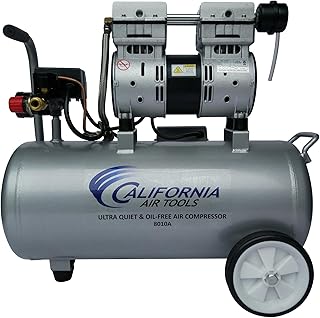
California Air Tools 8010A (8 Gallon)
This is the unit I’d recommend to anyone detailing in a garage attached to a house — the 60 dBA rating means you can run it mid-morning without waking a napping toddler upstairs, and the eight-gallon aluminum tank keeps cycling infrequent while you work a panel. It’s slow to fill from empty and the wheels are more decorative than rugged, but for oil-free, low-noise, low-maintenance detailing air, nothing at this price is close.
California Air Tools CAT-4610AC (4.6 Gallon Twin Tank)
The same ultra-quiet pump architecture in a shorter, twin-tank chassis that tucks under a bench and moves between bays without a fight. Choose this over the 8010A if space is tight and your air use is intermittent — the smaller reserve simply means the motor restarts a little more often.
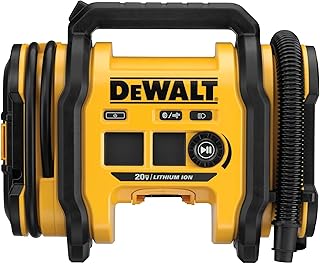
DEWALT 20V MAX Tire Inflator (DCC020IB)
An outstanding cordless inflator if you already own DEWALT 20V batteries: automatic shut-off at your target PSI, a genuinely useful LED work light, and the ability to run off the battery, a 12V socket, or wall power. It’s for tires and inflatables only — no tank, no shop air — but the auto-stop accuracy makes pressure-setting effortless.
AstroAI Dual-Power Tire Inflator (150 PSI)
The dual 12V/120V design is the standout here, letting the same pump serve roadside duty and garage duty without an adapter hunt. Twin metal motors and a clear digital gauge deliver quick, accurate fills; expect noticeable noise and heat on longer runs, so let it rest between tires.
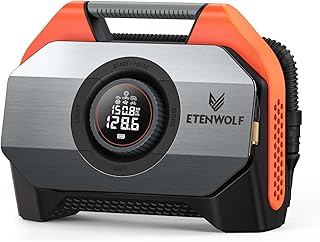
ETENWOLF VORTEX S6 Cordless Inflator
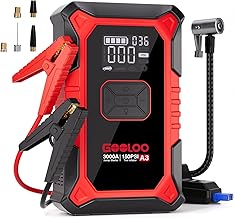
A 19,200 mAh pack, dual cylinders, and a claimed 100% duty cycle put this ahead of most cordless inflators for truck and RV-sized tires, where lesser pumps overheat and quit. The trade-off is bulk and charge time, but it’s the one I’d throw in an overlanding rig.
Frequently Asked Questions
How many CFM do I need for auto detailing?
For air blow-drying, dusting vents, and clearing water from panel gaps, 2.0–4.0 CFM at 90 PSI is comfortable. Air-powered polishers, DA sanders, and blast cabinets demand considerably more — check the tool’s rating before buying.
Are ultra-quiet compressors actually quieter in practice?
Yes, and dramatically so. The dBA scale is logarithmic, so a 60 dBA unit is perceived as roughly a quarter as loud as an 85 dBA one — the difference between talking over it and reaching for hearing protection.
Can I use a portable tire inflator to blow-dry my car?
No. Inflators produce high pressure at very low volume, which is the opposite of what a blower needs. Use a tank-based compressor or a dedicated car dryer.
Do I need to drain the tank?
Every session. Condensation collects at the bottom of the tank, and moisture in your air line will spot fresh paint and corrode the tank from the inside. Aluminum tanks resist rust better but still need draining.
Final Thoughts
For most home detailers, the California Air Tools 8010A is the buy: quiet enough to respect the rest of the house, oil-free, and sized right for real detailing work — with the CAT-4610AC as the compact alternative when floor space is scarce. Pair either with the DEWALT DCC020IB for tire pressure, and you have a complete, remarkably peaceable air setup.