Key takeaways
- Working height and adjustability: Aim for a saw table that sits near wrist height when you stand relaxed, roughly 34–38 inches for most adults. Stands with adjustable legs let you tune this to your body rather than forcing your body to adapt, which is the single biggest factor in whether you finish a long cutting session sore or fine.
- Material support length: Extensions and outfeed rollers determine what you can cut safely alone. Six feet of support handles trim and shelving; eight feet or more is what you want for door casing, fencing, and long rips of dimensional lumber.
- Portability versus rolling: Folding leg stands are lighter and store flat in a corner. Wheeled stands are heavier but never require a lift — a genuine consideration if you already manage back issues or work solo.
- Mounting system: Universal quick-release brackets let you swap saws in seconds and stow the saw separately so you’re not hauling forty pounds of tool and frame together. Verify your saw’s footprint against the rail spacing before buying.
- Weight capacity and frame rigidity: A stand rated for 300 pounds or more won’t flex mid-cut. Wobble ruins accuracy, but it also makes you tense up unconsciously — smooth, confident cuts feel calmer, and that carries through the rest of your evening.
What's inside
Most people don’t buy a miter saw stand until their body sends the invoice. You cut on the garage floor for a year, hunched over a saw perched on a scrap of plywood, and then one evening you notice you’re lying awake because your lower back won’t stop complaining about the eighty crosscuts you made on Saturday. Woodworking fatigue is real, and a surprising amount of it comes not from the work itself but from the height you work at, the awkward lifting, and the muscle-clenching stress of trying to steady a long board that has nowhere to rest.
A good stand fixes all three at once. It puts the blade at a repeatable working height so your spine stays neutral, it carries the weight of your material so your arms aren’t doing static holds, and it turns setup and teardown from a wrestling match into a thirty-second routine — which matters more than you’d think, because the friction of setup is what keeps hobby projects from ever getting finished. Below, we cover what actually separates a stand you’ll use for a decade from one you’ll resent, then review the top options for 2026 across portable, rolling, and support-stand categories.
As an Amazon Associate we earn from qualifying purchases.

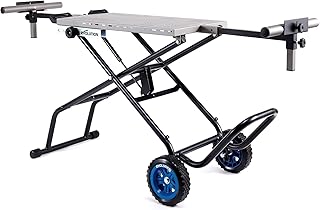


How to Choose a/an Miter Saw Stands (2026)
- Working height and adjustability: Aim for a saw table that sits near wrist height when you stand relaxed, roughly 34–38 inches for most adults. Stands with adjustable legs let you tune this to your body rather than forcing your body to adapt, which is the single biggest factor in whether you finish a long cutting session sore or fine.
- Material support length: Extensions and outfeed rollers determine what you can cut safely alone. Six feet of support handles trim and shelving; eight feet or more is what you want for door casing, fencing, and long rips of dimensional lumber.
- Portability versus rolling: Folding leg stands are lighter and store flat in a corner. Wheeled stands are heavier but never require a lift — a genuine consideration if you already manage back issues or work solo.
- Mounting system: Universal quick-release brackets let you swap saws in seconds and stow the saw separately so you’re not hauling forty pounds of tool and frame together. Verify your saw’s footprint against the rail spacing before buying.
- Weight capacity and frame rigidity: A stand rated for 300 pounds or more won’t flex mid-cut. Wobble ruins accuracy, but it also makes you tense up unconsciously — smooth, confident cuts feel calmer, and that carries through the rest of your evening.
The Best Miter Saw Stands (2026)s Reviewed
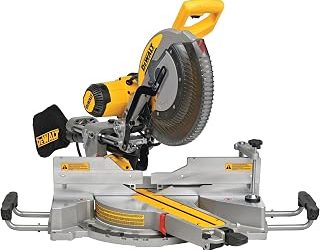
DEWALT DWX724 Compact Miter Saw Stand
The sensible default for most home shops: a 40-inch beam that extends for longer stock, a 500-pound capacity, and a folding design light enough to carry one-handed into a truck bed. It’s the stand I recommend to anyone whose workspace doubles as a parking spot.
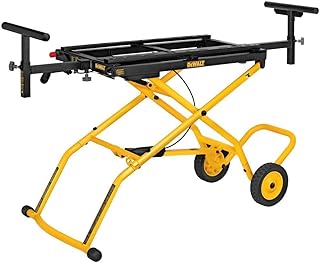
DEWALT DWX726 Rolling Miter Saw Stand
Same trusted mounting system as the DWX724, but on wheels with adjustable height and eight feet of material support — the practical choice for finish carpenters and anyone building large furniture pieces. You tilt and roll rather than lift, which spares your back the worst part of the job.
Evolution MCSSTAND Chop Saw Stand
Built for heavy metal-cutting chop saws, with a gas-strut Powerlift assist that raises the saw for you and all-terrain wheels for rough ground. If you run an Evolution S355 or similar, this is the purpose-built answer.
BORA PM-4000 Portable Miter Saw Stand
A universal-fit, heavy-duty stand with excellent value and genuinely quick setup. The wide stance feels planted, and the mounting brackets accept nearly any saw on the market.
BORA Adjustable Roller Stand
Not a full stand but the accessory that makes any bench setup workable: an adjustable-height roller that supports long boards through the cut. Buy two — one on each side beats one every time.
Frequently Asked Questions
What height should my miter saw be set at?
Let your arm hang naturally and measure to your wrist crease; that’s roughly where the saw’s table should sit. Too low forces you to bend forward repeatedly, which is what leaves you stiff hours later.
Do I need a full stand or just roller supports?
If you have a solid bench at a good height, a pair of roller stands like the Trend R/STAND/A may be all you need. If your saw lives on the floor or a wobbling table, get the full stand.
Are universal mounting brackets reliable?
Yes, provided you check your saw’s base dimensions first and tighten the fasteners properly. Recheck them every few months, as vibration gradually loosens hardware.
How much material support do I really need?
Support your stock within about two feet of the blade on both sides. For most furniture work, six feet total is plenty; trim and framing jobs benefit from eight.
Final Thoughts
For the majority of home shops, the DEWALT DWX724 hits the right balance of capacity, portability, and price, while the DWX726 is worth the upgrade if you’d rather roll a stand than lift one. Add a BORA Roller Stand for long stock, and you’ll cut straighter, work faster, and stop paying for your projects with a stiff back the next morning.