Key takeaways
- Lay geometry: Traditional banana-curve hammocks compress the shoulders and hyperextend the lower back. If you’re a side or stomach sleeper, prioritize a flat-lay design with spreader-free structural ridgelines — they let you rotate without rolling out.
- Thermal management: Air moving beneath you strips body heat far faster than ground contact does. Look for a rainfly with generous side coverage, and plan on an underquilt or closed-cell pad below 65°F regardless of how warm the listing claims the fabric is.
- Bug netting clearance: Netting that rests on your skin is a sleep-fragmentation machine. The best designs suspend mesh several inches above the face via a ridgeline or arched pole, with a zipper you can operate one-handed in the dark.
- Real capacity, not marketing capacity: Treat stated load limits as ceilings, not targets. A 500 lb rating gives a 200 lb sleeper the sag tolerance and fabric stability that makes micro-movements silent — and silence is what protects deep sleep stages.
- Packed weight and setup time: A system you can hang in under five minutes is a system you’ll actually use. Anything over three pounds belongs on a patio or in a car-camping bin rather than a thru-hiker’s pack.
What's inside
Sleep science has a blunt lesson for campers: the body doesn’t care how beautiful the view is if the spine is folded like a lawn chair. Most people who come back from a hammock trip complaining of a rough night aren’t victims of the hammock itself — they’re victims of a 15-degree hang angle, a shoulder-squeezing fabric width, or a mosquito net pressed against the face at 2 a.m. The nervous system reads all three as threats, and threats don’t let you fall into deep sleep.
This guide approaches hammock tents the way a sleep consultant approaches a mattress: as a thermal, postural, and sensory system. Below you’ll find the models worth your money in 2026, plus the selection criteria that actually predict a restorative night — flat-lay geometry, integrated bug protection, rainfly coverage, and honest weight capacity. Whether you’re hanging between two pines at 8,000 feet or between two patio posts in your backyard, the goal is the same: seven uninterrupted hours.
As an Amazon Associate we earn from qualifying purchases.




How to Choose a Hammock Tent Best (2026)
- Lay geometry: Traditional banana-curve hammocks compress the shoulders and hyperextend the lower back. If you’re a side or stomach sleeper, prioritize a flat-lay design with spreader-free structural ridgelines — they let you rotate without rolling out.
- Thermal management: Air moving beneath you strips body heat far faster than ground contact does. Look for a rainfly with generous side coverage, and plan on an underquilt or closed-cell pad below 65°F regardless of how warm the listing claims the fabric is.
- Bug netting clearance: Netting that rests on your skin is a sleep-fragmentation machine. The best designs suspend mesh several inches above the face via a ridgeline or arched pole, with a zipper you can operate one-handed in the dark.
- Real capacity, not marketing capacity: Treat stated load limits as ceilings, not targets. A 500 lb rating gives a 200 lb sleeper the sag tolerance and fabric stability that makes micro-movements silent — and silence is what protects deep sleep stages.
- Packed weight and setup time: A system you can hang in under five minutes is a system you’ll actually use. Anything over three pounds belongs on a patio or in a car-camping bin rather than a thru-hiker’s pack.
The Best Hammock Tent Best (2026)s Reviewed
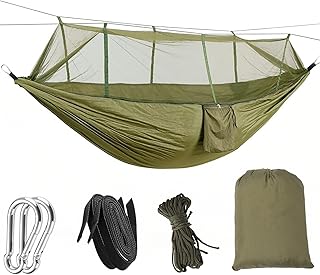
3-in-1 Waterproof Camping Hammock Tent (Dark Green)
This is the sensible generalist: netting, rainfly, and hammock body in one bundle, so nothing gets left behind on a rushed morning. The waterproof canopy has enough overhang to keep a drizzle off your shoulders, which matters more for sleep continuity than most buyers expect.
Flat Lay 3-in-1 Camping Hammock Tent
The flat-lay architecture here is the standout feature, holding your torso closer to neutral and taking pressure off the lumbar curve — a genuine advantage if you wake with lower-back stiffness in conventional hammocks. Included tree straps mean you can dial in the shallow hang angle that flat-lay designs depend on.
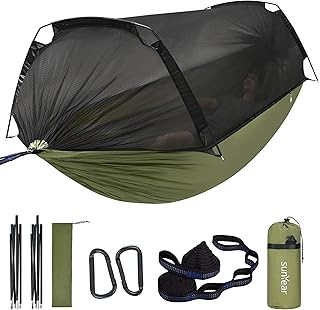
Sunyear Camping Hammock Tent
Sunyear’s anti-rollover shaping and 500 lb capacity produce an unusually settled, low-anxiety feel, which is exactly what nervous first-time hammock sleepers need. The extra interior volume also gives you room to stash a pillow and headlamp without them migrating under your hip.
Night Cat Flat Lay Hammock Tent
Built for solo backpackers who count grams, this one delivers flat-lay comfort in a genuinely trail-worthy package with a proper waterproof rainfly. The 330 lb limit and single-person footprint make it a specialist rather than an all-rounder — but within that lane it’s excellent.
2-in-1 Double/Single Camping Hammock (Black & Grey)
Convertible double-to-single use makes this the most flexible pick for couples who want to lounge together and sleep apart. Wider fabric gives a solo sleeper meaningful diagonal room, the simplest trick for reducing shoulder squeeze.
Frequently Asked Questions
Is hammock sleeping actually good for you?
Gentle rocking has been shown to shorten sleep onset and increase slow-wave sleep, and elevated head position can ease reflux and light snoring. The caveat is posture: benefits disappear if the hang is too tight or too deep.
What hang angle should I aim for?
Roughly 30 degrees from horizontal on each suspension strap. Straps that look nearly level are the single most common cause of a miserable, taco-shaped night.
Do I still need a sleeping pad?
Almost always. Convective heat loss underneath you is significant, and once your back is cold your body will surface out of deep sleep repeatedly to shiver.
Can I use a hammock tent indoors or on a patio?
Yes, provided you anchor into structural framing or rated posts rather than drywall. Indoor use is also the best way to acclimate before a trip.
Final Thoughts
For most buyers, the Sunyear Camping Hammock Tent offers the widest comfort margin and the steadiest feel, while the Flat Lay 3-in-1 Camping Hammock Tent is the smarter choice if back or shoulder discomfort has soured you on hammocks before; ultralight backpackers should go straight to the Night Cat Flat Lay Hammock Tent and pair it with an underquilt.