Key takeaways
- Length and fit first: Blade length is not negotiable. Check your saw’s manual or measure your current blade end to end — a 93″ blade will never work on a 32-7/8″ portable saw, no matter how good it is.
- Tooth count for material thickness: Keep at least three teeth engaged in the cut. Low TPI (3–6) clears sawdust fast in thick hardwood; high TPI (14–24) is for thin-wall tubing, sheet metal, and conduit where a coarse tooth would snag and strip.
- Width dictates curve radius: Wide blades (3/4″ and up) track straight and resist bowing during resaws. Narrow blades (1/4″–1/2″) turn tighter curves — essential for cabriole legs, arched headboard rails, and scrolled aprons.
- Bimetal versus carbon steel: Bimetal blades bond hardened high-speed-steel teeth to a flexible backer, so they survive metal and abrasive stock far longer. Carbon steel blades cost less and cut wood beautifully, but they dull quickly on anything harder.
- Tooth geometry: Wavy-set and variable-pitch designs stagger the teeth to break up harmonic vibration. That means less chatter, less noise, and a smoother finished edge — worth paying for if you cut varied stock.
What's inside
Behind every quiet bed frame and every headboard that doesn’t creak at 3 a.m. is a clean cut. That’s not a slogan — it’s mechanics. A bandsaw blade that wanders, burns, or leaves a rippled edge forces you to over-sand, over-shim, and over-glue, and those compromises are exactly where joints loosen and noise creeps into a bedroom six months later. Most buyers, though, are shopping blind: dozens of near-identical blades, cryptic TPI numbers, lengths that don’t match their saw, and no clear signal about whether a blade is meant for walnut bed rails or for trimming a steel canopy bracket.
This guide sorts the field by the work you’re actually doing. We look at tooth count and set, blade width versus curve radius, bimetal versus carbon steel, and the difference between portable band saw blades for metal and full-size shop blades for resawing hardwood. Each pick below is matched to a specific job in a furniture shop, along with the buying criteria and the questions we hear most often.
As an Amazon Associate we earn from qualifying purchases.



How to Choose a Band Saw Blade (2026)
- Length and fit first: Blade length is not negotiable. Check your saw’s manual or measure your current blade end to end — a 93″ blade will never work on a 32-7/8″ portable saw, no matter how good it is.
- Tooth count for material thickness: Keep at least three teeth engaged in the cut. Low TPI (3–6) clears sawdust fast in thick hardwood; high TPI (14–24) is for thin-wall tubing, sheet metal, and conduit where a coarse tooth would snag and strip.
- Width dictates curve radius: Wide blades (3/4″ and up) track straight and resist bowing during resaws. Narrow blades (1/4″–1/2″) turn tighter curves — essential for cabriole legs, arched headboard rails, and scrolled aprons.
- Bimetal versus carbon steel: Bimetal blades bond hardened high-speed-steel teeth to a flexible backer, so they survive metal and abrasive stock far longer. Carbon steel blades cost less and cut wood beautifully, but they dull quickly on anything harder.
- Tooth geometry: Wavy-set and variable-pitch designs stagger the teeth to break up harmonic vibration. That means less chatter, less noise, and a smoother finished edge — worth paying for if you cut varied stock.
The Best Band Saw Blade (2026)s Reviewed
Timber Wolf 1/2″ x 93-1/2″, 4 TPI
This is the resaw blade for anyone slicing bed rails, bookmatched headboard panels, or thick maple stock. The low tooth count and generous gullets evacuate chips instead of packing them, so you get less heat, less burning, and a face that needs minimal cleanup before glue-up.
Lenox Classic Tuff Tooth 93″ x 3/4″, 18 TPI
A wide bimetal blade with a wavy set and positive rake — a combination that cuts aggressively while staying quiet and stable. The 3/4″ width is a genuine advantage on long straight rips in metal or dense stock, where narrower blades start to bow.
LENOX Portable Band Saw Blades, 44-7/8″, 14 TPI (5-Pack)
The workhorse consumable for portable saws. Fourteen TPI is the right general-purpose choice for angle iron, threaded rod, and bed-frame hardware, and buying five at a time means you swap out a dulling blade instead of forcing it.
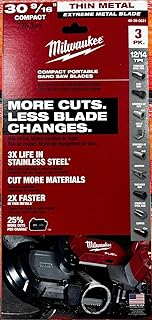
Milwaukee 48-39-0631 Compact, 12/14 TPI (3-Pack)
Built for compact portable saws and tuned for thicker metal, with a variable 12/14 pitch that suppresses the vibration you feel in coarser blades. If you cut steel tube or solid stock overhead or in awkward positions, the reduced chatter is immediately noticeable.
DEWALT 32-7/8″ Portable Band Saw Blade, 18 TPI (3-Pack)
A high-tooth-count option for thin-wall material — EMT conduit, light tubing, sheet stock — where fewer teeth would catch and tear. Reliable, widely available, and priced to be treated as a consumable rather than a treasure.
Frequently Asked Questions
Can I use one blade for both wood and metal?
You can, but you shouldn’t for long. Metal dulls the tooth tips quickly, and a dull blade in wood burns and wanders. Dedicate blades by material; a bimetal option like the Imachinist M42 bi-metal blade handles metal duty so your wood blades stay sharp.
Why is my blade drifting off the line?
Usually dull teeth, insufficient tension, or a blade too narrow for the cut. Uneven tooth set from a nick will also pull the cut consistently to one side — check the teeth before you blame your fence.
What tension should I use?
Follow the manufacturer’s guidance for the specific blade. Many premium wood blades, Timber Wolf included, are designed to run at lower tension than you’d expect, and over-tensioning shortens blade life and stresses your saw’s wheels.
How often should I replace a blade?
When cutting requires noticeably more feed pressure, when you see burn marks or hear a change in pitch, or when the finish deteriorates. Blades are cheap; wasted hardwood and re-cut joints are not.
Final Thoughts
For furniture work where fit and quiet joinery matter, the Timber Wolf 1/2″ 4 TPI is the resawing blade worth buying first, with the Lenox Classic Tuff Tooth covering wide straight cuts and mixed materials. Keep a multi-pack of LENOX 44-7/8″ 14 TPI blades on the shelf for metal hardware, and you’ll have the bases covered without overthinking it.