Key takeaways
- Match power to material: Palm and trim routers in the 0.8–1.25 HP range handle roundovers, chamfers, hinge mortises, and laminate trimming all day. Once you are cutting deep grooves in white oak or maple bed rails, or spinning bits over 1-1/4″ in diameter, you want a full-size 2-1/4 HP machine with a 1/2″ collet.
- Base configuration: A fixed base is more accurate for edge work and table mounting. A plunge base lets you start a cut in the middle of a panel — essential for stopped grooves, inlays, and slat mortises. Combination kits give you both bases on one motor and are the best value if you own only one router.
- Variable speed with constant response: Speed control alone is not enough. Look for electronics that hold RPM under load and provide soft start, which prevents the tool from twisting out of your grip on that first trigger pull. This matters more than raw amperage on tearout-prone figured woods.
- Depth adjustment you can trust: Micro-adjust rings, positive lock levers, and clear scales are what let you sneak up on a fit rather than guessing. Sloppy depth mechanisms are the most common source of mismatched joinery.
- Dust control and visibility: Bedroom furniture means light-colored finishes and lots of hand-sanding. A dust port and an unobstructed sightline to the bit save real cleanup time, and LED-lit or open-front bases pay for themselves on dark hardwoods.
What's inside
Anyone who has built a bed frame, a slatted headboard, or a pair of nightstands knows the moment the project turns: you have flat stock, square cuts, and joints that fit — and it still looks like shop furniture. Edges are sharp against a bare shin. Dadoes are ragged. The panel grooves wander. A router is the tool that closes that gap, and it is the single machine that most decides whether bedroom furniture feels finished or merely assembled. It is also the tool buyers get wrong most often, usually by purchasing either far too little motor for hardwood or far too much bulk for the small, close-quarters trim work that bedroom pieces demand.
This guide approaches routers from the perspective of the work I do most: sleep-focused furniture, where every surface gets touched by bare hands and bare feet in the dark, and where a router’s real job is rounding over rails, cutting clean mortises for slats, and hollowing recesses for hardware so nothing catches. Below are the routers I recommend for 2026, sorted by the role they actually play in a shop, along with the specifications that matter and the ones that are marketing noise.
As an Amazon Associate we earn from qualifying purchases.




How to Choose a/an Wood Router (2026)
- Match power to material: Palm and trim routers in the 0.8–1.25 HP range handle roundovers, chamfers, hinge mortises, and laminate trimming all day. Once you are cutting deep grooves in white oak or maple bed rails, or spinning bits over 1-1/4″ in diameter, you want a full-size 2-1/4 HP machine with a 1/2″ collet.
- Base configuration: A fixed base is more accurate for edge work and table mounting. A plunge base lets you start a cut in the middle of a panel — essential for stopped grooves, inlays, and slat mortises. Combination kits give you both bases on one motor and are the best value if you own only one router.
- Variable speed with constant response: Speed control alone is not enough. Look for electronics that hold RPM under load and provide soft start, which prevents the tool from twisting out of your grip on that first trigger pull. This matters more than raw amperage on tearout-prone figured woods.
- Depth adjustment you can trust: Micro-adjust rings, positive lock levers, and clear scales are what let you sneak up on a fit rather than guessing. Sloppy depth mechanisms are the most common source of mismatched joinery.
- Dust control and visibility: Bedroom furniture means light-colored finishes and lots of hand-sanding. A dust port and an unobstructed sightline to the bit save real cleanup time, and LED-lit or open-front bases pay for themselves on dark hardwoods.
The Best Wood Router (2026)s Reviewed
BOSCH 1617EVSPK Combination Plunge- and Fixed-Base Router
This is the router I would buy if I could only own one, because a single 2-1/4 HP motor swaps between a fixed base for edge profiles and router-table duty and a plunge base for stopped slat mortises and mid-panel work. The electronics are unfussy, the collets grip cleanly after years of use, and parts and accessories are trivially easy to source.
BOSCH 1617EVS Fixed-Base Router
The same proven motor and control package in a fixed base only, which makes it the smarter buy if you plan to mount it permanently under a router table and already own a plunge machine. It has the mass and torque to run large panel-raising and profile bits without bogging in dense hardwood.
BOSCH PR20EVS Colt Palm Router
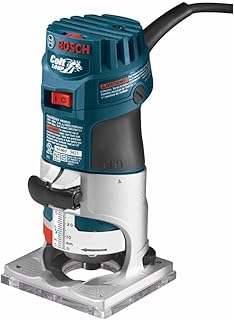
The benchmark compact router, and the one that lives on my bench during any bed or nightstand build: soft start, genuinely useful constant-response circuitry, and a quick-clamp base that makes depth changes fast enough that you actually make test cuts. It is the best tool here for roundovers on rails and hardware recesses.
AVID POWER 1.25 HP Compact Router
A strong value pick that arrives with an edge guide, roller guide, dust hood, and a starter bit set, which shortens the gap between unboxing and cutting. It is a touch coarser in its adjustments than the Colt, but for hobbyists building a headboard or two a year, the included accessories are worth more than the refinement you give up.
TwoWin 800W Compact Router with 15-Piece Bit Set
The lowest-commitment entry point, best understood as a trim router plus a learning kit rather than a lifetime tool. The 15 carbide bits let you experiment with profiles on scrap before you invest in premium cutters, and it is perfectly capable of laminate trimming and light chamfers.
Frequently Asked Questions
Do I need both a palm router and a full-size router?
Eventually, yes — they do different jobs. If budget forces a choice, start with a compact router for edge work and hardware mortises, since that covers the majority of furniture tasks, then add a 2-1/4 HP machine when you begin cutting deep joinery or building a router table.
Is a 1/4″ collet a serious limitation?
For trim and profile work, no. It becomes limiting when you want large-diameter bits, long spiral cutters, or panel-raising profiles, all of which are only sold with 1/2″ shanks because a smaller shank would flex or snap.
What speed should I run?
Reduce RPM as bit diameter increases — small roundovers and straight bits can run near the top of the range, while wide profile bits should be dialed well down to keep rim speed and burning under control. Slower speeds also help on maple and cherry, which scorch easily.
How do I avoid tearout on bed rails and headboard edges?
Take shallow passes, feed against bit rotation, and finish with a light climb-cut skim on end grain. Backing up the exit corner with a sacrificial block prevents the blowout that always seems to happen on the most visible edge.
Final Thoughts
For most people building bedroom furniture, the BOSCH 1617EVSPK combination kit is the correct one-router answer: enough power for joinery, both bases included, and a support ecosystem that will outlast the tool. Pair it with the BOSCH Colt PR20EVS for one-handed edge work and you have a setup that covers essentially every cut a bed frame, nightstand, or headboard requires. Working to a tighter budget, the AVID POWER compact router delivers most of that trim-router capability with the guides and accessories already in the box.