Key takeaways
- Crosscut capacity over blade diameter: Don’t fixate on 12-inch blades. What matters is sliding crosscut width at 90 degrees — roughly 12 inches on a good 10-inch or 8-1/2-inch saw, which covers nearly every headboard rail, bed slat, and case side you’ll ever cut. Oversized blades add weight, cost, and deflection.
- Noise and vibration: Brushless and well-balanced brushed motors run noticeably calmer than budget universal motors, and a saw that doesn’t ring through the floor joists is a saw you can use after dinner. If your shop shares a wall with a bedroom, treat sound as a spec, not an afterthought.
- Real dust control: A bag catches maybe a third of what a saw throws. Look for a shrouded dust port sized for a 1-1/4 or 2-1/2 inch hose so you can connect a vacuum with a HEPA filter — this is the single biggest upgrade for indoor air quality and for anyone with reactive airways.
- Sightlines and cut guidance: Shadow-cast LED systems project the blade’s actual outline and need no calibration; lasers are cheaper but drift out of alignment. Either beats squinting at a pencil line under a bare bulb, which is exactly how tired eyes make expensive mistakes.
- Weight and bevel access: Single-bevel saws cost less but force you to flip long stock, an awkward move when you’re working alone. Double bevel is worth the premium for crown-style headboard trim. Under 45 pounds means you can actually put the tool away instead of leaving it out.
What's inside
Most people who build their own bed frames, nightstands, and headboards discover the same thing I did after years of counseling clients on sleep hygiene: the workshop and the bedroom are connected. A saw that screams at 105 decibels through a shared wall wrecks a partner’s evening wind-down. Fine airborne dust that drifts from a garage into a hallway settles in bedding and irritates airways at 2 a.m. And fatigue-driven mistakes — the ones that happen when you’re pushing through a cut at 11 p.m. — are how careful woodworkers lose fingertips. Choosing a slide compound miter saw is partly a precision decision and partly a rest-and-recovery decision.
This guide looks at the best sliding compound miter saws for 2026 through that dual lens: how cleanly and accurately they crosscut the wide stock furniture demands, and how they behave in a home where somebody is trying to sleep. I’ve weighted quiet-running motors, effective dust capture, sightline systems that reduce eye strain, and weight low enough that you’re not lifting 65 pounds when you’re already tired. Below are the saws worth your money, followed by a buying framework and answers to the questions I hear most.
As an Amazon Associate we earn from qualifying purchases.



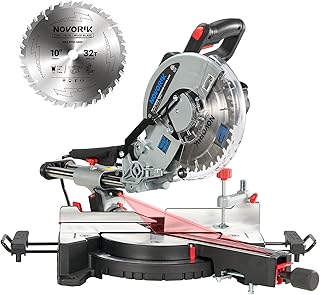

How to Choose a Slide Compound Miter Saw (2026)
- Crosscut capacity over blade diameter: Don’t fixate on 12-inch blades. What matters is sliding crosscut width at 90 degrees — roughly 12 inches on a good 10-inch or 8-1/2-inch saw, which covers nearly every headboard rail, bed slat, and case side you’ll ever cut. Oversized blades add weight, cost, and deflection.
- Noise and vibration: Brushless and well-balanced brushed motors run noticeably calmer than budget universal motors, and a saw that doesn’t ring through the floor joists is a saw you can use after dinner. If your shop shares a wall with a bedroom, treat sound as a spec, not an afterthought.
- Real dust control: A bag catches maybe a third of what a saw throws. Look for a shrouded dust port sized for a 1-1/4 or 2-1/2 inch hose so you can connect a vacuum with a HEPA filter — this is the single biggest upgrade for indoor air quality and for anyone with reactive airways.
- Sightlines and cut guidance: Shadow-cast LED systems project the blade’s actual outline and need no calibration; lasers are cheaper but drift out of alignment. Either beats squinting at a pencil line under a bare bulb, which is exactly how tired eyes make expensive mistakes.
- Weight and bevel access: Single-bevel saws cost less but force you to flip long stock, an awkward move when you’re working alone. Double bevel is worth the premium for crown-style headboard trim. Under 45 pounds means you can actually put the tool away instead of leaving it out.
The Best Sliding Compound Miter Saws (2026), Reviewed
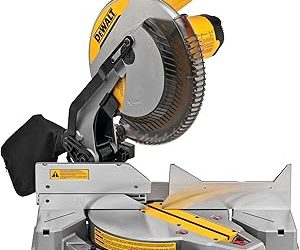
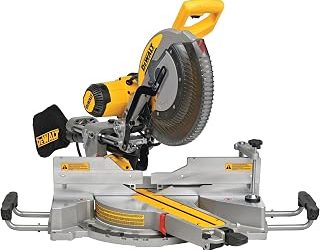
DEWALT DWS780 12-Inch Double Bevel Sliding Compound Miter Saw
The XPS shadow light is the standout here — no batteries, no calibration, just a crisp blade shadow on your layout line, which meaningfully reduces the squint-and-guess cutting that leads to errors late in a session. It’s the most capable saw on this list for wide furniture stock and mitered trim, and the included clamp and wrench mean you’re cutting the day it arrives.
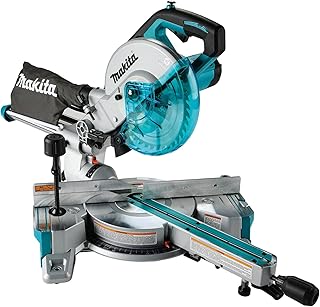
Makita LS1110F 10-Inch Slide Compound Miter Saw
Makita’s newer 10-inch slider is my pick for anyone building furniture in a house with sleeping occupants: it runs smooth and comparatively quiet, the LED work light is genuinely useful, and its crosscut capacity rivals heavier 12-inch machines. Excellent repeat accuracy on miters, which matters when you’re cutting eight identical bed rail shoulders.
Makita LS0816F 8-1/2-Inch Slide Compound Miter Saw
A compact, refined saw for small shops, apartments, and anyone who has to carry the tool up stairs. The reduced blade diameter keeps noise and vibration low without giving up the roughly 12-inch crosscut you need for nightstand and dresser panels.
VEVOR 12-Inch Double Bevel Sliding Miter Saw
The value play: 15 amps, a 60-tooth blade, double bevel, and LED alignment at a fraction of the premium brands’ cost. Expect to fine-tune the fence and bevel stops out of the box, and consider a better blade eventually — but for occasional furniture projects it’s a lot of capability per dollar.
SEESII 8-Inch Cordless Sliding Compound Miter Saw
Twin 21V batteries, a brushless motor, and a lightweight frame make this the quietest, most flexible option for cutting outdoors — which is exactly where you want your dust and noise if you’re mindful of household air and sleep. Capacity tops out around 2.5 by 12 inches, plenty for slats, trim, and small casework.
Frequently Asked Questions
Is a miter saw too loud to use in a home with young children?
Peak noise during a cut typically lands between 95 and 105 dB, well above the threshold that disrupts naps and night sleep. Cut during waking hours, wear hearing protection, and prefer brushless or 8-1/2-inch to 10-inch saws, which run measurably calmer than large brushed 12-inch models.
Do I really need a 12-inch blade for furniture?
Rarely. Sliding action, not blade diameter, determines crosscut width, and a quality 10-inch slider handles nearly all bed, table, and cabinet stock. Choose 12-inch only if you regularly cut tall baseboard or thick timber upright.
How do I keep sawdust out of bedrooms?
Connect the dust port to a shop vacuum with a HEPA filter rather than relying on the bag, cut with the garage door open or outdoors when possible, and change clothes before entering sleeping areas. Fine wood dust stays airborne for hours and is a common overlooked trigger for nighttime congestion.
Single bevel or double bevel?
Single bevel saves money and suits straightforward crosscuts and simple miters. Double bevel earns its keep on angled headboard trim and mitered boxes, where flipping long boards repeatedly invites both inaccuracy and injury.
Final Thoughts
If you want one saw to build furniture for the next decade, the DEWALT DWS780 delivers the capacity and shadow-line accuracy that make complex joinery straightforward. For a household where quiet matters as much as precision, the Makita LS1110F is the more considerate choice — and the compact LS0816F is the one I’d hand to anyone working in a small, shared space. Whichever you choose, pair it with a HEPA-filtered vacuum, and stop cutting before you’re tired. Good work and good sleep protect each other.