Key takeaways
- Crosscut capacity: Measure the widest board in your project plan before you shop. Bed rails, headboard panels and 1×12 shelving demand a sliding head with at least 13 to 14 inches of crosscut; a non-sliding saw will force you to flip stock and chase the line.
- Bevel type: Double bevel tilts left and right, so you can cut mating crown or mitered edge banding without lifting and re-clamping the workpiece. Single bevel is cheaper and perfectly adequate for square casework and simple frames.
- Cut-line visibility: Shadow-light systems project the blade’s own outline onto the board and never need calibration. Lasers are useful but drift, and drift shows up as gappy miters on visible bedroom furniture.
- Dust management: Fine wood dust is a genuine respiratory irritant and a poor houseguest if your shop shares air with bedrooms. Prioritize a saw with a real dust port sized for a shop vacuum, and treat the bundled bag as a backup rather than a solution.
- Noise and timing: A 15-amp saw runs roughly 95 to 105 dB at the operator. Wear hearing protection, and schedule cutting sessions well before your wind-down window — loud, high-arousal work within two hours of bed reliably delays sleep onset.
What's inside
Most people shopping for a compound sliding miter saw are not chasing tool specs for their own sake. They are trying to finish a bed frame, a nightstand, a set of closet shelves, or a bedroom built-in that has been half-drawn on paper for months. And here is the part that rarely makes it into a tool review: the quality of the furniture around your bed has a measurable effect on how well you sleep in it. A platform bed with rails cut a degree out of square will creak every time you turn over. A nightstand that wobbles becomes the thing you bump at 2 a.m. Cuts that close cleanly and repeat accurately are the difference between a bedroom that feels settled and one that keeps asking for your attention after lights-out.
As a sleep-wellness practitioner who spends a good deal of time helping people rebuild their bedrooms rather than just their bedtime routines, I have watched a lot of DIY furniture projects succeed or fail at the chop station. This guide covers what actually matters when you are cutting hardwood rails, mitered trim, and case sides for bedroom pieces: crosscut capacity, bevel range, blade visibility, dust control, and the noise and vibration profile you will be living with in a garage attached to a sleeping house. Below you will find the saws worth your money in 2026, followed by a short buyer’s framework and answers to the questions readers send me most.
As an Amazon Associate we earn from qualifying purchases.


How to Choose a Compound Sliding Miter Saw (2026)
- Crosscut capacity: Measure the widest board in your project plan before you shop. Bed rails, headboard panels and 1×12 shelving demand a sliding head with at least 13 to 14 inches of crosscut; a non-sliding saw will force you to flip stock and chase the line.
- Bevel type: Double bevel tilts left and right, so you can cut mating crown or mitered edge banding without lifting and re-clamping the workpiece. Single bevel is cheaper and perfectly adequate for square casework and simple frames.
- Cut-line visibility: Shadow-light systems project the blade’s own outline onto the board and never need calibration. Lasers are useful but drift, and drift shows up as gappy miters on visible bedroom furniture.
- Dust management: Fine wood dust is a genuine respiratory irritant and a poor houseguest if your shop shares air with bedrooms. Prioritize a saw with a real dust port sized for a shop vacuum, and treat the bundled bag as a backup rather than a solution.
- Noise and timing: A 15-amp saw runs roughly 95 to 105 dB at the operator. Wear hearing protection, and schedule cutting sessions well before your wind-down window — loud, high-arousal work within two hours of bed reliably delays sleep onset.
The Best Compound Sliding Miter Saws (2026) Reviewed
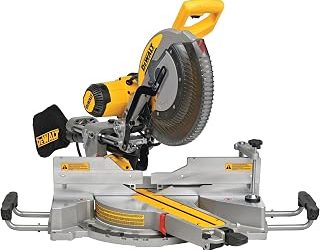
DEWALT DWS780 12-Inch Double Bevel Sliding
This is the saw I point people toward when they intend to build real furniture rather than trim out a closet, largely because the XPS shadow light makes lining up a mitered nightstand corner almost trivial. Between the double bevel, the generous crosscut and the genuinely effective dust collection, it earns its price over a single project of any ambition.
DEWALT DWS779 12-Inch Double Bevel Sliding
Mechanically the DWS779 is very close to its more famous sibling, trading the shadow light for a lower price while keeping the same 3,800 RPM motor and wide crosscut capacity. If you are comfortable working to a pencil line, this is the value pick of the DEWALT sliders.
DOVAMAN Updated 10-Inch Sliding Miter Saw
A surprisingly well-rounded budget slider, with dual speeds and three included TCT blades that let it move between softwood, hardwood and non-ferrous stock without a separate purchase. The ambidextrous handle and nine positive stops make it a sensible first saw for someone furnishing a bedroom on a tight budget.
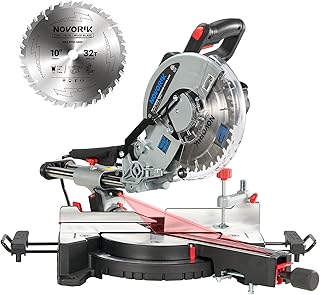
NOVORIK 10-Inch Single Bevel Compound Sliding
The 15-amp, 4,000 RPM motor punches above the price bracket, and the laser guide is accurate enough for shelving and frame work once you take a few minutes to dial it in. Single bevel means more flipping on mitered edges, which is a fair trade at this cost.
DEWALT DWS715 12-Inch Single Bevel Compound
Not a slider, so crosscut width is limited — but for narrow bedroom stock like 1×4 rails, cleats and picture-frame moulding, it is lighter, cheaper and easier to store than anything above. Choose it only if your projects genuinely stay narrow.
Frequently Asked Questions
Do I really need a sliding saw for bedroom furniture?
If your plans include anything wider than about eight inches — headboard panels, case sides, wide shelves — yes. Sliding capacity removes the flip-and-align step where most accuracy is lost.
Is 10-inch or 12-inch better?
Twelve-inch saws offer more depth and height capacity for thick hardwood and taller baseboard; 10-inch saws are lighter, quieter and cheaper to re-blade. For most bedroom furniture, either is sufficient.
How do I keep dust out of the sleeping areas of the house?
Connect a shop vacuum to the dust port, cut with the garage door open, and change clothes before entering bedrooms. Airborne fine dust settles for hours after the saw stops.
What blade should I use for furniture-grade cuts?
Swap the stock blade for a 60- to 80-tooth fine-finish blade. Tear-out on visible bed rails and drawer fronts is almost always a blade problem, not a saw problem.
Final Thoughts
For anyone building furniture they intend to sleep beside for a decade, the DEWALT DWS780 is the clearest choice, with the DWS779 close behind for buyers who do not need the shadow light. If cost is the binding constraint, the DOVAMAN 10-inch slider will still get you square, quiet-enough cuts and a bedroom that finally stops creaking.