Key takeaways
- Sliding vs. fixed: A non-slider handles stock up to roughly 2×6 and is lighter, cheaper, and plenty for nightstands and small case goods. If you plan to crosscut 1×10 or 1×12 shelving and wide bed rails in one pass, a sliding saw earns its price immediately.
- Blade diameter: Ten inches spins faster and cuts cleaner in hardwood; twelve inches buys vertical capacity for tall baseboard, headboard panels, and nested crown. Larger blades also cost more to replace, so factor that in.
- Single vs. double bevel: Single bevel means flipping the workpiece for opposing angles — fine, but flipping introduces error. Double bevel tilts both directions, which pays off on angled headboard returns and any project where symmetry is visible from across the room.
- Cutline visibility: Shadow-casting LED systems project the blade’s actual position rather than a laser’s approximation, and they never need calibrating. On dark walnut or stained pine, this is the difference between hitting a pencil line and splitting it.
- Dust control and placement: Bag-only collection captures maybe half the chips. Choose a saw with a proper 1-1/4″ port, connect it to a shop vac, and cut outside or in a garage — fine wood dust is a respiratory irritant you don’t want circulating near sleeping quarters.
What's inside
Most bedroom furniture projects fail at the same place: the cut line. A headboard with gaps at the miters, a nightstand that rocks on an uneven floor, a bed frame whose rails don’t sit flush — none of that comes from bad lumber or bad intentions. It comes from a saw that can’t repeat the same angle twice. And because the bedroom is the one room where craftsmanship gets judged nightly, sloppy joinery has a way of becoming the thing you stare at at 2 a.m. instead of sleeping.
This guide looks at compound miter saws through the lens of the work most home-furniture builders actually do: bed frames, platform slats, nightstand carcasses, crown-style headboard trim, and closet built-ins. I’ve focused on cut capacity for wide stock, bevel behavior for angled headboards and canopy posts, sightline accuracy, and how much dust the saw throws into a room you sleep in. Below are six saws worth your money in 2026, followed by the buying criteria that separate a good one from an expensive disappointment.
As an Amazon Associate we earn from qualifying purchases.



How to Choose a Compound Miter Saw (2026)
- Sliding vs. fixed: A non-slider handles stock up to roughly 2×6 and is lighter, cheaper, and plenty for nightstands and small case goods. If you plan to crosscut 1×10 or 1×12 shelving and wide bed rails in one pass, a sliding saw earns its price immediately.
- Blade diameter: Ten inches spins faster and cuts cleaner in hardwood; twelve inches buys vertical capacity for tall baseboard, headboard panels, and nested crown. Larger blades also cost more to replace, so factor that in.
- Single vs. double bevel: Single bevel means flipping the workpiece for opposing angles — fine, but flipping introduces error. Double bevel tilts both directions, which pays off on angled headboard returns and any project where symmetry is visible from across the room.
- Cutline visibility: Shadow-casting LED systems project the blade’s actual position rather than a laser’s approximation, and they never need calibrating. On dark walnut or stained pine, this is the difference between hitting a pencil line and splitting it.
- Dust control and placement: Bag-only collection captures maybe half the chips. Choose a saw with a proper 1-1/4″ port, connect it to a shop vac, and cut outside or in a garage — fine wood dust is a respiratory irritant you don’t want circulating near sleeping quarters.
The Best Compound Miter Saws of 2026, Reviewed
DEWALT DWS713 10-Inch Single Bevel
The most sensible first saw for someone building bedroom furniture on weekends: light enough to carry one-handed, accurate out of the box, and dead simple to align. Capacity is the limit — plan on two-pass cuts for anything wider than a 2×6.
DEWALT DWS715 12-Inch Single Bevel
Same reliable platform as the DWS713 with a 12-inch blade and tall-fence capacity that makes short work of baseboard and vertical headboard trim. It’s the value pick if you want reach without paying for a slide mechanism.
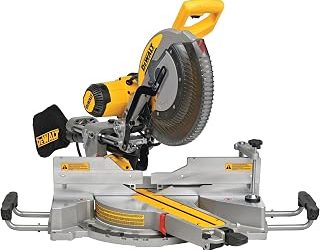
DEWALT DWS780 12-Inch Double Bevel Sliding
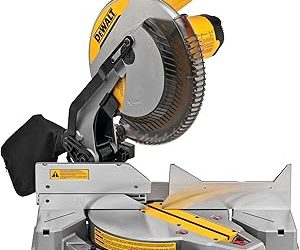
The one I’d buy if the saw is going to live in my shop for a decade. The XPS shadow light is genuinely the best cutline system available, the double bevel removes guesswork on mirrored angles, and detent accuracy holds up after years of use. Heavy, expensive, and worth it.
DEWALT DWS779 12-Inch Double Bevel Sliding
Essentially the DWS780 minus the shadow light, at a noticeably lower price. If you’re comfortable working to a pencil line or plan to add task lighting, this is the smartest dollar-per-capacity choice in the lineup.
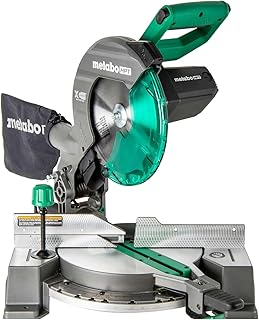
Metabo HPT C10FCG2 10-Inch Single Bevel
A lightweight, budget-friendly saw with a surprisingly good shadow-line system and smooth pivot action. It’s the pick for small apartments and tight garages where the saw gets stored on a shelf between projects.
Frequently Asked Questions
Do I need a sliding saw to build a bed frame?
Not strictly. Standard bed rails and posts fall within a 10-inch non-slider’s capacity. A slider becomes necessary once you’re crosscutting wide panel stock or 1×12 shelving for matching nightstands.
Is the stock blade good enough?
For framing and rough cuts, yes. For furniture-grade results in oak, maple, or plywood veneer, swap in a 60–80 tooth fine-finish blade. It’s the cheapest accuracy upgrade you can make.
How loud are these, and does that matter indoors?
Expect 95–105 dB at the operator’s position — hearing protection is non-negotiable, and the noise carries well beyond a closed door. Schedule cutting for daytime hours if anyone in the household sleeps on a shifted schedule.
Can I use one for metal or PVC?
Only with a blade rated for that material, and never with a wood blade. Some budget saws advertise multi-material capability; verify the specific blade spec before cutting anything but wood.
Final Thoughts
For most people building bedroom furniture at home, the DEWALT DWS779 hits the best balance of capacity and price, while the DWS780 is the upgrade worth stretching for if you value its shadow-line accuracy. If your projects are smaller and storage space is tight, the DWS713 or the Metabo HPT C10FCG2 will cut cleanly enough to build furniture you’ll be glad to wake up to.