Key takeaways
- Louver range, not just “adjustable”: Look for a pitch that closes fully watertight and opens to at least 130–140°. A wide arc lets you pull filtered morning brightness in for circadian benefit, then flatten the blades to near-total shade when the sun crosses overhead.
- Drainage that’s genuinely internal: Water should travel through the louvers into hollow posts and exit at ground level. Surface gutters and open channels tend to weep at the corners, which is how outdoor daybeds and cushions get quietly ruined.
- Frame material and wall thickness: Extruded aluminum resists corrosion and won’t stain a deck; galvanized steel gives you higher wind ratings at more weight. Either is fine — what you don’t want is thin-gauge tube that flexes when you crank the louvers.
- Zoned control for larger footprints: Anything over about 200 sq ft should have two or more independently operated louver banks. That lets you keep a dining zone bright while a lounge or nap corner sits in deep shade, which is exactly the flexibility that makes an outdoor rest space work.
- Anchoring and siting before size: Confirm your slab, footings, or ledger board can take the load, and check setback rules. Then think about orientation — a west-facing pergola catches the low glare that makes late-day relaxation uncomfortable.
What's inside
Most people shopping for a louvered pergola are thinking about shade and rain. As someone who spends their working life on sleep and circadian health, I’d argue you’re actually shopping for something more interesting: a controllable light environment outdoors. Afternoon light exposure is one of the most underused tools for consolidating nighttime sleep, and yet the average patio is unusable between noon and four — too bright, too hot, too exposed. So people retreat indoors, spend the brightest hours of the day under 200 lux of ceiling light, and then wonder why 11 p.m. feels wide awake. A roof you can angle is a roof you can dose.
The catch is that this category has filled up fast, and the differences that matter aren’t the ones in the bullet points. Louver pitch range, frame rigidity in wind, whether water actually leaves the structure or drips down the post onto your cushions — these determine whether the pergola becomes a daily habit or an expensive sculpture. Below I’ve assessed six of the strongest 2026 options with an eye toward comfort, thermal behavior, and genuine all-day usability, plus a buying framework you can apply to anything not on this list.
As an Amazon Associate we earn from qualifying purchases.


How to Choose a Pergola With Louvered Roof (2026)
- Louver range, not just “adjustable”: Look for a pitch that closes fully watertight and opens to at least 130–140°. A wide arc lets you pull filtered morning brightness in for circadian benefit, then flatten the blades to near-total shade when the sun crosses overhead.
- Drainage that’s genuinely internal: Water should travel through the louvers into hollow posts and exit at ground level. Surface gutters and open channels tend to weep at the corners, which is how outdoor daybeds and cushions get quietly ruined.
- Frame material and wall thickness: Extruded aluminum resists corrosion and won’t stain a deck; galvanized steel gives you higher wind ratings at more weight. Either is fine — what you don’t want is thin-gauge tube that flexes when you crank the louvers.
- Zoned control for larger footprints: Anything over about 200 sq ft should have two or more independently operated louver banks. That lets you keep a dining zone bright while a lounge or nap corner sits in deep shade, which is exactly the flexibility that makes an outdoor rest space work.
- Anchoring and siting before size: Confirm your slab, footings, or ledger board can take the load, and check setback rules. Then think about orientation — a west-facing pergola catches the low glare that makes late-day relaxation uncomfortable.
The Best Pergolas With Louvered Roofs (2026): Reviewed
PURPLE LEAF Aluminum Louvered Pergola 12′ × 24′
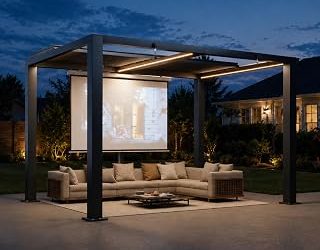
Four independently controlled louver roofs across 288 sq ft is the standout feature here, and it’s a functional one — you can run one bay fully open for daylight exposure and another fully closed over a lounger. The all-aluminum build and hidden gutters mean less seasonal upkeep and a reliably dry surface underneath, which matters if you’re leaving textiles out.
Backyard Discovery Evanston 16′ x 10′ Wall-Mounted
The best choice for exposed or windy sites: galvanized steel, a high-wind rating, and a wall-mount design that borrows structural support from the house. The integrated PowerPort is a small touch with real value — it lets you run a fan or warm, low-level lighting instead of harsh floods that undercut evening melatonin.
12′ x 20′ Louvered Pergola with Integrated Drainage
A heavy-duty metal frame with a generous 240 sq ft footprint, well suited to poolside and larger deck installations where you want a shaded core plus sunny margins. Rotating the blades to a shallow angle here produces the kind of dappled, moving shade that reads as restful rather than dim.
Domi Louvered Pergola 10×20, Espresso Brown
The narrow 10-foot depth suits townhouse patios and side yards where a square structure won’t fit, and the espresso finish absorbs glare instead of bouncing it back at seated eye level. Adjustable roof and built-in drainage cover the essentials without the price of a zoned system.
12′ x 16′ Louvered Pergola, Grey
A well-proportioned mid-size option — big enough for a full seating arrangement, small enough to install and manage without a crew. The reinforced aluminum frame and internal drainage put it above most entry-level units, and grey stays visually cool in strong sun.
Frequently Asked Questions
Can a louvered pergola actually help me sleep better?
Indirectly, yes. Daytime light exposure and cooler evening body temperature are two of the strongest drivers of sleep quality, and a shaded outdoor space makes both easier to come by. It’s the behavior it enables — more hours outside — that does the work.
Are they safe to nap under?
With louvers closed you get near-complete shade, but closed blades also cut airflow. Leave a slight pitch for ventilation, keep hydration nearby, and treat outdoor naps as short — 20 to 30 minutes, ideally before mid-afternoon, so nighttime sleep pressure stays intact.
How much rain will they really hold off?
A properly closed louvered roof with internal drainage handles steady rain well. Sustained downpours with wind can drive spray through the blade seams at the perimeter, so position furniture toward the center.
Should I open the louvers over winter?
Open them. Flat, closed blades collect snow load; angled or open louvers shed it and reduce stress on the frame. Clear the drainage channels before the first freeze.
Final Thoughts
If you have the space and want genuine zone-by-zone control over light and shade, the PURPLE LEAF 12′ × 24′ is the most capable pergola here. The Backyard Discovery Evanston is the smarter buy for windy, exposed, or wall-adjacent installs, and the 12′ x 16′ grey aluminum model hits the best balance of size, build quality, and manageability for a typical patio.