Key takeaways
- Dual motors over single: A single-motor base raises head and foot together, which shoves you down the bed and folds your hips awkwardly. Two independent motors let you lift the torso 30–45 degrees while adding a slight knee bend to anchor your body in place — the position that actually keeps an airway open comfortably.
- A real anti-snore or zero-gravity preset: You will not adjust your bed at 3 a.m. while half-conscious. One-touch presets and programmable memory positions matter more than the number of features on the box, because a position you can’t recall instantly is a position you won’t use.
- Motor noise and ramp speed: Look for brushless or “quiet” motors rated under roughly 45 dB. If a partner nudges the base while you’re drifting off, a loud gear whine undoes the benefit entirely.
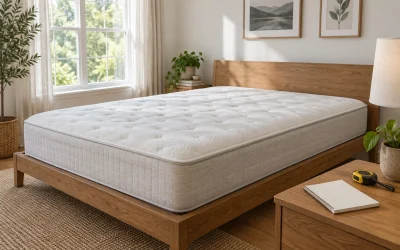
- Mattress compatibility: Foam and hybrid mattresses 10–14 inches thick flex properly. Traditional innerspring units with rigid perimeter coils resist bending and can develop permanent creases — check your mattress warranty before you buy the base.
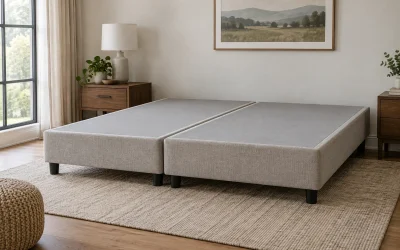
- Weight capacity and leg height: Confirm the rating covers both sleepers plus the mattress, and check that adjustable legs let you match your existing bed height. Retrofitting a base into an existing bed frame is common; measure the interior rails first.
What's inside
Snoring is rarely just a noise problem. It’s usually a geometry problem — soft tissue at the back of the throat collapsing inward when you lie flat, narrowing the airway until turbulent air makes the tissue vibrate. Gravity is the culprit, which is why most people snore hardest on their backs and why the standard fixes (nasal strips, mouth tape, an extra pillow stack that slides off by 2 a.m.) tend to underperform. Elevating the torso by even six or seven degrees changes the angle of the airway enough to reduce vibration measurably in many sleepers, and an adjustable base is the only way to hold that angle reliably, all night, without wrecking your neck.
The trouble is that “anti-snore” has become a marketing sticker rather than a specification. Some bases offer a genuine dual-motor lift with a preset incline; others give you a single hinge and a hopeful label. This guide breaks down what actually matters — motor configuration, incline range, preset memory, noise, and how the base interacts with your existing mattress — then reviews the adjustable bases worth your money in 2026, from full-featured packages to budget frames that still get the fundamentals right.
As an Amazon Associate we earn from qualifying purchases.



🛒 Best Price Today on Amazon
Prime members get fast, free shipping on everything above, plus member-only deals. New members get a 30-day free trial — cancel anytime.
How to Choose an Adjustable Bed For Snoring (2026)
- Dual motors over single: A single-motor base raises head and foot together, which shoves you down the bed and folds your hips awkwardly. Two independent motors let you lift the torso 30–45 degrees while adding a slight knee bend to anchor your body in place — the position that actually keeps an airway open comfortably.
- A real anti-snore or zero-gravity preset: You will not adjust your bed at 3 a.m. while half-conscious. One-touch presets and programmable memory positions matter more than the number of features on the box, because a position you can’t recall instantly is a position you won’t use.
- Motor noise and ramp speed: Look for brushless or “quiet” motors rated under roughly 45 dB. If a partner nudges the base while you’re drifting off, a loud gear whine undoes the benefit entirely.
- Mattress compatibility: Foam and hybrid mattresses 10–14 inches thick flex properly. Traditional innerspring units with rigid perimeter coils resist bending and can develop permanent creases — check your mattress warranty before you buy the base.
- Weight capacity and leg height: Confirm the rating covers both sleepers plus the mattress, and check that adjustable legs let you match your existing bed height. Retrofitting a base into an existing bed frame is common; measure the interior rails first.
The Best Adjustable Beds For Snoring (2026) Reviewed
Sven & Son Classic Adjustable Bed Base + 14″ Hybrid Mattress
This is the closest thing to a turnkey solution here: a zero-gravity-capable base bundled with a medium-soft 14-inch hybrid, so you’re not gambling on whether your current mattress will flex. Head and foot lift, dual massage, USB charging, and under-bed lighting round out a package that suits anyone replacing an entire sleep setup at once rather than retrofitting.
Tami Tami T600 Adjustable Bed Frame
The T600’s standout trait is its genuinely quiet motor, which makes it the smart pick for couples where one partner is a light sleeper and the other repositions frequently. Side pockets, dual USB, a nightlight, and a five-minute assembly make it unusually low-friction for a mid-priced base.
Lucid L300 Adjustable Bed Frame
A deliberately minimal base that spends its budget on mechanics instead of extras — reliable head and foot articulation, USB charging, and memory positions so you can save your personal anti-snore angle and return to it with one press. The best choice for buyers who want fewer things that can eventually break.
Marsail Queen Adjustable Bed Frame (Dual Motor)
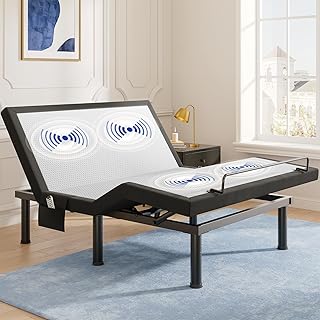
Independent head and foot motors, a zero-gravity preset, four USB ports, and adjustable-height legs make this the most flexible retrofit option for slotting into an existing bed frame. Positioning is precise enough to fine-tune incline in small increments, which matters when you’re hunting for the exact angle that quiets snoring without straining your neck.
Marsail NS0 Full Adjustable Bed Base
Essentially the dual-motor Marsail formula in a full size with a dedicated anti-snore mode alongside zero gravity — a rare find at this footprint, since most snore-focused bases skip full sizes. Three-minute assembly and under-bed lighting make it a strong fit for guest rooms and solo sleepers in smaller bedrooms.
Frequently Asked Questions
How high should I raise the head of the bed to reduce snoring?
Most people find relief between roughly 7 and 12 degrees of torso elevation — noticeably less than sitting upright. Start low, add a slight foot lift to stop yourself sliding down, and increase gradually over several nights rather than jumping straight to a steep angle.
Will an adjustable bed treat sleep apnea?
No. Elevation can reduce simple positional snoring and may ease mild symptoms, but obstructive sleep apnea is a medical condition involving repeated breathing interruptions and requires diagnosis and treatment. If you gasp awake, wake unrefreshed, or a partner notices pauses in your breathing, see a physician — a bed is not a substitute for a sleep study or CPAP therapy.
Can I use my current mattress on an adjustable base?
Usually, if it’s memory foam, latex, or a modern hybrid in the 10–14 inch range. Older innerspring mattresses with connected coil systems and stiff edge supports often won’t bend evenly and can be damaged, so verify with the manufacturer first.
Do the massage and lighting features actually help sleep?
Massage is best understood as a wind-down comfort feature rather than a therapeutic one. Under-bed lighting is genuinely useful, though — it lets you navigate to the bathroom without switching on an overhead light, which protects the melatonin release that keeps you falling back asleep quickly.
Final Thoughts
For a complete, no-guesswork upgrade, the Sven & Son Classic bundle removes the mattress-compatibility question entirely. If you’re keeping your current mattress, the dual-motor Marsail Queen offers the most precise incline control for dialing in your anti-snore angle, while the Tami Tami T600 is the one to choose when quiet operation matters most to a sensitive partner. Whichever you pick, give yourself two weeks of gradual adjustment — and if snoring persists at any elevation, treat that as a signal to talk to a doctor rather than to buy another gadget.