Key takeaways
- Vented canopy construction: A wind vent at the crown lets pressure escape instead of building underneath and turning the canopy into a sail. Two- and three-tier designs are meaningfully calmer in gusts, and quieter — which matters if you’re actually trying to nap under it.
- Rib count and material: Eight ribs is the practical minimum; fiberglass or reinforced aluminum ribs bend under load and spring back, while cheap steel takes a permanent set after one bad afternoon. Check whether ribs are individually replaceable.
- Base weight, not umbrella weight: For a 9-foot freestanding umbrella, plan on 50 lbs of base minimum; 75–125 lbs if it isn’t threaded through a table. Cantilever models need substantially more — usually a cross base loaded with plates or sandbags.
- Fabric density and UV rating: Look for 220–240 GSM solution-dyed fabric with UPF 50+. Denser weaves resist fraying at the rib tips, where wind damage almost always starts, and they cut the glare that keeps you from actually relaxing.
- Tilt mechanism placement: Push-button and auto-tilt systems are convenient, but every hinge is a stress point. If your site is exposed, prefer a simple crank-and-collar tilt, and always return the canopy to vertical before a blow.
What's inside
As someone who spends most of my professional life talking about circadian rhythm, thermal comfort, and the conditions that let the nervous system downshift, I’ve become oddly evangelical about shade. Daytime rest is not a luxury — afternoon recovery in filtered light lowers arousal, buffers heat stress, and helps protect the sleep pressure you’ll actually use at night. The problem is that most patio umbrellas sabotage the whole ritual. You settle in, the breeze picks up to a modest 18 mph, and suddenly you’re not resting; you’re bracing, listening to the canopy snap, waiting for the pole to lurch. That vigilance is the opposite of restorative.
Wind resistance, then, isn’t a niche spec for coastal buyers. It’s the difference between a shade structure you trust and one you monitor. This guide looks at the umbrellas that hold their shape when the air moves — vented canopies, reinforced rib counts, aluminum frames that flex instead of failing — and explains what to weigh before you buy, which models earn their keep in gusty yards, and how to set one up so it stays put.
As an Amazon Associate we earn from qualifying purchases.
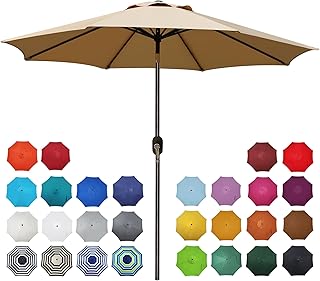


How to Choose a Patio Umbrella Wind (2026)
- Vented canopy construction: A wind vent at the crown lets pressure escape instead of building underneath and turning the canopy into a sail. Two- and three-tier designs are meaningfully calmer in gusts, and quieter — which matters if you’re actually trying to nap under it.
- Rib count and material: Eight ribs is the practical minimum; fiberglass or reinforced aluminum ribs bend under load and spring back, while cheap steel takes a permanent set after one bad afternoon. Check whether ribs are individually replaceable.
- Base weight, not umbrella weight: For a 9-foot freestanding umbrella, plan on 50 lbs of base minimum; 75–125 lbs if it isn’t threaded through a table. Cantilever models need substantially more — usually a cross base loaded with plates or sandbags.
- Fabric density and UV rating: Look for 220–240 GSM solution-dyed fabric with UPF 50+. Denser weaves resist fraying at the rib tips, where wind damage almost always starts, and they cut the glare that keeps you from actually relaxing.
- Tilt mechanism placement: Push-button and auto-tilt systems are convenient, but every hinge is a stress point. If your site is exposed, prefer a simple crank-and-collar tilt, and always return the canopy to vertical before a blow.
The Best Patio Umbrella Wind (2026)s Reviewed
PURPLE LEAF Cantilever 10′ x 10′ Square Double Top
The double-top canopy and 35 MPH-rated frame make this the most composed offset umbrella here — the upper vent bleeds off gusts instead of transmitting them into the mast, so the whole structure stays quiet. Ideal if you want unobstructed shade over a daybed or lounger, provided you commit to a properly weighted cross base.
EliteShade USA 9ft 3-Tier Market Umbrella
Three tiers of venting is the most aggressive pressure-relief design on this list, and the commercial-grade build shows in the rib seating and crank feel. This is my pick for genuinely exposed sites — rooftops, lakefronts, wide-open lawns — where lesser umbrellas invert.
Midtown Umbrellas 9 Ft with Terylast Fabric
Terylast fabric and a 10-year no-fade claim put this in the buy-once category, and the auto-tilt aluminum frame with eight reinforced ribs tracks the sun without a fight. The navy canopy also transmits less light than pale fabrics, which makes a real difference if you’re reading or dozing beneath it.
JEAREY 9FT with Push Button Tilt and Crank
A well-executed conventional market umbrella: eight sturdy ribs, waterproof UV-blocking canopy, and a push-button tilt that operates smoothly one-handed. Best suited to table-mounted use in sheltered or semi-sheltered yards rather than open exposure.
9′ Outdoor Table Umbrella with 8 Sturdy Ribs
The value entry, and a sensible one — crank open, push-button tilt, eight ribs, and a footprint that fits standard 6-seat tables. Pair it with a heavier base than the listing suggests and it holds up well through ordinary breezes.
Frequently Asked Questions
What wind speed can a patio umbrella actually handle?
Most quality vented umbrellas are comfortable through roughly 20–25 mph, and the best-engineered frames are rated to around 35 mph. Beyond that, close and crank down regardless of the rating — no canopy is designed to be a permanent windbreak.
Does a vent really make a difference?
Yes, and audibly so. The vent equalizes pressure between the underside and the top of the canopy, which reduces lift, reduces frame stress, and cuts the flapping noise that makes outdoor rest impossible.
Cantilever or center-pole for windy areas?
Center-pole umbrellas are inherently more stable because the load path is vertical and the table helps anchor them. Cantilevers offer better usable shade but demand a heavier, wider base and more diligence about closing them.
How should I store it seasonally?
Dry the canopy fully before covering — trapped moisture is what causes mildew and premature fabric failure — then store the frame closed and upright, ideally indoors, with the crank left unloaded.
Final Thoughts
If your yard sees real wind, the EliteShade USA 3-Tier is the safest structural bet, with the PURPLE LEAF Cantilever close behind for anyone who wants uninterrupted shade over a lounge area. For a table-mounted umbrella you won’t have to replace in three seasons, the Midtown Umbrellas 9 Ft strikes the best balance of fabric quality, rib reinforcement, and everyday usability — and it’s the one I’d choose if the goal is a reliably quiet, genuinely restful patch of afternoon shade.