Key takeaways
- Match profile height to your body, not the photo: A 10-inch build suits lighter sleepers and guest rooms; 12 inches is the reliable middle ground for most adults; 14 inches gives heavier sleepers and dedicated side sleepers the comfort depth needed to keep the shoulder and hip from bottoming out onto the coil layer.
- Read firmness as a sleep-position decision: Side sleepers generally need medium to medium-plush so the shoulder can sink and the spine stays neutral. Back and stomach sleepers do better on medium-firm, which prevents the pelvis from dropping and the lumbar curve from collapsing.
- Insist on individually pocketed coils: Independently wrapped springs move only where weight is applied, which is what actually keeps a partner’s 3 a.m. bathroom trip from registering on your side of the bed. Connected innerspring units transmit motion across the whole surface.
- Verify fiberglass-free construction and certification: A fiberglass-free flame barrier removes the risk of airborne irritant release if a cover is ever unzipped or torn. CertiPUR-US confirms the foam meets limits on VOCs and prohibited chemicals — relevant to air quality in a room you occupy a third of your life.
- Weigh the trial period more heavily than the discount: Your nervous system needs two to four weeks to recalibrate to a new sleep surface. A generous in-home trial is genuinely more valuable than a modest price cut, because no showroom test predicts week three.
What's inside
Shopping for a hybrid mattress has become oddly difficult — not because there are too few options, but because nearly every listing describes itself in identical language. “Cooling gel,” “pressure relief,” “medium firm”: the vocabulary has flattened to the point where two mattresses with wildly different sleep experiences read the same on paper. Meanwhile the actual variables that determine whether you wake up restored or aching — coil gauge, comfort-layer depth, edge reinforcement, how quickly foam recovers when you roll over — are usually buried or omitted entirely.
This guide cuts through that. As a sleep-wellness practitioner, I evaluate mattresses the way I evaluate sleep habits: by what they do to your body over eight hours, night after night, not by spec-sheet theater. Below you’ll find the compressed-shipping hybrids worth your attention in 2026, a framework for matching construction to your sleep position, and honest notes on where each model earns its keep — and where it compromises.
As an Amazon Associate we earn from qualifying purchases.



🛒 Best Price Today on Amazon
Prime members get fast, free shipping on everything above, plus member-only deals. New members get a 30-day free trial — cancel anytime.
How to Choose a Hybrid Mattress In A Box (2026)
- Match profile height to your body, not the photo: A 10-inch build suits lighter sleepers and guest rooms; 12 inches is the reliable middle ground for most adults; 14 inches gives heavier sleepers and dedicated side sleepers the comfort depth needed to keep the shoulder and hip from bottoming out onto the coil layer.
- Read firmness as a sleep-position decision: Side sleepers generally need medium to medium-plush so the shoulder can sink and the spine stays neutral. Back and stomach sleepers do better on medium-firm, which prevents the pelvis from dropping and the lumbar curve from collapsing.
- Insist on individually pocketed coils: Independently wrapped springs move only where weight is applied, which is what actually keeps a partner’s 3 a.m. bathroom trip from registering on your side of the bed. Connected innerspring units transmit motion across the whole surface.
- Verify fiberglass-free construction and certification: A fiberglass-free flame barrier removes the risk of airborne irritant release if a cover is ever unzipped or torn. CertiPUR-US confirms the foam meets limits on VOCs and prohibited chemicals — relevant to air quality in a room you occupy a third of your life.
- Weigh the trial period more heavily than the discount: Your nervous system needs two to four weeks to recalibrate to a new sleep surface. A generous in-home trial is genuinely more valuable than a modest price cut, because no showroom test predicts week three.
The Best Hybrid Mattress In A Box (2026)s Reviewed
Sleepmax 14″ Queen Hybrid
The 14-inch build gives side sleepers real comfort depth — enough that the shoulder can settle without the hip riding high — while the coil unit underneath keeps back sleepers properly supported. The 365-night trial is the standout: a full year removes any pressure to decide before your body has adapted.
Zinus 12″ King Cool Support Hybrid
Zinus has spent years refining this category, and the heavy-duty wrapped coil layer here handles king-size weight distribution without the center sag that plagues cheaper wide builds. The medium-firm feel and gel-infused foam make it a sensible default for couples who run warm and sleep in different positions.
Coolvie 14″ Twin Euro Top Hybrid
The Euro top is the differentiator — stitched flush to the perimeter rather than draped over it, so the plush surface extends to the edge instead of rolling off. A strong pick for a teen’s room, a guest space, or an adult side sleeper who wants cushioning without a soft, unsupported core.
Omblix 12″ Queen Hybrid
A clean, unfussy medium-firm build that hits the specification most adults actually need: 12 inches, pocketed coils, CertiPUR-US foam, no gimmick layers inflating the price. This is the one I’d point a first-time hybrid buyer toward when they want competence over novelty.
CH Charme House 10″ Queen Hybrid
The reinforced perimeter is unusually good at this height, which matters if you sit on the edge to dress or share a bed and sleep near the sides. At 10 inches it’s best suited to lighter-framed sleepers, guest rooms, or bunk and daybed frames where a thicker profile won’t fit.
Frequently Asked Questions
How long should I wait before sleeping on a boxed mattress?
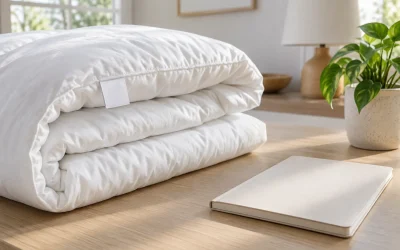
Most hybrids reach usable shape within a few hours of unrolling, but give it a full 24 to 48 hours to finish expanding and off-gassing in a ventilated room. Sleeping on it earlier won’t damage it — it simply won’t feel like the mattress you bought.
Do hybrids actually sleep cooler than all-foam mattresses?
Generally yes, and the reason is structural rather than chemical. The open coil layer allows air to circulate beneath your body, which does more for heat dissipation than gel infusions alone. Gel helps at the surface; airflow does the heavy lifting.
What kind of foundation does a hybrid need?
A solid platform or a slatted base with gaps no wider than roughly three inches. Wider slat spacing lets the coil unit flex unevenly, which creates soft spots and can void warranty coverage. Box springs are a poor match for hybrid construction.
Should I rotate or flip my hybrid mattress?
Rotate head-to-foot every three to six months; do not flip. These are single-sided builds with the comfort layers on top, so flipping puts you on the coil base. Rotation alone evens out wear where your hips and shoulders load the surface.
Final Thoughts
If you want the safest all-around choice, the Sleepmax 14″ Queen pairs genuine comfort depth with a year-long trial that lets your body cast the deciding vote. Couples and warm sleepers in larger beds should look hard at the Zinus 12″ King Cool Support, while anyone furnishing a smaller room or a growing kid’s space will get more mattress than they paid for from the Coolvie 14″ Twin Euro Top. Any of the three will outperform a worn-out bed dramatically — and the best mattress remains the one matched to how you actually sleep, not the one with the longest feature list.