Key takeaways
- Suspension and arc length: Longer chains produce a slower, longer pendulum swing — the kind that lulls rather than agitates. Look for adjustable chains and, ideally, spring hardware; springs absorb the small jolts that keep your inner ear alert. Aim to hang the seat 17–19 inches off the deck with at least 4 feet of chain above it.
- Back angle and seat depth: A roll-back or contoured backrest that reclines slightly past vertical lets your shoulders drop and your breathing slow. Flat, 90-degree backs force postural muscles to stay engaged, which is the opposite of what you want at dusk. Deep seats (20 inches or more) let you tuck your legs up.
- Load rating and frame integrity: A 700–880 lb capacity isn’t about seating four adults; it’s about eliminating the flex and creak that your brain registers as instability. Kiln-dried hardwood or powder-coated aluminum both work. Avoid thin softwood slats and stapled joinery.
- Shade and light control: If you’ll use the swing in daylight, a canopy protects against the UV exposure that fades cushions and, more importantly, gives you a dim retreat when your circadian system needs a break from glare. If you’ll use it after sunset, prioritize warm, low-level lighting over bright fixtures.
- Mounting reality check: Ceiling-hung swings need joists or a solid beam rated well above the swing’s capacity. If you’re not certain what’s above your porch ceiling, buy a freestanding model with its own A-frame stand — a swing you’re nervous about is a swing that never relaxes you.
What's inside
Most people shop for a porch swing thinking about summer afternoons and lemonade. As someone who spends their working life studying rest, I’d argue the real value shows up in the twenty minutes before bed — or during that stubborn 3 p.m. energy trough when your body wants motion, not caffeine. Gentle rocking at roughly 0.25 to 1 Hz, the unhurried pace a well-hung swing naturally settles into, is the same rhythm that calms an infant and the same one sleep researchers have used to deepen slow-wave activity in adults. The trouble is that most swings sold online don’t deliver that rhythm. They creak, they list to one side, they seat you at a spine-punishing angle, or the chains are set so short that you get a nervous jiggle instead of a long, sedating arc.
This guide approaches porch swings the way I’d approach a mattress or a blackout curtain: as a piece of sleep-adjacent equipment that either supports your nervous system or works against it. Below you’ll find the models worth your money in 2026, judged on swing arc and suspension quality, back and lumbar geometry, weather durability, load rating, and how easy each one is to hang correctly. I’ve also included a buying framework and answers to the questions I hear most often from clients trying to build a genuine wind-down routine outdoors.
As an Amazon Associate we earn from qualifying purchases.



How to Choose a Porch Swing (2026)
- Suspension and arc length: Longer chains produce a slower, longer pendulum swing — the kind that lulls rather than agitates. Look for adjustable chains and, ideally, spring hardware; springs absorb the small jolts that keep your inner ear alert. Aim to hang the seat 17–19 inches off the deck with at least 4 feet of chain above it.
- Back angle and seat depth: A roll-back or contoured backrest that reclines slightly past vertical lets your shoulders drop and your breathing slow. Flat, 90-degree backs force postural muscles to stay engaged, which is the opposite of what you want at dusk. Deep seats (20 inches or more) let you tuck your legs up.
- Load rating and frame integrity: A 700–880 lb capacity isn’t about seating four adults; it’s about eliminating the flex and creak that your brain registers as instability. Kiln-dried hardwood or powder-coated aluminum both work. Avoid thin softwood slats and stapled joinery.
- Shade and light control: If you’ll use the swing in daylight, a canopy protects against the UV exposure that fades cushions and, more importantly, gives you a dim retreat when your circadian system needs a break from glare. If you’ll use it after sunset, prioritize warm, low-level lighting over bright fixtures.
- Mounting reality check: Ceiling-hung swings need joists or a solid beam rated well above the swing’s capacity. If you’re not certain what’s above your porch ceiling, buy a freestanding model with its own A-frame stand — a swing you’re nervous about is a swing that never relaxes you.
The Best Porch Swings (2026) Reviewed
VINGLI 5 FT Heavy Duty Porch Swing with Cushion
The best all-around choice for restorative use: the heavy wood frame and 880-lb rating keep the ride silent and dead-steady, and the adjustable chains let you dial in a genuinely slow arc rather than accepting whatever the factory chose. The included cushion is the detail that matters most here — bare slats create pressure points that pull your attention back into your body instead of letting it drift.
Amish Casual Heavy Duty Porch Swing with Cup Holders
The roll-back profile is the standout feature, cradling the lumbar curve in a way that few mass-produced swings manage, and the American-made cedar construction should outlast several rounds of cushions. A strong pick if you want one piece of furniture you’ll never think about again.
Wooden Porch Swing 2-Seater with High Backrest and Deep Seat
My top recommendation for anyone who actually wants to doze outdoors: the high backrest supports the head and neck, the deep seat allows a semi-reclined posture, and the 7mm springs smooth out the micro-jolts that ordinary chain-only hangs transmit straight to your spine.
VINGLI XL 5 FT Pro Wooden Porch Swing with Cup Holders
Essentially the flagship VINGLI with more room and integrated cup holders — worth the upgrade if two adults will share it regularly, since the extra width prevents the shoulder-crowding that makes long sessions unrestful.
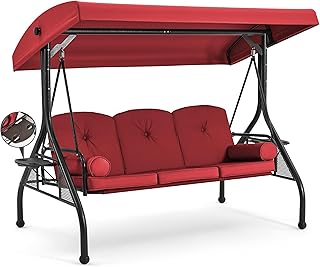
3 Seat Porch Swing with Adjustable Canopy and Stand
The most versatile option for renters or anyone without suitable ceiling joists, and the convertible flat-bed mode makes it a legitimate outdoor nap platform rather than just a bench. The adjustable canopy gives you real control over light exposure through the afternoon.
Frequently Asked Questions
Can a porch swing actually improve my sleep?
Indirectly, and meaningfully. Slow rocking is associated with reduced sympathetic arousal and easier sleep onset, and a swing gives you a screen-free, low-light place to spend the last half hour of the evening. The swing isn’t the intervention — the routine it anchors is.
How high should I hang the seat?
Roughly 17 to 19 inches from the deck surface, so your feet rest flat with knees near hip height. Leave at least 3 feet of clearance behind the swing and 2 feet in front so you’re not unconsciously bracing against a wall or railing.
Do I need cushions, or are wooden slats fine?
For short sits, slats are fine. For anything approaching a nap or a long wind-down, use a cushion at least 3 inches thick with a removable, washable cover — pressure discomfort is one of the most common reasons people abandon outdoor rest spaces.
Is aluminum better than wood?
It’s a maintenance question more than a comfort one. Powder-coated aluminum frames resist rot and need almost no upkeep, which makes them ideal for humid or coastal climates. Hardwood feels warmer and dampens vibration slightly better, but expects a seal or stain every couple of seasons.
Final Thoughts
If you want one swing that does everything well, the VINGLI 5 FT Heavy Duty is the safest bet — solid, quiet, and cushioned out of the box. For genuine outdoor rest, the 2-Seater with High Backrest and 7mm springs offers the best head support and smoothest motion of anything here. And if drilling into your porch ceiling isn’t an option, the freestanding 3 Seat Swing with Adjustable Canopy delivers a convertible swing bed with no mounting anxiety at all.