Key takeaways
- Aim for medium to medium-firm, not soft: Side sleepers often reach for plush and regret it. What you actually want is a surface that lets the shoulder sink an inch or two while the midsection stays supported — that’s a medium-firm core with a compliant comfort layer, not a soft slab throughout.
- Look for zoning: A 5- or 7-zone latex layer varies pinhole density along the length of the bed, softening under shoulders and firming under hips and lumbar. For side sleeping this is the single highest-value feature you can pay for.
- Know your latex type: Dunlop is denser and more supportive underfoot; Talalay is airier and more pressure-relieving near the surface. Many of the best side-sleeper builds use Dunlop below and a softer layer above.
- Mind total height relative to body weight: Under about 130 lb, a 4–6 inch latex slab on a slatted base can be plenty. Above roughly 200 lb, look for 10–12 inches so your hip doesn’t bottom out into the foundation.
- Verify the certifications: GOLS covers organic latex content, GOTS the cotton and wool, and CertiPUR-US applies to any polyfoam in a hybrid. Terms like “natural” are unregulated on their own — the certificate is the substance.
What's inside
Side sleeping concentrates your entire body weight onto two narrow zones — the shoulder and the hip — while leaving the waist and knees comparatively unloaded. When a mattress can’t yield at those pressure points, the shoulder joint compresses and the lumbar spine twists out of neutral, which is why so many side sleepers wake with a numb arm, an aching hip, or that vague stiffness that takes half a morning to shake off. Latex has become the go-to material for this sleep position because it does something foam and innersprings struggle to do simultaneously: it dips locally under a shoulder while still holding the waist up, and it does so without the slow, sinking lag of memory foam.
This guide looks at the latex and latex-hybrid mattresses worth considering in 2026 specifically through a side-sleeping lens — Dunlop versus Talalay feel, why zoned construction matters more for you than for a back sleeper, how thickness interacts with body weight, and where a topper makes more sense than a whole new bed. Below you’ll find the current standouts, followed by a buying framework and answers to the questions that come up most often in sleep consultations.
As an Amazon Associate we earn from qualifying purchases.


🛒 Best Price Today on Amazon
Prime members get fast, free shipping on everything above, plus member-only deals. New members get a 30-day free trial — cancel anytime.
How to Choose a Latex Mattress For Side Sleepers (2026)
- Aim for medium to medium-firm, not soft: Side sleepers often reach for plush and regret it. What you actually want is a surface that lets the shoulder sink an inch or two while the midsection stays supported — that’s a medium-firm core with a compliant comfort layer, not a soft slab throughout.
- Look for zoning: A 5- or 7-zone latex layer varies pinhole density along the length of the bed, softening under shoulders and firming under hips and lumbar. For side sleeping this is the single highest-value feature you can pay for.
- Know your latex type: Dunlop is denser and more supportive underfoot; Talalay is airier and more pressure-relieving near the surface. Many of the best side-sleeper builds use Dunlop below and a softer layer above.
- Mind total height relative to body weight: Under about 130 lb, a 4–6 inch latex slab on a slatted base can be plenty. Above roughly 200 lb, look for 10–12 inches so your hip doesn’t bottom out into the foundation.
- Verify the certifications: GOLS covers organic latex content, GOTS the cotton and wool, and CertiPUR-US applies to any polyfoam in a hybrid. Terms like “natural” are unregulated on their own — the certificate is the substance.
The Best Latex Mattress For Side Sleepers (2026)s Reviewed
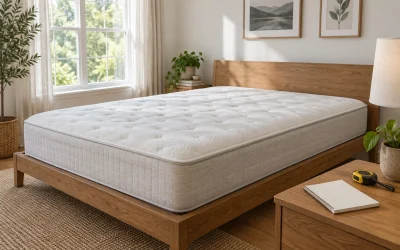
10 Inch Full Latex Hybrid Mattress in a Box
This one pairs a latex-and-memory-foam comfort layer with individually pocketed springs, which gives you contouring at the shoulder plus the deeper pushback that heavier side sleepers need at the hip. The 120-night trial and 20-year warranty are unusually generous for the price bracket, making it a low-risk first step into latex.
Organic Latex Mattress — Queen
A straightforward, chemistry-light all-latex build for buyers whose priority is materials transparency as much as comfort. Expect a responsive, buoyant surface that lets you change positions in the night without the trapped feeling of memory foam — a real advantage if you rotate between side and back.
Pure Green Natural Latex Mattress, Full 4″
At four inches this is a slim, zoned Dunlop slab, and it performs best for lighter side sleepers or over a firm platform or existing supportive base. The zonal construction is the standout: shoulder relief is noticeably better than you’d expect from a mattress this thin.
100% Natural Latex Mattress, 90×200cm
A single-size, compression-resistant natural latex mattress aimed squarely at joint and lower-back complaints, with the shape retention latex is known for over years of use. The narrow European width makes it a strong pick for guest rooms, adjustable frames, and solo sleepers on a Euro-size base.
Coolvie 12 Inch Latex Hybrid, Queen
The thickest option here, and the one I’d point warm sleepers toward — the latex comfort layer over pocketed coils moves air far better than an all-foam bed of the same height. Motion isolation is good enough for couples, and 12 inches of build height suits mid- to higher-weight side sleepers well.
Frequently Asked Questions
Is latex actually better than memory foam for side sleepers?
For most, yes — latex relieves shoulder and hip pressure without the delayed rebound that makes turning over feel like work. Memory foam contours more dramatically, but that same property can let the hip drop too far and pull the spine out of alignment.
How firm should my latex mattress be if I sleep on my side?
Medium to medium-firm is the sweet spot for most adults. Lighter sleepers under roughly 130 lb often do better one step softer, while those over 230 lb usually need firmer support to keep the hips from sinking past neutral.
Can a topper fix my current mattress instead?
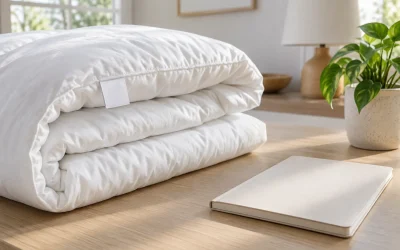
If your existing mattress is supportive but simply too hard at the shoulder, a zoned three-inch latex topper like the 7 Zone GOLS-certified option can solve the problem for a fraction of the cost. It won’t rescue a sagging or genuinely worn-out bed, though — support has to come from underneath.
Do latex mattresses sleep hot?
Far less than all-foam beds. The open-cell structure and pinhole coring move air passively, and hybrid builds with pocketed coils add a second convection path — which is why the 12-inch hybrid is the pick if you run warm.
Final Thoughts
If you want the most forgiving all-rounder for side sleeping, the 10 Inch Full Latex Hybrid delivers zoned-feeling shoulder relief with a trial period long enough to know for sure. Warm sleepers and couples should go straight to the Coolvie 12 Inch Latex Hybrid, and anyone whose mattress is supportive but punishing at the shoulder should try the 7 Zone Organic Latex Topper before replacing the bed entirely.