Key takeaways
- Footprint versus storage: Fabric tents collapse into a closet and suit apartments or shared rooms; hemlock cabins measuring around 35″ wide or a three-person bench need a permanent home. Measure the wall you’d sacrifice before you measure the sauna.
- Dry heat or steam-assisted: Models with a 2.6L or 3L steamer feel warmer faster and are gentler on dry sinuses, but they add humidity to the room and require draining. Dry cabins heat more slowly and leave no moisture behind — a better fit for carpeted bedrooms.
- Timer and heat granularity: Nine heat levels and a 99-minute timer sound like overkill until you’re building a routine. For sleep purposes you want the ability to sit at a moderate setting for 20–30 minutes and have the unit shut itself off, rather than babysitting a dial.
- Low EMF and heater placement: Look for an explicit low-EMF claim and note where the emitters sit. Ceramic and carbon panels positioned at back and calf level warm you evenly; a single rear panel leaves your front cool and tempts you to crank the heat.
- Red light wavelengths, if offered: Genuine red light therapy is specified in nanometers — 660nm and 850nm are the usual pairing. Seven-color mood lighting is pleasant ambience, not therapy, and shouldn’t carry a price premium.
What's inside
Most people shopping for a home sauna aren’t chasing athletic recovery — they’re chasing a decent night’s sleep. From a sleep-wellness standpoint, that instinct is well-founded: core body temperature has to fall roughly one to two degrees Fahrenheit for sleep to begin, and passive heating followed by a natural cooldown accelerates that drop. The trouble is that the market has flooded with lookalike tents and cabins whose specs are written to impress rather than inform, and the difference between a unit you’ll use four nights a week and one that lives folded behind the couch usually comes down to details nobody advertises.
This guide looks at home infrared saunas through the lens of realistic, repeatable use: how quickly a unit reaches a usable temperature, whether the heat is dry or steam-assisted, how much floor space it genuinely claims once assembled, and whether the controls are simple enough to operate at 9 p.m. without reading a manual. Below you’ll find current standout options, a buying framework, and answers to the questions that come up most often once a sauna is actually in the room.
As an Amazon Associate we earn from qualifying purchases.


🛒 Best Price Today on Amazon
Prime members get fast, free shipping on everything above, plus member-only deals. New members get a 30-day free trial — cancel anytime.
How to Choose a/an Infrared Sauna For Home Use (2026)
- Footprint versus storage: Fabric tents collapse into a closet and suit apartments or shared rooms; hemlock cabins measuring around 35″ wide or a three-person bench need a permanent home. Measure the wall you’d sacrifice before you measure the sauna.
- Dry heat or steam-assisted: Models with a 2.6L or 3L steamer feel warmer faster and are gentler on dry sinuses, but they add humidity to the room and require draining. Dry cabins heat more slowly and leave no moisture behind — a better fit for carpeted bedrooms.
- Timer and heat granularity: Nine heat levels and a 99-minute timer sound like overkill until you’re building a routine. For sleep purposes you want the ability to sit at a moderate setting for 20–30 minutes and have the unit shut itself off, rather than babysitting a dial.
- Low EMF and heater placement: Look for an explicit low-EMF claim and note where the emitters sit. Ceramic and carbon panels positioned at back and calf level warm you evenly; a single rear panel leaves your front cool and tempts you to crank the heat.
- Red light wavelengths, if offered: Genuine red light therapy is specified in nanometers — 660nm and 850nm are the usual pairing. Seven-color mood lighting is pleasant ambience, not therapy, and shouldn’t carry a price premium.
The Best Infrared Sauna For Home Use (2026)s Reviewed
Infrared Sauna Tent with 3L Steamer
The 3L steamer, nine heat levels, and five-layer insulated fabric make this the most forgiving entry point for anyone testing whether sauna sessions actually improve their sleep before committing to a cabin. The included folding chair and remote mean the whole setup can be running within a few minutes of unpacking, and the 99-minute timer removes any need to watch a clock mid-session.
1–2 Person Infrared Sauna with Red Light Therapy
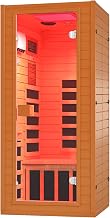
A dry-heat cabin at 40″ x 36″ x 73″ is the sweet spot for solo users who want a real enclosure without remodeling a room, and the Bluetooth and radio integration is more useful than it sounds when you’re aiming for 30 quiet minutes. Expect a longer preheat than any steam tent, so plan sessions rather than improvising them.
OUTEXER Far Infrared Hemlock Sauna
Canadian hemlock construction, a 1200W low-EMF heating system, and a tempered glass door give this compact room a build quality closer to a spa installation than a home appliance. At roughly 35″ x 28″ it’s snug by design, which is precisely why it holds temperature so efficiently.
3 Person Ceramic Infrared Sauna
Combining far and near infrared with ceramic emitters and red light therapy, this is the pick for households where more than one person will use the sauna regularly. The granite backdrop and deluxe glass front make it presentable enough for a finished basement or converted spare room, though you’ll want to confirm your circuit can support it.
Infrared Sauna Box with 660nm & 850nm Red Light
This portable box pairs a 1200W, 3L steamer with a properly specified 660nm and 850nm red light lamp — a rare combination at the tent price point. It’s the strongest option for someone who wants light therapy and steam without dedicating permanent floor space.
Frequently Asked Questions
When should I use a sauna if my goal is better sleep?
Aim to finish your session 90 minutes to two hours before bed. The warming phase is not what makes you sleepy — the temperature descent afterward is, and that descent needs time to unfold. Sitting in a sauna immediately before lying down can leave you too warm to fall asleep.
How long should a session last?
Twenty to thirty minutes at a moderate setting is enough for most people, and consistency matters far more than duration or intensity. Four short sessions a week will do more for your sleep architecture than one punishing hour on a Sunday.
Is a fabric tent genuinely comparable to a wooden cabin?
For the physiological effect, largely yes — your body responds to the heat load, not the material around it. Cabins offer better heat retention, a more spacious feel, and durability; tents win on cost, storage, and speed to first use.
Do I need to worry about EMF exposure?
Current evidence doesn’t establish harm from infrared heater emissions at typical distances, but low-EMF designs are widely available and cost little extra, so there’s no reason to accept a unit that omits the specification entirely.
Final Thoughts
If you’re building a sleep routine and want to start this week, the Infrared Sauna Tent with 3L Steamer is the lowest-friction choice, while the Infrared Sauna Box adds legitimate 660nm and 850nm red light for a modest step up. For a permanent installation you won’t outgrow, the OUTEXER hemlock room offers spa-grade construction in a footprint most homes can actually accommodate.