Key takeaways
- Heater coverage over raw wattage: A cabin with seven distributed carbon panels at 1200W will feel more even than a 1500W unit with two rear heaters. Look for panels at the calves, back, and side walls — cold ankles are the most common complaint in budget builds.
- Verified low EMF: Carbon-fiber and carbon-crystal heaters generally read far lower than older ceramic rods, but “low EMF” is a marketing phrase unless the listing cites measured values in milligauss at seat distance. Ask the seller if it isn’t published.
- Wood species and finish: Canadian hemlock is the sensible default — dimensionally stable, low resin, minimal aroma for anyone scent-sensitive. Interior surfaces should be unsealed; varnish and adhesives off-gas at 140°F.
- Footprint, ceiling, and power: Measure the diagonal clearance of your doorway, not just the room. Most single-person cabins land between 35 and 40 inches wide and run on a standard 110V outlet, but they should not share a circuit with a space heater or dryer.
- Session controls that support a routine: Digital temperature setpoints, a timer, and an adjustable range (roughly 25–60°C) matter more than novelty extras. Reproducibility is what turns a sauna into a sleep habit rather than an occasional indulgence.
What's inside
Most people shopping for a home sauna aren’t chasing a spa aesthetic — they’re chasing sleep. As a sleep-wellness practitioner, I see the same pattern weekly: someone lies down at 11 p.m., body still humming from the day, and spends forty minutes waiting for a nervous system that never got the signal to stand down. Passive heating is one of the few at-home interventions that reliably sends that signal. Warm the body’s shell, let it dump heat afterward, and core temperature drops on a steeper curve than it would on its own — which is precisely the physiological cue that precedes deep, consolidated sleep.
The catch is that “infrared sauna” now covers everything from a $600 zip-up fabric pod to a 400-pound hemlock cabin that needs a dedicated circuit. Heater count, EMF output, wood species, ceiling height, and how honestly a brand reports wattage all change the experience enormously. This guide breaks down what actually matters for a home installation, then walks through the single-person indoor units worth considering in 2026 — with an emphasis on the ones that fit real apartments, spare bedrooms, and garage gyms rather than showroom floors.
As an Amazon Associate we earn from qualifying purchases.


🛒 Best Price Today on Amazon
Prime members get fast, free shipping on everything above, plus member-only deals. New members get a 30-day free trial — cancel anytime.
How to Choose a/an Indoor Infrared Sauna (2026)
- Heater coverage over raw wattage: A cabin with seven distributed carbon panels at 1200W will feel more even than a 1500W unit with two rear heaters. Look for panels at the calves, back, and side walls — cold ankles are the most common complaint in budget builds.
- Verified low EMF: Carbon-fiber and carbon-crystal heaters generally read far lower than older ceramic rods, but “low EMF” is a marketing phrase unless the listing cites measured values in milligauss at seat distance. Ask the seller if it isn’t published.
- Wood species and finish: Canadian hemlock is the sensible default — dimensionally stable, low resin, minimal aroma for anyone scent-sensitive. Interior surfaces should be unsealed; varnish and adhesives off-gas at 140°F.
- Footprint, ceiling, and power: Measure the diagonal clearance of your doorway, not just the room. Most single-person cabins land between 35 and 40 inches wide and run on a standard 110V outlet, but they should not share a circuit with a space heater or dryer.
- Session controls that support a routine: Digital temperature setpoints, a timer, and an adjustable range (roughly 25–60°C) matter more than novelty extras. Reproducibility is what turns a sauna into a sleep habit rather than an occasional indulgence.
The Best Indoor Infrared Saunas (2026) Reviewed
1-Person Far Infrared Home Sauna with 7 Low-EMF Carbon Heaters
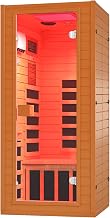
Seven distributed carbon panels is the standout spec here, and it shows up as genuinely even warmth rather than a hot back and chilly shins. The Bluetooth audio and seven-color chromotherapy lighting are secondary, but dimming to amber for an evening session is a smart way to avoid undoing your melatonin with bright white LEDs.
35.2″ Single-Person Sauna Room, 1200W Hemlock Cabin
At just over 35 inches wide, this is the unit I recommend most often to apartment dwellers, and the 25–60°C adjustable range makes it easy to start conservatively at 45°C and work upward. Heat-up is brisk for the wattage, typically usable in 12–15 minutes.
Far Infrared Sauna Box with Red Light Therapy
A collapsible full-size box at roughly 5.9 × 2.9 × 2.6 feet, this suits renters who need the footprint to disappear between sessions. Carbon-crystal heating with nine intensity levels gives surprisingly fine control, though it won’t match a rigid cabin for heat retention on cold nights.
Canadian Hemlock 800W Sauna Spa Room
The 800W draw is the gentlest on this list, which is a feature rather than a flaw if you’re heat-sensitive or building tolerance. Tempered glass door, reading lights, and circulation vents make longer 30-minute sessions comfortable, and assembly is genuinely manageable for two people in an afternoon.
1-Person Sauna with Red Light Glow and Oxygen Ionizer
The 1350W five-panel layout heats fastest of anything here — useful if your window between the gym and bed is narrow. The 308 × 220mm red light panel and ionizer are pleasant additions rather than clinical ones; buy it for the heating performance and digital controller.
Frequently Asked Questions
How long before bed should I use a sauna?
Aim to finish 90 minutes to two hours before lights out. That leaves time for the post-session heat dissipation that drives core temperature down. Ending a session ten minutes before bed usually backfires — you’ll be too warm to fall asleep.
What temperature and duration should a beginner start with?
Twenty minutes at 45–50°C is plenty for the first two weeks. Infrared warms you at lower air temperatures than a traditional sauna, so resist the urge to chase 60°C early. Hydrate before, not just after.
Will a sauna work in a carpeted bedroom?
Yes, with clearance. Keep 4–6 inches behind and beside the cabin, avoid pushing it against curtains, and place a thin hard mat underneath to protect fibers and ease repositioning. Check your model’s manufacturer clearance spec before installing.
Is red light therapy necessary?
No. It’s a distinct modality bundled for convenience, and the evidence base for skin and recovery outcomes is separate from the thermal effects driving sleep benefits. Treat it as a bonus, not a deciding factor.
Final Thoughts
For most buyers, the 35.2″ single-person hemlock cabin hits the best balance of footprint, adjustable control, and heat quality, while the 7-heater low-EMF model is the stronger choice if even warmth and evening-friendly lighting matter most to you. Renters and anyone short on permanent space should look hard at the collapsible Far Infrared Sauna Box — it delivers the physiological effect that counts, then folds away by morning.