Key takeaways
- Prioritize the support core, not the surface feel: A mattress marketed as “firm” can still fail if its base layer is low-density polyfoam. Hybrids with pocketed coils, or all-foam beds with a dedicated high-density transition layer, resist deep compression far better over a five-year horizon.
- Check density and coil specs: Aim for memory foam at 4 lb/ft³ or higher, base polyfoam at 1.8 lb/ft³ or higher, and coils in the 13–15 gauge range. Thicker gauge numbers mean thinner wire and quicker fatigue.
- Don’t go under 12 inches: Profile height buys you compression headroom. Twelve inches is the practical floor for heavier sleepers; 14 inches gives side sleepers enough room for the hips and shoulders to sink without hitting the base.
- Insist on reinforced edges: Perimeter foam encasement or higher-gauge border coils keep the sitting edge usable and expand your effective sleep surface — critical for couples sharing a queen.
- Read the warranty’s sag threshold: Most warranties only cover indentations past 0.75 or 1 inch, and many void without proper support. Use a slatted base with gaps of 3 inches or less, and treat the sleep trial as your real testing window.
What's inside
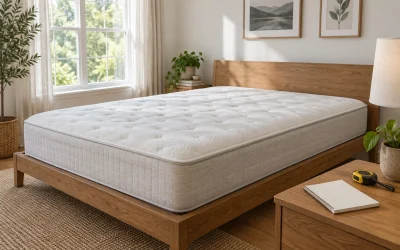
Mattress shopping changes meaningfully once combined sleeper weight climbs past roughly 230 pounds per side. Materials that feel supportive in a showroom behave differently under sustained load: comfort layers bottom out, the hips settle below the shoulders, and the lumbar curve loses its scaffolding somewhere around 2 a.m. The pattern I hear most often in sleep consultations is waking stiff, rolling into a body impression that wasn’t there six months ago, and bracing against a collapsing edge just to sit up.
Firmness by itself doesn’t fix any of that. Durability for heavier bodies comes from what sits beneath the surface feel — support-core density, coil gauge, perimeter reinforcement, and total profile height. This guide covers the specs that actually predict longevity at higher weights, then reviews five mattresses that hold their shape under real load, spanning extra-firm hybrids and reinforced all-foam builds.
As an Amazon Associate we earn from qualifying purchases.


🛒 Best Price Today on Amazon
Prime members get fast, free shipping on everything above, plus member-only deals. New members get a 30-day free trial — cancel anytime.
How to Choose a Firm Mattress For Heavy People (2026)
- Prioritize the support core, not the surface feel: A mattress marketed as “firm” can still fail if its base layer is low-density polyfoam. Hybrids with pocketed coils, or all-foam beds with a dedicated high-density transition layer, resist deep compression far better over a five-year horizon.
- Check density and coil specs: Aim for memory foam at 4 lb/ft³ or higher, base polyfoam at 1.8 lb/ft³ or higher, and coils in the 13–15 gauge range. Thicker gauge numbers mean thinner wire and quicker fatigue.
- Don’t go under 12 inches: Profile height buys you compression headroom. Twelve inches is the practical floor for heavier sleepers; 14 inches gives side sleepers enough room for the hips and shoulders to sink without hitting the base.
- Insist on reinforced edges: Perimeter foam encasement or higher-gauge border coils keep the sitting edge usable and expand your effective sleep surface — critical for couples sharing a queen.
- Read the warranty’s sag threshold: Most warranties only cover indentations past 0.75 or 1 inch, and many void without proper support. Use a slatted base with gaps of 3 inches or less, and treat the sleep trial as your real testing window.
The Best Firm Mattresses For Heavy People (2026) Reviewed
BedStory Extra Firm 14″ Hybrid
This is the most purpose-built option here for higher body weights: a genuinely extra-firm hybrid with a tall 14-inch profile aimed squarely at lumbar and hip support. The 365-night trial is unusually generous, which matters because it takes several weeks to know whether a firm bed is supporting you or simply pushing back.
SLEEP100 14″ Extra Firm Memory Foam
An all-foam pick that leans hard into spinal alignment rather than contouring comfort, with gel-infused ventilated foam to offset the heat retention that dense foam usually brings. Best suited to back and stomach sleepers who want a flat, unyielding surface.
DreamCloud 12″ Hybrid
DreamCloud’s coil-on-foam construction delivers responsive lift with less of the stuck-in-quicksand sensation heavier sleepers often report from thick memory foam. At 12 inches it’s the slimmest recommendation on this list, but the innerspring core does the structural heavy lifting well.
Sealy Dreamlife 14″ Foam
Sealy’s transition layer is the quiet strength here — it bridges the gel memory foam surface and the base so weight distributes gradually instead of dropping straight through. A sensible choice for buyers who want a recognized brand and a boxed-mattress price.
Sweetnight CoolNest 14″
The five-zone layout firms up under the midsection while softening at the shoulders, which helps heavier side sleepers avoid the hip-dip problem. Note the medium feel: pick this one if you want pressure relief with structure, not maximum firmness.
Frequently Asked Questions
What weight actually requires a specialized mattress?
Around 230 pounds per sleeper is the common industry threshold. Above it, standard comfort layers compress faster and standard warranties become harder to claim against.
Is firmer always better?
No. Excessive firmness creates pressure points at the shoulders and hips, particularly for side sleepers. What you want is a firm support core with enough comfort layer to cushion the joints.
Should I choose foam or a hybrid?
Hybrids generally hold up longer at higher weights because steel coils fatigue more slowly than foam. All-foam beds work well if the density specs are strong and you prefer minimal motion transfer.
How long should these last?
Expect six to eight years for a well-specified hybrid and closer to five to seven for all-foam under heavier use. Rotating the mattress head-to-foot every three months meaningfully slows body impressions.
Final Thoughts
For most heavier sleepers, the BedStory Extra Firm 14″ Hybrid offers the best combination of profile height, targeted lumbar support, and a year-long trial to prove itself. The DreamCloud 12″ Hybrid is the stronger pick if you want coil responsiveness without an extra-firm surface, while the SLEEP100 14″ serves back and stomach sleepers who want uncompromising flatness. Match the support core to your sleep position first — comfort feel is the easier variable to adjust.