Key takeaways
- Setup friction: Count the steps between “saw is stored” and “saw is cutting.” Rolling and folding stands that deploy in one motion get used at sensible hours; saws that require clearing a bench get used at midnight.
- Fence accuracy: A rack-and-pinion fence that locks parallel every time removes the measuring-and-remeasuring loop that turns a twenty-minute cut list into a two-hour one. Precision here buys back evening time.
- Dust management: Look for a shrouded blade, a sealed lower housing, and a 2-1/2-inch port you can actually connect to a shop vac. Airborne fines irritate airways for hours and are a genuine, under-discussed sleep disruptor.
- Noise and vibration: Direct-drive universal motors are loud by design, but a heavy, flat, well-damped table meaningfully reduces the shrill component that carries through walls. Budget for muffs regardless.
- Capacity versus footprint: Be honest about your widest realistic cut. A 32-inch rip is transformative for sheet goods and dead weight if you only build drawers and shelves.
What's inside
I came to woodworking sideways — through sleep. A decade of pulling clients out of frayed sleep schedules taught me that the last two hours before bed set the tone for everything after, and for a surprising number of hobbyist builders, those hours happen in a garage with a spinning blade. That is where the table saw problem really begins. Most buying advice treats these machines as spec sheets: amps, rip capacity, RPM. What it misses is that a saw you dread hauling out is a saw you end up using at 11 p.m. in a rush, tired, ears ringing, with fine dust still drifting through the house when you finally lie down.
This guide evaluates 2026’s leading portable and jobsite saws on the criteria that protect your fingers and your recovery alike: how quickly they deploy, how cleanly and quietly they run, whether the fence stays true when you are too fatigued to verify it, and how completely they disappear when the session ends. Below are the models genuinely worth buying this year, followed by a short framework for matching one to your shop, your schedule, and your household.
As an Amazon Associate we earn from qualifying purchases.


How to Choose a Table Saw (2026)
- Setup friction: Count the steps between “saw is stored” and “saw is cutting.” Rolling and folding stands that deploy in one motion get used at sensible hours; saws that require clearing a bench get used at midnight.
- Fence accuracy: A rack-and-pinion fence that locks parallel every time removes the measuring-and-remeasuring loop that turns a twenty-minute cut list into a two-hour one. Precision here buys back evening time.
- Dust management: Look for a shrouded blade, a sealed lower housing, and a 2-1/2-inch port you can actually connect to a shop vac. Airborne fines irritate airways for hours and are a genuine, under-discussed sleep disruptor.
- Noise and vibration: Direct-drive universal motors are loud by design, but a heavy, flat, well-damped table meaningfully reduces the shrill component that carries through walls. Budget for muffs regardless.
- Capacity versus footprint: Be honest about your widest realistic cut. A 32-inch rip is transformative for sheet goods and dead weight if you only build drawers and shelves.
The Best Table Saws (2026) Reviewed
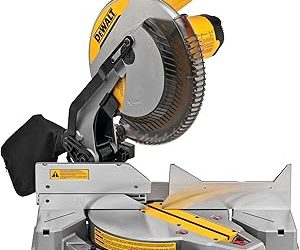
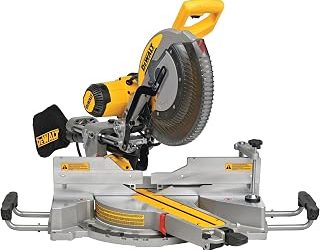
DEWALT DWE7491RS
The most complete portable saw on the market, and the one I recommend to anyone building furniture from plywood: 32-1/2 inches of rip capacity, a genuinely repeatable rack-and-pinion fence, and a rolling stand that deploys in seconds. The 15-amp, 4800 RPM motor cuts hardwood without bogging, and the low setup cost keeps late, rushed sessions off your calendar.
SKIL TS6307-00
The best-value 10-inch jobsite saw available, with a smooth rack-and-pinion fence and a folding stand that stows against a wall. It runs slightly quieter under load than several rivals in its class, and its dust chute clears the cabinet more effectively than the price suggests.
DEWALT DWE7485 Compact
An 8-1/4-inch saw that trades rip capacity for a footprint one person can carry up stairs and lift onto a bench single-handed. Ideal for apartments, small garages, and anyone whose shop must be fully packed away each night.
Evolution R10TS
A thoughtfully specified 10-inch saw with a zero-clearance throat plate and an included dado plate — features usually reserved for pricier machines. The 26-inch rip and 3-3/8-inch depth of cut handle most furniture work, and the zero-clearance insert noticeably reduces tearout and stray dust.
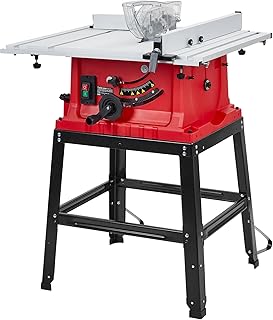
10-Inch 5000 RPM Saw with Stand
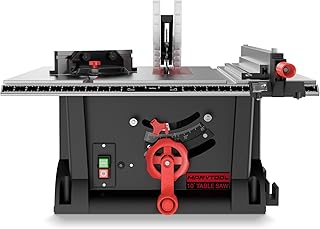
A generous 36 x 25-inch tabletop, a full stand, and a protective cover make this the strongest entry point for a first shop. Support the extension wings and check the fence against a square before your first cut, and it will carry you through years of weekend projects.
Frequently Asked Questions
Is a 10-inch saw always better than an 8-1/4-inch?
No. Ten-inch saws offer more depth of cut and wider blade selection, but 8-1/4-inch models are lighter, cheaper to feed, and easier to store. Choose by the thickest stock you actually cut.
Do I need the stand, or can I use a bench?
Get the stand. A saw at correct working height with clear outfeed encourages square shoulders and steady feed pressure; hunching over a low bench builds the fatigue that precedes most kickback incidents.
How late is too late to run a table saw?
Two rules I give clients: stop cutting ninety minutes before your target bedtime, and never start a new cut list after your second yawn. Loud, high-arousal work close to sleep delays sleep onset, and tired hands make expensive mistakes.
Can I run a dado stack on these saws?
Only the Evolution R10TS ships dado-ready among the models here. Most compact DEWALT saws have short arbors that will not accept a stack — verify arbor length before buying blades.
Final Thoughts
If you build furniture from sheet goods, the DEWALT DWE7491RS is worth every dollar for its rip capacity and effortless deployment. The SKIL TS6307-00 delivers most of that capability for considerably less, and the DEWALT DWE7485 is the right answer for tight spaces where the shop has to vanish before bedtime.