Key takeaways
- Lift mechanism and mattress weight range: Gas struts are calibrated to a specific mattress weight window, usually somewhere between 50 and 100 pounds for a queen. Pair a heavy hybrid with light struts and the bed slams; pair a thin foam mattress with heavy struts and it fights you on the way down. Check the rating before you buy the mattress.
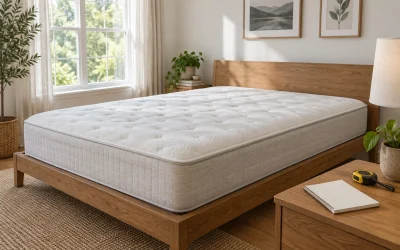
- Mattress depth and support deck: Most wall beds cap out around 10 to 12 inches and use a slatted deck instead of a box spring. Slat spacing under three inches is what keeps foam from sagging between rails — the single biggest factor in whether the bed feels like a real bed a year from now.
- Moisture and airflow: A mattress stored vertically in a closed cabinet loses the passive drying it would normally get. Look for ventilated backing or slats with open gaps, and plan to leave the bed open for a few hours weekly in humid climates.
- Wall anchoring and floor clearance: Vertical queen units project roughly 16 to 20 inches when closed and need studs or heavy-duty anchors behind them. Measure ceiling height and the swing arc before committing to a wall — sloped ceilings and low-hanging fixtures are the most common installation surprise.
- Integrated lighting and charging: Built-in LEDs and USB ports are genuinely useful, but warm, dimmable light supports melatonin release while cool white overhead light suppresses it. Treat a charging station as a convenience for a clock or e-reader, not an invitation to keep a phone at pillow height.
What's inside
Square footage is the quiet enemy of good sleep. When the guest room doubles as a home office, or the studio apartment has to be a bedroom by 11 p.m. and a workspace by 8 a.m., something usually gets sacrificed — and it is almost always the sleep surface. An inflatable mattress on the floor or a fold-out sofa with a bar under the lumbar spine is not a neutral choice; poor surface support fragments sleep architecture and leaves guests (or you) waking unrefreshed. A queen Murphy bed solves the spatial problem without asking the sleeper to pay for it.
This guide looks at queen wall beds through a sleep-quality lens rather than a purely decorative one: how the lift mechanism affects whether the bed actually gets used nightly, which mattress depths the frames can accommodate, how airflow and moisture behave when a mattress spends its days upright, and whether integrated lighting and charging help or quietly sabotage your wind-down routine. Below are the models worth shortlisting in 2026, followed by the specifications that matter most.
As an Amazon Associate we earn from qualifying purchases.


🛒 Best Price Today on Amazon
Prime members get fast, free shipping on everything above, plus member-only deals. New members get a 30-day free trial — cancel anytime.
How to Choose a Murphy Bed Queen (2026)
- Lift mechanism and mattress weight range: Gas struts are calibrated to a specific mattress weight window, usually somewhere between 50 and 100 pounds for a queen. Pair a heavy hybrid with light struts and the bed slams; pair a thin foam mattress with heavy struts and it fights you on the way down. Check the rating before you buy the mattress.
- Mattress depth and support deck: Most wall beds cap out around 10 to 12 inches and use a slatted deck instead of a box spring. Slat spacing under three inches is what keeps foam from sagging between rails — the single biggest factor in whether the bed feels like a real bed a year from now.
- Moisture and airflow: A mattress stored vertically in a closed cabinet loses the passive drying it would normally get. Look for ventilated backing or slats with open gaps, and plan to leave the bed open for a few hours weekly in humid climates.
- Wall anchoring and floor clearance: Vertical queen units project roughly 16 to 20 inches when closed and need studs or heavy-duty anchors behind them. Measure ceiling height and the swing arc before committing to a wall — sloped ceilings and low-hanging fixtures are the most common installation surprise.
- Integrated lighting and charging: Built-in LEDs and USB ports are genuinely useful, but warm, dimmable light supports melatonin release while cool white overhead light suppresses it. Treat a charging station as a convenience for a clock or e-reader, not an invitation to keep a phone at pillow height.
The Best Queen Murphy Beds of 2026, Reviewed
Hlivelood Queen Murphy Bed with LED Lights
The dual gas struts here are well-matched to mid-weight queen mattresses, giving a controlled descent that makes nightly use realistic rather than a chore. The integrated LED strips are the standout for sleep hygiene — soft perimeter light lets you read or navigate the room without triggering the bright overhead fixture that resets your wind-down.
AMERLIFE Queen Murphy Bed with Sliding Tambour Door
The tambour door is the smartest detail in this category: it conceals the bed completely without the swing clearance a hinged cabinet demands, which matters in narrow rooms. Bedside shelves and a charging station keep essentials off the floor, and the fluted oak finish reads as furniture rather than storage, which helps the room feel like a bedroom at night.
Merax Space-Saving White Murphy Bed
Adjustable shelving flanking the bed is the practical advantage — you can size the openings to fit bedding, a white-noise machine, or books instead of accepting fixed cubbies. It is the most straightforward option for a study or guest room where the bed is open perhaps a few nights a month and the storage earns its keep the rest of the time.
LIVAUVEAD Farmhouse Queen Murphy Bed
A clean, uncluttered take on the farmhouse wall bed with a built-in charging station and a foldable frame that handles standard queen mattresses without a box spring. Best suited to guest rooms where you want the bed to disappear entirely between visits and the aesthetic to stay quiet.
Murphybedz Tuscany Cabinet Chest Bed
This is a cabinet bed rather than a wall bed: it rolls out from a chest at floor level, so no wall anchoring or ceiling clearance is required — ideal for renters and older adults who would rather not lift a frame overhead. The trade-off is the six-inch tri-fold mattress, which is comfortable for occasional guests but less supportive than a full-depth mattress for nightly sleep.
Frequently Asked Questions
Can I leave sheets and pillows on a Murphy bed?
Yes — most vertical wall beds include a retaining strap that holds bedding in place when the frame is raised. Bulky duvets and multiple pillows can interfere with the cabinet closing flush, so a fitted sheet, flat sheet, and a single pillow per side is the practical limit.
Is a Murphy bed comfortable enough for every night?
With a proper 10-to-12-inch mattress on a closely spaced slat deck, there is no meaningful difference in support compared with a conventional platform bed. Comfort problems in wall beds almost always trace back to the mattress choice or wide slat gaps, not the folding mechanism itself.
Do queen Murphy beds have to be bolted to the wall?
Vertical wall beds should always be secured to wall studs, both for tip resistance and to keep the strut geometry aligned over time. Cabinet-style beds like the Tuscany sit freestanding on the floor and generally do not require anchoring, which makes them the better choice for rentals.
Will a folded mattress develop mold or odor?
It can if the room runs humid and the bed stays closed for months. Open the bed periodically to let the mattress breathe, avoid closing it immediately after stripping damp sheets, and choose a frame with a ventilated deck rather than a solid backing panel.
Final Thoughts
For a bed you will actually open every night, the Hlivelood with its warm LED lighting and well-tuned gas struts is the strongest all-around pick, while the AMERLIFE tambour-door cabinet is the one to choose when floor clearance is tight and you want the unit to pass as ordinary furniture. If you rent, cannot drill into studs, or want to avoid overhead lifting entirely, the Murphybedz Tuscany cabinet bed is the sensible compromise — just plan on it serving guests rather than replacing your primary mattress.