Key takeaways
- Noise transfer: Dense PVC rolls sit flush to the slab and absorb footfall and tool drops better than rigid tiles, which can drum slightly over air gaps. If a bedroom shares a wall or floor with the garage, prioritize a continuous roll or a tile with a solid, close-contact base.
- Off-gassing and odor: Any vinyl product releases some smell when first unrolled. Look for low-odor formulations, and plan to air the garage out for 48 to 72 hours with the house door closed before you consider the job finished.
- Thickness versus load: Rolls in the 2.2mm to 2.8mm range handle passenger cars comfortably. If you use a floor jack, engine hoist, or heavy toolbox casters, interlocking polypropylene tiles rated in the tens of thousands of pounds are the safer structural choice.
- Moisture management: Slabs without a vapor barrier will push moisture upward and trap it under a solid mat. Open-grid, self-draining tiles let that moisture escape and dry, which prevents the musty smell that eventually finds its way indoors.
- Cleaning realism: Choose the surface you’ll actually maintain. Smooth diamond-plate rolls hose off in minutes; textured tiles need a broom or blower to clear grit from the pattern. A floor you avoid cleaning becomes a dust source for the whole house.
What's inside
Most people think of the garage as a storage problem. As someone who spends their working life studying what wrecks a good night’s rest, I’ve come to see it as a sleep problem too. In the average attached home, the garage shares a wall — or a ceiling — with a bedroom. Every tire chirp on bare concrete, every dropped socket wrench, every dolly wheel rolling across a gritty slab travels straight into the room where someone is trying to fall asleep. Add the faint solvent smell that seeps under the connecting door, and you have a space quietly working against the household’s recovery.
Good garage flooring fixes the obvious things — stains, dust, cold concrete, hot-tire pickup — but the underrated benefit is acoustic and olfactory. The right surface dampens impact noise, keeps concrete dust out of your return-air path, and contains spills before they turn into fumes. This guide covers what actually matters when choosing between rolled mats and interlocking tiles in 2026, then reviews the five options I’d recommend to a client whose bedroom sits directly above the bay.
As an Amazon Associate we earn from qualifying purchases.



How to Choose a Flooring For Garage (2026)
- Noise transfer: Dense PVC rolls sit flush to the slab and absorb footfall and tool drops better than rigid tiles, which can drum slightly over air gaps. If a bedroom shares a wall or floor with the garage, prioritize a continuous roll or a tile with a solid, close-contact base.
- Off-gassing and odor: Any vinyl product releases some smell when first unrolled. Look for low-odor formulations, and plan to air the garage out for 48 to 72 hours with the house door closed before you consider the job finished.
- Thickness versus load: Rolls in the 2.2mm to 2.8mm range handle passenger cars comfortably. If you use a floor jack, engine hoist, or heavy toolbox casters, interlocking polypropylene tiles rated in the tens of thousands of pounds are the safer structural choice.
- Moisture management: Slabs without a vapor barrier will push moisture upward and trap it under a solid mat. Open-grid, self-draining tiles let that moisture escape and dry, which prevents the musty smell that eventually finds its way indoors.
- Cleaning realism: Choose the surface you’ll actually maintain. Smooth diamond-plate rolls hose off in minutes; textured tiles need a broom or blower to clear grit from the pattern. A floor you avoid cleaning becomes a dust source for the whole house.
The Best Flooring For Garage (2026) Options Reviewed
Swisstrax Ribtrax PRO Tiles (Pearl Grey, 24-Pack)
Commercial-grade polypropylene with a snap-together system that needs no adhesive, which makes it the cleanest-installing option here and the least likely to fill your garage with glue fumes. The ribbed surface channels water away efficiently, and the pearl grey brightens a dim bay without showing every speck of dust.
SnapLock RaceDeck Free-Flow Tiles (48-Pack)
The open-grid design is the specialist pick for damp slabs, snow-melt runoff, or wash-down bays, since water passes straight through and evaporates instead of sitting trapped underneath. With an 80,000-pound rolling load rating and US manufacturing, it handles jack stands and loaded toolboxes without deforming.
8×20 FT Diamond Plate Garage Floor Roll (2.8mm)
At 2.8mm, this is the thickest roll in the lineup, and that extra density is what makes it my default recommendation for garages under bedrooms — it deadens footsteps and dropped hardware noticeably better than thinner mats. The 20-piece tape kit keeps edges anchored so the roll doesn’t creep when you pull in.
VEVOR Garage Floor Roll (7.5 x 20 ft)
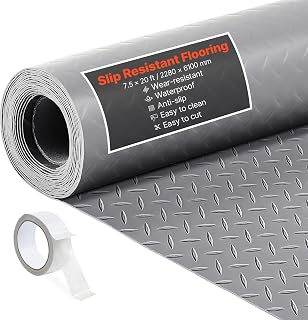
A sensible single-bay solution at 2.2mm, with double-sided tape included and a silver-grey diamond plate finish that hides tire marks well. It wipes clean quickly, which matters if you want spills contained before they have time to evaporate into the shared air space.
Armor All Jumbo XXL Garage Floor Mat (22′ x 8’10”)
Built to absorb rather than repel, this US-made pad soaks up snowmelt, rain, and oil drips instead of letting them pool and spread. It’s the one I’d point toward in wet or salted climates, where the alternative is tracked-in brine and a persistent damp smell drifting indoors.
Frequently Asked Questions
Will new garage flooring make my house smell?
Briefly, yes — vinyl rolls in particular carry a distinct odor for the first few days. Unroll the material, keep the door to the house shut, ventilate with a fan or open bay door, and let it cure before parking. The smell dissipates and shouldn’t reach living spaces afterward.
Are tiles or rolls quieter?
A continuous roll bonded tightly to the slab generally transmits less impact noise, because there’s no air cavity to resonate. Tiles win on drainage and load capacity, so if noise is your primary concern and the slab is dry, choose the roll.
Can I install over a cracked or slightly uneven slab?
Interlocking tiles bridge minor imperfections better than rolls, which telegraph every ridge and pit. Fill significant cracks first regardless, and confirm the slab is dry — tape a plastic square down overnight and check for condensation.
How much maintenance should I expect?
Very little. Sweep or blow out grit weekly, hose or damp-mop monthly, and address oil spills promptly. Open-grid tiles can be lifted individually if something soaks through to the concrete below.
Final Thoughts
If the garage sits beneath or beside a bedroom, the 8×20 FT 2.8mm diamond plate roll gives you the best combination of sound dampening and easy cleanup for the money. For a hardworking bay with moisture, heavy equipment, or wash-downs, the SnapLock RaceDeck Free-Flow tiles are the more durable answer, while Swisstrax Ribtrax PRO delivers the most polished finish for anyone who wants the space to feel like part of the house rather than an afterthought attached to it.