Key takeaways
- Rated capacity versus real-world load: Treat the printed number as a static rating, not a sway rating. Motion, entry drops, and two-person shifting multiply force at the hooks, so leave a generous cushion — a 500 lb frame is a comfortable choice for a single 200 lb sleeper who plans to rock.
- Bed length and diagonal lay: Neutral spine alignment comes from lying at roughly a 20–30 degree angle across the fabric, not straight down the centerline. That requires a bed wide enough and a stand long enough to let you spread out; short beds force the “banana” curl that produces morning back stiffness.
- Stand geometry and footprint: Wider base spread and a low center of gravity mean less lurch when you enter and a smoother, slower swing arc. Measure your space plus about two feet of clearance at the head and foot, and check for a balance strap that keeps the bed from spinning.
- Fabric and thermoregulation: Core temperature has to drop for you to fall asleep, so breathability matters more than plushness. Open cotton weaves and double-layer netting shed heat well in shade; tightly woven polyester dries faster outdoors but traps warmth in direct sun.
- Assembly, weight, and storage: A hammock you have to wrestle into place gets used twice a summer. Tool-free connections, a carry bag, and a collapsible frame are the difference between a seasonal ornament and a daily wind-down habit.
What's inside
Most people shopping for a standing hammock aren’t decorating a patio — they’re chasing better rest. A hammock’s gentle lateral sway does something a mattress can’t: it feeds slow, rhythmic input to the vestibular system, which sleep researchers have linked to faster sleep onset and longer stretches of stable, uninterrupted sleep. The catch is that the freestanding market has filled up with near-identical steel arcs and inflated capacity claims, and a poorly matched stand-and-bed pairing will fold you into a spine-compressing curl instead of the open, weightless position that makes hammock napping restorative.
This guide approaches the category from a sleep-quality standpoint rather than a purely decorative one. Below you’ll find the specifications that actually determine whether you sleep or just perch, followed by reviews of the standing hammocks worth considering in 2026 for backyards, sunrooms, balconies, and bedrooms.
As an Amazon Associate we earn from qualifying purchases.




How to Choose a Standing Hammock (2026)
- Rated capacity versus real-world load: Treat the printed number as a static rating, not a sway rating. Motion, entry drops, and two-person shifting multiply force at the hooks, so leave a generous cushion — a 500 lb frame is a comfortable choice for a single 200 lb sleeper who plans to rock.
- Bed length and diagonal lay: Neutral spine alignment comes from lying at roughly a 20–30 degree angle across the fabric, not straight down the centerline. That requires a bed wide enough and a stand long enough to let you spread out; short beds force the “banana” curl that produces morning back stiffness.
- Stand geometry and footprint: Wider base spread and a low center of gravity mean less lurch when you enter and a smoother, slower swing arc. Measure your space plus about two feet of clearance at the head and foot, and check for a balance strap that keeps the bed from spinning.
- Fabric and thermoregulation: Core temperature has to drop for you to fall asleep, so breathability matters more than plushness. Open cotton weaves and double-layer netting shed heat well in shade; tightly woven polyester dries faster outdoors but traps warmth in direct sun.
- Assembly, weight, and storage: A hammock you have to wrestle into place gets used twice a summer. Tool-free connections, a carry bag, and a collapsible frame are the difference between a seasonal ornament and a daily wind-down habit.
The Best Standing Hammocks (2026) Reviewed
ANAGOO Double Hammock with Stand
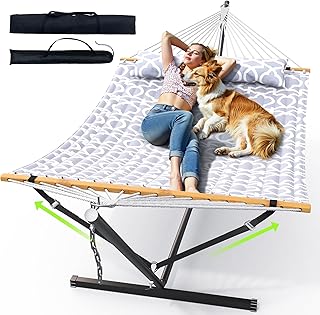
A 500 lb steel frame with a balance strap and tool-free assembly, this is the most sensible default for shared naps and adult sleepers who want a wide diagonal lay. The white two-person bed runs cool in shade, and the stability of the base makes solo entry unnervingly easy — no wobble, no clenched core.
Goutime Collapsible Hammock Stand
Three-level height adjustment up to ten feet lets you tune the sag depth, which is the single most useful control for dialing in a flat, spine-friendly position. The 550 lb rating, double-layer net, and carry bag make it the pick for anyone moving between a bedroom, a yard, and a campsite.
600 lb Hammock with Stand for Outside
The highest capacity here, and worth it for two-person lounging or heavier sleepers who want margin rather than a number that just barely clears. It ships in a carrying package, so seasonal storage doesn’t mean disassembling the whole frame every autumn.
Double Hammock with Wooden Stand
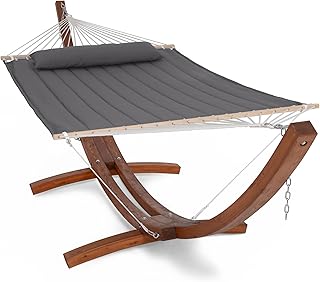
The 475 lb wooden frame is the one that earns a place indoors, reading as furniture rather than hardware in a sunroom or bedroom corner. Wood also damps vibration slightly, giving the swing a slower, quieter cadence that suits winding down before bed.
Standing Patio Hammock with Canopy
The integrated canopy is a genuine sleep feature, not a sunshade gimmick: cutting bright light suppresses the alerting signal that keeps daytime nappers hovering in light sleep. Foldable and portable in dark gray, it’s the strongest option for anyone whose best rest happens at two in the afternoon.
Frequently Asked Questions
Can you sleep overnight in a standing hammock?
Yes, and many people do so comfortably for weeks at a time. Success depends on lying diagonally, keeping the sag moderate rather than deep, and adding a small pillow under the knees if you feel lower-back tension in the first hour.
Does the rocking motion actually improve sleep?
Controlled studies on rocking beds have found shorter sleep onset and increased slow-wave activity compared to stationary sleep. The effect is strongest with slow, regular motion — roughly one gentle cycle every four seconds — rather than vigorous swinging.
Will a standing hammock fit in a bedroom or apartment?
Most freestanding models need nine to eleven feet of length and about four feet of width. Because the stand is self-supporting, there’s no drilling or joist hunting, which makes it one of the few sleep upgrades renters can install and remove in an afternoon.
How do I stop side sleeping from feeling impossible?
Loosen the bed so the fabric spreads flatter, then lie diagonally before rolling. A wider two-person bed gives you enough surface to hold a side position without the edges folding over your shoulder.
Final Thoughts
For most households, the ANAGOO Double Hammock with Stand offers the best balance of stability, capacity, and painless setup. Choose the Goutime Collapsible Stand if adjustability and portability matter most, or the Standing Patio Hammock with Canopy if your priority is genuinely dark, restorative daytime sleep.