Key takeaways
- Natural oil content: Species like teak carry resins and oils in the heartwood that repel moisture and fungal decay without chemical treatment. This is the single strongest predictor of how a piece survives a decade of freeze-thaw cycles.
- Density and joint integrity: Denser hardwoods hold mortise-and-tenon and bolted joints far longer than softwoods, which crush under fastener pressure. A frame that stays rigid is a frame you’ll actually relax on.
- Thermal behavior: Light, open-grained woods shed absorbed heat quickly; dark, dense stock stores it. If your patio faces west, this determines whether the seat is usable during the late-afternoon window when daylight exposure does the most for sleep timing.
- Your tolerance for upkeep: Every outdoor hardwood silvers to gray without an annual oiling. Decide now whether you want the patina or the ritual — buying against your own habits is how furniture ends up neglected.
- Sourcing transparency: Plantation-grown and FSC-certified stock has largely closed the quality gap with old-growth timber. Look for named origin rather than vague “hardwood” labeling.
What's inside
Most people shopping for patio furniture think they’re buying a place to sit. In my work with clients on rest architecture — the small environmental cues that tell a nervous system it’s safe to downshift — outdoor seating is one of the most underused tools available. Morning daylight anchors your circadian rhythm more powerfully than any supplement, and an unhurried hour outdoors in the evening measurably softens the transition into sleep. But none of that happens if the bench is splintered, the chair rocks on its back leg, or the whole set has warped into something you avoid.
The variable that decides whether that happens is the wood. This guide breaks down how species, density, and finish affect longevity, comfort, and maintenance load, then reviews the sets and boards worth your attention in 2026 — from ready-to-use teak and acacia to lumber for anyone building their own.
As an Amazon Associate we earn from qualifying purchases.


How to Choose a Wood for Patio Furniture (2026)
- Natural oil content: Species like teak carry resins and oils in the heartwood that repel moisture and fungal decay without chemical treatment. This is the single strongest predictor of how a piece survives a decade of freeze-thaw cycles.
- Density and joint integrity: Denser hardwoods hold mortise-and-tenon and bolted joints far longer than softwoods, which crush under fastener pressure. A frame that stays rigid is a frame you’ll actually relax on.
- Thermal behavior: Light, open-grained woods shed absorbed heat quickly; dark, dense stock stores it. If your patio faces west, this determines whether the seat is usable during the late-afternoon window when daylight exposure does the most for sleep timing.
- Your tolerance for upkeep: Every outdoor hardwood silvers to gray without an annual oiling. Decide now whether you want the patina or the ritual — buying against your own habits is how furniture ends up neglected.
- Sourcing transparency: Plantation-grown and FSC-certified stock has largely closed the quality gap with old-growth timber. Look for named origin rather than vague “hardwood” labeling.
The Best Woods for Patio Furniture (2026), Reviewed
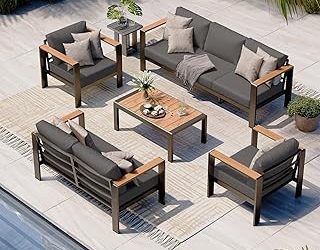
Cambridge Casual Vermont 3-Piece Teak Conversation Set
Solid teak in a natural finish remains the benchmark for outdoor seating, and this armchair-and-side-table trio is sized for the kind of slow, two-person conversation that actually lowers evening arousal. Expect it to gray gracefully if left unoiled, with no structural penalty.
Signature Design by Ashley Clare View Eucalyptus Sofa
Eucalyptus offers most of teak’s weather resistance at a friendlier entry point, and the five-step protective finish here addresses the species’ main weakness — surface checking. The deep three-person seat and stain-resistant Nuvella fabric make this the pick if horizontal afternoon rest, not upright sitting, is the goal.
Cambridge Casual Maine 4-Foot Teak Garden Bench
A weathered-teak bench is the most reliable way to create a single dedicated outdoor rest station without committing to a full set. At four feet it fits narrow balconies and porch corners where a conversation set would crowd the walkway.
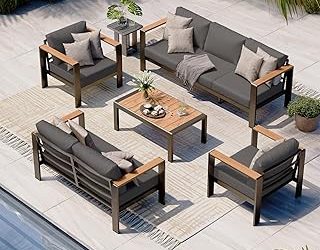
Devoko 8-Piece Acacia Wood Patio Set
Acacia is dense, naturally water-resistant, and considerably cheaper than teak, which makes an eight-piece modular configuration realistic for most budgets. Acacia is less forgiving of neglect than teak, so plan on a sealant coat each spring and covered storage through winter.
Padauk Lumber Boards (3/4″ × 4″)
For builders, padauk is an underrated outdoor species — rot-resistant, dimensionally stable, and dramatic in color before it mellows to a deep russet. These surfaced boards are well suited to slat seats, side tables, and repairs on existing frames.
Frequently Asked Questions
Which wood genuinely lasts longest outdoors?
Teak, with no serious rival. Its heartwood oils resist rot, insects, and moisture movement for decades untreated, which is why it remains standard on boat decks and public park installations.
Is acacia a reasonable substitute for teak?
Yes, with conditions. Acacia matches teak on hardness and initial water resistance but lacks the same oil reserves, so it depends on you maintaining a finish. Left fully exposed year-round, expect roughly half the service life.
How do I stop my furniture from turning gray?
Clean with mild soap and water each spring, let it dry fully, then apply a penetrating outdoor oil. Skip film-forming varnishes — they trap moisture and peel. Graying is purely cosmetic, so leaving it alone is a legitimate choice.
Which wood stays coolest for daytime use?
Untreated teak and eucalyptus in lighter, natural finishes shed heat fastest. Dark-stained or dense tropical stock in direct sun can hold enough heat to make midday reclining uncomfortable — position those pieces where they catch afternoon shade.
Final Thoughts
If you want outdoor seating that outlasts your next two mattresses, the Cambridge Casual Vermont teak set is the sound long-term investment, with the Maine teak bench serving as a smaller-footprint version of the same logic. For a deep, cushioned surface built around genuine rest rather than posture, the Ashley Clare View eucalyptus sofa is the more comfortable choice — and the Devoko acacia set delivers the most seating per dollar for anyone willing to keep up with seasonal care.