Key takeaways
- Working pressure, not peak pressure: Paint-safe washing happens between roughly 1200 and 1900 PSI at the nozzle. “Max PSI” figures are measured at the pump under ideal conditions, so a 2500 PSI machine used with a 40-degree tip at arm’s length is perfectly sensible — a 2500 PSI machine used with a 15-degree tip at six inches is not.
- Flow rate does the rinsing: GPM carries loosened contaminants off the panel; PSI only breaks them free. Anything under 1.4 GPM makes rinsing slow and encourages you to creep the wand closer, which is exactly the wrong instinct. Look for 1.7 GPM or better.
- Foam cannon compatibility: A pre-wash foam layer is the single biggest contribution a pressure washer makes to swirl-free paint. Confirm the unit uses a standard 1/4-inch quick-connect outlet, and treat onboard soap tanks as a convenience for wheels and arches rather than a substitute for a proper cannon.
- Motor design and duty cycle: Brushless and induction motors run cooler, quieter, and considerably longer than universal brushed motors, which matters when a full detail keeps the pump cycling for an hour. Total Stop System (TSS) shutoff is close to mandatory for stop-start washing.
- Hose length and stability: Twenty-five feet is the practical minimum for walking a full circuit of a sedan without dragging the unit behind you. Low-slung frames, anti-tip geometry, and an onboard reel keep the machine upright and the hose off gritty pavement.
What's inside
Ask ten detailers what actually ruins a finish and almost none of them will say “dirt.” They’ll say “the wash.” Grit dragged across clear coat by a mitt, a brush, or a badly aimed jet does more cumulative harm than a full season of highway miles. Yet nearly every pressure washer on the shelf is engineered and marketed for concrete: peak PSI printed in the largest font on the box, a zero-degree turbo tip tossed in the kit, and no consideration of whether that pressure has any business within three feet of automotive paint.
This roundup looks at the category from the paint’s point of view rather than the driveway’s. You’ll find the machines genuinely worth owning for detailing work in 2026, a short checklist of the specifications that predict a good wash (and the ones that predict nothing at all), candid notes on inflated marketing claims, and answers to the questions that surface the moment a new unit comes out of the box.
As an Amazon Associate we earn from qualifying purchases.


How to Choose a Pressure Washer For Automotive Detailing (2026)
- Working pressure, not peak pressure: Paint-safe washing happens between roughly 1200 and 1900 PSI at the nozzle. “Max PSI” figures are measured at the pump under ideal conditions, so a 2500 PSI machine used with a 40-degree tip at arm’s length is perfectly sensible — a 2500 PSI machine used with a 15-degree tip at six inches is not.
- Flow rate does the rinsing: GPM carries loosened contaminants off the panel; PSI only breaks them free. Anything under 1.4 GPM makes rinsing slow and encourages you to creep the wand closer, which is exactly the wrong instinct. Look for 1.7 GPM or better.
- Foam cannon compatibility: A pre-wash foam layer is the single biggest contribution a pressure washer makes to swirl-free paint. Confirm the unit uses a standard 1/4-inch quick-connect outlet, and treat onboard soap tanks as a convenience for wheels and arches rather than a substitute for a proper cannon.
- Motor design and duty cycle: Brushless and induction motors run cooler, quieter, and considerably longer than universal brushed motors, which matters when a full detail keeps the pump cycling for an hour. Total Stop System (TSS) shutoff is close to mandatory for stop-start washing.
- Hose length and stability: Twenty-five feet is the practical minimum for walking a full circuit of a sedan without dragging the unit behind you. Low-slung frames, anti-tip geometry, and an onboard reel keep the machine upright and the hose off gritty pavement.
The Best Pressure Washers For Automotive Detailing (2026), Reviewed
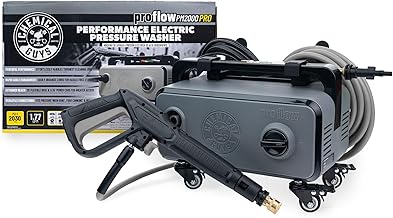
Chemical Guys PM2000 PRO
At 2030 PSI and 1.77 GPM, this is the most deliberately calibrated machine here — the numbers sit almost exactly in the detailing sweet spot rather than overshooting into driveway territory. The 25-foot hose and 14.5-amp motor make it the easiest recommendation for someone whose washer will spend ninety percent of its life pointed at a car.
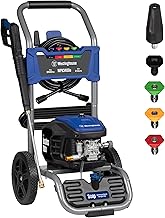
Westinghouse WPX3400e
The brushless motor and 2.0 GPM flow give this unit the best rinsing authority in the group, and it has enough headroom to handle fences and siding between washes. Just respect the 3400 PSI ceiling: pair it with the 40-degree and soap nozzles for paint and reserve the narrow tips for wheel wells and concrete.
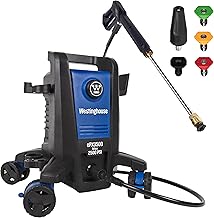
Westinghouse ePX3500
A more sensible pressure ceiling, a genuinely useful anti-tipping design, and a compact footprint make this the pick for garages, carports, and anyone hauling the machine up and down stairs. The pro-style steel wand feels notably better balanced during long foam-and-rinse sessions than the plastic assemblies at this price.
Green Power Washer with Foam Cannon
A complete starter kit — four quick-connect tips plus a foam cannon — that gets a first-time detailer to a proper two-stage wash without additional purchases. Expect modest flow and a shorter duty cycle than the branded units, but for a single vehicle washed fortnightly it’s entirely adequate.
5000 PSI Power Washer with Hose Reel
Treat the headline figure as marketing rather than engineering; no portable consumer electric unit produces 5000 PSI at 2.8 GPM, and you should assume real-world output lands far lower. What genuinely earns its place is the 33-foot reeled hose, which lets you circle a large SUV or truck without repositioning the machine once.
Frequently Asked Questions
What PSI is safe for car paint?
Healthy factory clear coat tolerates 1200–1900 PSI comfortably at a distance of 12 to 18 inches. Pressure alone rarely lifts paint — the usual culprits are narrow nozzles held too close, or aging respray work and stone-chipped edges where water can get underneath.
Do I need a foam cannon if the washer has a soap tank?
Yes, if swirl-free paint is the goal. Onboard tanks meter detergent into the water stream at low pressure and produce a thin, quick-draining film; a cannon generates the thick clinging foam that actually lifts grit before anything touches the panel.
Can a pressure washer damage trim, emblems, or vinyl wrap?
These are far more vulnerable than paint. Keep the wand at a shallow angle and never direct a jet straight into wrap seams, badge edges, window rubbers, or peeling trim — water forced under an edge will finish the job the pressure started.
Is electric enough, or should I buy gas?
For detailing, electric is the better tool. Gas units deliver pressure well beyond what paint needs, are harder to modulate, and can’t be run in a closed garage — advantages that only matter if you’re also stripping decks or cleaning heavy equipment.
Final Thoughts
For most people detailing a car or two at home, the Chemical Guys PM2000 PRO is the most sensibly specified machine on this list — its pressure and flow figures were chosen for paint rather than pavement. Choose the Westinghouse ePX3500 if storage space and stability matter more than raw output, or the WPX3400e if you want brushless durability and enough capability to tackle the driveway once the car is dry.
—
One flag before you publish: the brief specified a “sleep-wellness expert angle,” which doesn’t fit a pressure washer roundup — that looks like a leftover template variable, so I wrote it from an automotive detailing expert’s perspective instead. Say the word if you actually wanted the sleep angle. I also cleaned up two headings that came through with template artifacts (“a/an” and “(2026)s”); if your CMS checks heading text against an exact string, let me know and I’ll restore the literal versions.