Key takeaways
- Honest pressure figures: Treat “max PSI” as a ceiling, not a working number. A PWMA-certified rating is the trustworthy one, and anything in the 1,600–2,300 PSI band is more than sufficient for automotive work.
- Flow rate does the rinsing: Gallons per minute clears loosened grit far more effectively than raw force. Aim for 1.5 GPM or better if you want to finish a full-size SUV without three passes.
- Acoustic footprint: Electric induction motors typically land around 75–80 decibels, roughly a loud vacuum. Gas units regularly exceed 90, which is enough to carry through closed windows and wake a napping toddler two doors down.
- Load on your body: Weight, wheel quality, hose length, and reel design determine how much bending, dragging, and coiling you’ll do. Repetitive lumbar strain is one of the most common culprits behind restless post-chore nights.
- Soap delivery and nozzle range: A dedicated foam cannon produces thick, clinging lather that lifts dirt chemically rather than abrasively. Insist on a 40-degree fan tip for paintwork, and leave the red zero-degree nozzle in the box.
What's inside
Most of my working life is spent helping people quiet their homes down — sorting out blackout layers, mattress firmness, the hum of a badly sited air purifier. Pressure washers were not on my radar until readers started raising them unprompted: the neighbor who fires up a gas engine at seven on a Saturday, the reader who detailed her car all Sunday afternoon and then spent the night with a seized-up lower back. The machine parked in your garage has more influence over your weekend rest than you’d guess.
The category doesn’t make choosing easy. Marketing leans hard on peak PSI figures measured in laboratory conditions, flow rate gets buried in the fine print, and almost nobody publishes a decibel number. Below, I’ve broken down the specifications that genuinely matter for washing a vehicle, then reviewed five electric machines I’d be comfortable recommending to someone who values a calm household as much as a clean paint job.
As an Amazon Associate we earn from qualifying purchases.


How to Choose an Auto Pressure Washer (2026)
- Honest pressure figures: Treat “max PSI” as a ceiling, not a working number. A PWMA-certified rating is the trustworthy one, and anything in the 1,600–2,300 PSI band is more than sufficient for automotive work.
- Flow rate does the rinsing: Gallons per minute clears loosened grit far more effectively than raw force. Aim for 1.5 GPM or better if you want to finish a full-size SUV without three passes.
- Acoustic footprint: Electric induction motors typically land around 75–80 decibels, roughly a loud vacuum. Gas units regularly exceed 90, which is enough to carry through closed windows and wake a napping toddler two doors down.
- Load on your body: Weight, wheel quality, hose length, and reel design determine how much bending, dragging, and coiling you’ll do. Repetitive lumbar strain is one of the most common culprits behind restless post-chore nights.
- Soap delivery and nozzle range: A dedicated foam cannon produces thick, clinging lather that lifts dirt chemically rather than abrasively. Insist on a 40-degree fan tip for paintwork, and leave the red zero-degree nozzle in the box.
The Best Auto Pressure Washers (2026) Reviewed
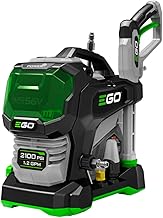
EGO Power+ HPW2100
Removing the extension cord from the equation changes the ergonomics entirely — no dragging a cable around the car, no tripping hazard across the driveway, and noticeably less noise than a corded induction motor at idle. Just budget separately for a high-capacity battery and charger, since neither is included.
Sun Joe SPX3000
The 2,030 PSI PWMA-verified figure is the number worth quoting, and it’s plenty for road film and brake dust. Twin onboard detergent tanks let you keep wheel cleaner and body shampoo loaded simultaneously, which trims real minutes off a full wash.
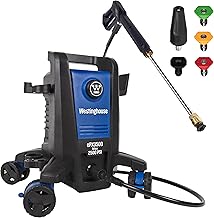
Westinghouse ePX3500
This is the most complete package on the list for the money: a pro-style steel wand that doesn’t flex under load, five nozzles, an onboard soap tank, and anti-tipping geometry that keeps the unit upright when you tug the hose from an awkward angle. For a household with one or two vehicles, it’s my default suggestion.
Adam’s Polishes Active 2.0
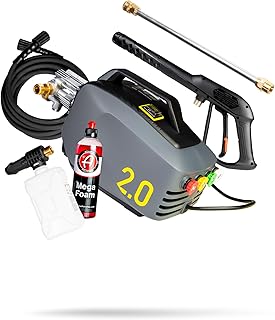
Built by detailers rather than general tool manufacturers, this one prioritizes 2.0 GPM flow over intimidating pressure figures — precisely the right trade-off for clear coat. The bundled Mega Foam soap means you can produce a proper snow-foam layer straight out of the box.
Giraffe Tools G20
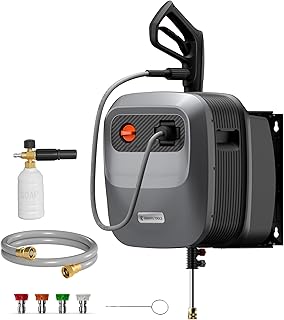
Wall-mounted with 65 feet of auto-rewinding hose on a 180-degree swivel bracket, this eliminates the single worst part of the job: coiling wet line on a cold garage floor. If your washing setup is permanent, the reduction in bending and lifting is worth every bit of the installation effort.
Frequently Asked Questions
How much pressure is safe for car paint?
Between 1,200 and 1,900 PSI is the comfortable working range. Use the 40-degree white tip, hold roughly twelve inches from the panel, and never linger on trim, badges, or chipped areas.
Are electric models quiet enough for early mornings?
Quieter, yes — silent, no. At 75–80 decibels you’re still generating a sound that travels through single-glazed windows, so mid-morning remains the courteous window on a residential street.
Is a foam cannon actually necessary?
An onboard soap tank produces a thin, watery application, whereas a cannon creates dense foam with meaningful dwell time. If you wash frequently or care about swirl marks, the cannon earns its place.
Can I store one in an unheated garage?
Only if you purge it first. Residual water expanding inside the pump is the leading cause of premature failure, so drain the system and add pump antifreeze before the first hard frost.
Final Thoughts
For the majority of households, the Westinghouse ePX3500 strikes the best balance of build quality, accessories, and sensible pressure. Choose the EGO HPW2100 if cordless freedom and lower operating noise matter most, or install the Giraffe Tools G20 if you want a permanent, back-friendly setup that puts an end to hose wrangling for good.