Key takeaways
- Measure the route, not just the room: Leave at least 24 inches of walking space on the sides, then check your stairwell turns and doorway diagonals. Compressed bed-in-a-box models solve most of this, but the box itself can weigh well over 100 pounds — plan for two people on delivery day.
- Let your dominant sleep position set firmness: Side sleepers generally need enough give at the shoulder and hip to keep the spine level, while back and stomach sleepers do better with a firmer surface that prevents the pelvis from sinking. A medium-firm feel is the practical compromise for couples who split the difference.
- Ask whether the support is zoned: Longer beds benefit from coil systems or foam layers that firm up under the lumbar region and soften at the shoulders. Uniform support across 84 inches is the most common reason a technically well-built mattress still leaves you stiff.
- Treat cooling as a system, not a buzzword: Gel infusions and phase-change covers help at the surface, but airflow through a pocketed coil unit does more sustained work than any single foam layer. If you run hot, weight your search toward hybrids.
- Read the trial terms before the review score: Bodies need two to four weeks to adapt to a new sleep surface, so a 30-night window tells you very little. Confirm return logistics too — hauling a Cal king back is not the same errand as returning a twin.
What's inside
A California king is the only mainstream size that trades width for length: 72 by 84 inches, four inches narrower and four inches longer than a standard king. That geometry is a genuine relief if you sleep at 6’2″, stack pillows against a headboard, or share the foot of the bed with a large dog — and it’s a quiet headache at checkout. The Cal king catalog is thinner than the queen and king aisles, bedding is sold separately from “king,” and a surprising amount of mattress advice online is written with a 60-inch-wide bed in mind.
This guide focuses on what actually changes at 84 inches: how support zoning has to stretch across a longer body map, why perimeter reinforcement matters more when there’s more perimeter, and which sleep trials give you enough seasons to judge a bed honestly rather than in the first jet-lagged week. Below are the Cal king mattresses worth shortlisting in 2026, followed by a buying framework and the questions readers ask most.
As an Amazon Associate we earn from qualifying purchases.


🛒 Best Price Today on Amazon
Prime members get fast, free shipping on everything above, plus member-only deals. New members get a 30-day free trial — cancel anytime.
How to Choose a Cal King Mattress (2026)
- Measure the route, not just the room: Leave at least 24 inches of walking space on the sides, then check your stairwell turns and doorway diagonals. Compressed bed-in-a-box models solve most of this, but the box itself can weigh well over 100 pounds — plan for two people on delivery day.
- Let your dominant sleep position set firmness: Side sleepers generally need enough give at the shoulder and hip to keep the spine level, while back and stomach sleepers do better with a firmer surface that prevents the pelvis from sinking. A medium-firm feel is the practical compromise for couples who split the difference.
- Ask whether the support is zoned: Longer beds benefit from coil systems or foam layers that firm up under the lumbar region and soften at the shoulders. Uniform support across 84 inches is the most common reason a technically well-built mattress still leaves you stiff.
- Treat cooling as a system, not a buzzword: Gel infusions and phase-change covers help at the surface, but airflow through a pocketed coil unit does more sustained work than any single foam layer. If you run hot, weight your search toward hybrids.
- Read the trial terms before the review score: Bodies need two to four weeks to adapt to a new sleep surface, so a 30-night window tells you very little. Confirm return logistics too — hauling a Cal king back is not the same errand as returning a twin.
The Best Cal King Mattresses (2026) Reviewed
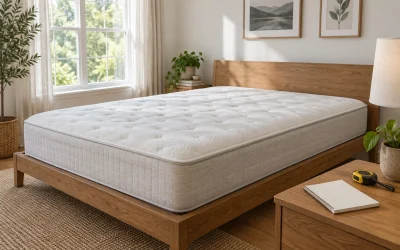
Nectar Luxe 14″ Memory Foam
The deepest all-foam pick here, with enough contouring layers to cradle pressure points without the sunken feeling older memory foam was known for. Its real strength on a Cal king is motion isolation — movement at one edge rarely registers at the other — and the year-long trial removes most of the risk from buying foam unseen.
DreamCloud 12″ Hybrid
A balanced coil-and-foam build that reads plusher at the surface than its medium-firm rating suggests, which suits couples with mismatched preferences. The 365-night trial covers a full cycle of seasons, so you’ll know how it behaves in both August humidity and February chill.
Coolvie 14″ Cal King Hybrid
Four foam layers over pocketed springs at a price that undercuts most name-brand hybrids, with fiberglass-free construction — a detail worth verifying on any budget mattress. It’s the sensible choice for a guest suite or a second home where you want hybrid responsiveness without a premium outlay.
Luxury Hotel 14″ Hybrid (2026 Upgraded)
Cooling gel memory foam sits over pocket springs with reinforced edges, so sitting on the perimeter to tie your shoes doesn’t collapse the side rail. The firmer, more supportive feel is well matched to back sleepers and anyone who finds traditional foam too enveloping.
LETMOON 14″ Luxury Hybrid
Zoned pocket coils are the headline here, tuned to give more under the shoulders and hold firm through the lower back — exactly the specification that pays off across a longer mattress. The hotel-style medium-firm surface lands in the range most sleepers rate comfortable regardless of position.
Frequently Asked Questions
Is a California king bigger than a king?
Longer, not larger. A Cal king measures 72″ × 84″ against a standard king’s 76″ × 80″, which means slightly less total surface area but four extra inches of legroom. Choose it for height, not for shoulder space.
Will my king sheets and bed frame fit?
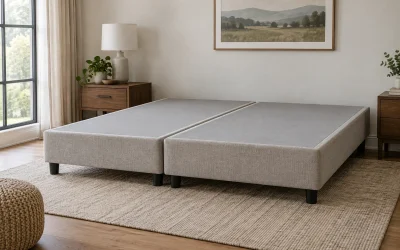
No on both counts. Cal king bedding is a distinct size, and the frame or platform must be built for 72 × 84 — budget for a compatible foundation, ideally with center support, since a span this wide will sag over slats spaced too far apart.
How long until a boxed mattress feels normal?
Allow 24 to 72 hours for full expansion and any new-product odor to dissipate in a ventilated room. Give your body another two to four weeks before judging comfort; early stiffness is usually adaptation, not a defect.
Memory foam or hybrid for a Cal king?
Choose foam if motion transfer between partners is your main complaint, and a hybrid if you sleep warm, weigh more, or sit on the edge of the bed frequently. Hybrids also tend to hold their shape better across a wider span over time.
Final Thoughts
For most buyers, the DreamCloud hybrid is the safest all-round Cal king — balanced feel, year-long trial, few compromises. Hot sleepers and heavier bodies will be better served by the LETMOON with its zoned coils and reinforced edges, while committed foam devotees should go straight to the Nectar Luxe. If you’re outfitting a smaller guest room on the same order, Lucid’s 10″ gel memory foam bed is a low-risk companion buy.