Key takeaways
- Immediate pressure relief. A 3-inch layer of memory foam meaningfully softens a firm mattress at the hips and shoulders, which is the single most common reason people buy one.
- Cooler than plain memory foam. Gel infusion delays heat buildup, so the topper feels noticeably less swampy in the first part of the night than the older non-gel foam many people remember.
- Cheap compared to a mattress. $40 to $150 versus $600 to $2,000 for a new queen mattress buys several more years out of a bed that is merely too hard, not broken.
- Motion isolation. Memory foam absorbs movement, so a partner’s tossing is less noticeable, a benefit innerspring mattresses lack.
- Easy to try and return. Most sellers offer 30- to 100-night trials, and a rolled topper is simple to ship back.
- Works on any base. Foam, hybrid, innerspring, sofa bed, or dorm mattress, the topper conforms to whatever is underneath.
What's inside
The Short Answer
Yes, with one condition: your current mattress is too firm or too worn, and heat is a secondary complaint rather than the primary one. A cooling gel memory foam topper is a genuinely good $40 to $150 fix for pressure points and a hard surface, and the gel keeps it from running as hot as plain memory foam. If your only problem is that you sweat through the night on an otherwise comfortable mattress, a gel topper will disappoint you. The gel slows heat buildup for the first hour or two and then the foam settles into roughly body temperature like any other foam. Buyers who need real cooling should look at a breathable latex or wool topper, or a fan-based bed cooler, and buyers who simply want a softer bed that does not feel like a heat trap will be happy with gel.
What You Actually Get
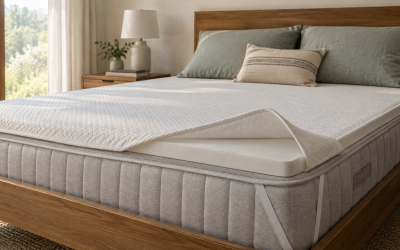
A cooling gel topper is a slab of viscoelastic polyurethane foam, usually 2 to 4 inches thick, with gel either swirled through the foam during manufacturing or applied as beads or a layer near the top. The gel has higher thermal mass than foam, so it absorbs body heat for a while before it warms up. Most toppers in this category weigh 15 to 35 pounds in queen size, come compressed and rolled in a box roughly 16 by 16 by 40 inches, and need 24 to 72 hours to fully expand and release the factory smell. Density typically runs 2.5 to 3.5 pounds per cubic foot; higher density feels more supportive and lasts longer, lower density feels plusher and breaks down faster. Many include a removable cover, though budget models often ship bare. Pricing in 2026 clusters into two bands: entry-level 3-inch queens around $40 to $70, such as the EGO 3 Inch Queen Mattress Topper Gel Memory Foam for Pressure Relief at about $41.24, and mid-range models with certifications and better covers around $100 to $150, such as the Linenspa Memory Foam Mattress Topper in king size, a 3-inch gel-infused, CertiPUR-certified topper with a plush feel at about $119.99. Expect 2 to 4 years of useful life before the foam softens noticeably.
As an Amazon Associate we earn from qualifying purchases at no extra cost to you. Product prices and availability are accurate as of the date shown and are subject to change.


Pros
- Immediate pressure relief. A 3-inch layer of memory foam meaningfully softens a firm mattress at the hips and shoulders, which is the single most common reason people buy one.
- Cooler than plain memory foam. Gel infusion delays heat buildup, so the topper feels noticeably less swampy in the first part of the night than the older non-gel foam many people remember.
- Cheap compared to a mattress. $40 to $150 versus $600 to $2,000 for a new queen mattress buys several more years out of a bed that is merely too hard, not broken.
- Motion isolation. Memory foam absorbs movement, so a partner’s tossing is less noticeable, a benefit innerspring mattresses lack.
- Easy to try and return. Most sellers offer 30- to 100-night trials, and a rolled topper is simple to ship back.
- Works on any base. Foam, hybrid, innerspring, sofa bed, or dorm mattress, the topper conforms to whatever is underneath.
Cons
- Cooling is temporary. Gel stores heat; it does not remove it. After one to two hours the topper settles near body temperature and feels like any memory foam.
- Adds height and changes sheet fit. A 3-inch topper on a 12-inch mattress needs sheets with 15- to 18-inch pockets, an extra $30 to $80 many buyers forget.
- Off-gassing. New foam smells for 1 to 3 days; sensitive people may need to air it in a spare room for a week.
- Slides and shifts. Without straps or a fitted cover, the topper migrates on a smooth mattress and bunches at the edges.
- Cannot fix sag. A topper follows the contour of the mattress below it. Over a dip, it dips.
- Heavy and awkward to clean. The foam itself cannot be washed; only the cover can, and a 30-pound queen slab is a chore to move.
Who Should Buy It
Side sleepers on a mattress that leaves shoulders and hips aching in the morning. Anyone who inherited a too-firm bed, moved into a furnished rental, or is sleeping on a dorm or guest mattress they cannot replace. Couples where one partner wants a softer surface; a topper on one side of a split king solves the argument. Sleepers who ran hot on old-style memory foam and want the same hug with less heat. Budget buyers who want to extend a decent mattress two or three more years before a $1,000-plus replacement.
Who Should Skip It
People whose main complaint is night sweats or overheating on a mattress that is otherwise comfortable; the gel will not fix it, and adding 3 inches of foam usually makes it slightly worse after midnight. Anyone sleeping on a mattress that visibly sags more than an inch and a half; the topper will sag with it. Stomach sleepers and heavier sleepers over about 230 pounds who need firm support; 3 inches of soft foam lets the hips sink and strains the lower back. People sensitive to chemical odors or who cannot wait a few days for off-gassing. Buyers who already own a soft or plush mattress and want it cooler rather than softer.
Cheaper Alternatives
| Option | Cost | Trade-off |
|---|---|---|
| Cotton or bamboo mattress pad (quilted, 1 inch or less) | $25 to $60 | Breathes far better and washes in the machine, but adds almost no softness or pressure relief |
| Egg-crate polyurethane foam topper, 1.5 to 2 inches | $20 to $45 | Airflow through the peaks keeps it cooler than flat foam; breaks down in about a year and feels less plush |
| Percale or linen sheets plus a lighter duvet | $40 to $120 | Fixes overheating for many people without changing mattress feel at all; does nothing for firmness |
| Fiberfill or down-alternative topper, 2 to 3 inches | $40 to $90 | Soft and cool at first, compresses within months and needs frequent fluffing |
| Wool mattress topper, 1.5 to 2 inches | $120 to $250 | Regulates temperature better than gel and lasts 5 years or more, but costs more and gives a cushioned rather than contouring feel |
| Bed fan or under-sheet air cooler | $60 to $150 | Actually moves heat away rather than storing it; adds noise and a cord and does nothing for comfort |
| Rotate and flip the existing mattress, add a bunkie board | $0 to $60 | Evens out early wear and firms a soft bed, but cannot soften a hard one |
FAQ
How thick should a cooling gel topper be?
Two inches gives a light softening and stays coolest because there is less foam to store heat. Three inches is the most popular choice and the best balance of pressure relief and temperature for most sleepers under about 230 pounds. Four inches is for very firm mattresses or heavier sleepers who want a deep hug and accept that it will run warmer.
Do gel toppers really sleep cooler than regular memory foam?
Cooler for the first part of the night, yes, because the gel absorbs heat before it reaches your skin. Over a full eight hours the difference shrinks as the gel saturates. If you want a topper that stays cool all night, latex, wool, or an open-cell foam with a breathable cover will outperform gel.
How long does a gel memory foam topper last?
Two to four years of nightly use for most models. Density is the best predictor: a 3-pound-per-cubic-foot foam typically lasts longer than a 2.5-pound one. Signs it is done include a permanent body impression deeper than an inch, a surface that no longer springs back within a few seconds, or a return of the pressure-point pain the topper originally fixed.
Can I put a mattress protector over the topper?
Yes, and you should. A thin, breathable protector shields the foam from sweat and spills, which cannot be washed out of memory foam. Choose a protector with pockets deep enough to cover both the topper and the mattress, and avoid vinyl-backed models, which trap heat and undo the cooling benefit you paid for.