Key takeaways
- Submerging the foam. Memory foam holds water like a sponge and can take a week to dry inside, which invites mold and permanently softens the cell structure.
- Machine washing or drying. Agitation shreds the foam, and dryer heat above about 120°F can warp or shrink it.
- Using bleach or undiluted peroxide. Both degrade polyurethane and can turn the yellow into orange or brown.
- Wringing or twisting. Pressing straight down is fine; twisting tears the internal structure and creates lumps.
- Sleeping on it before it is bone dry. Trapped moisture plus body heat equals mildew within days.
- Expecting pure white. Oxidation yellowing is chemical and partly permanent. Lighter and odor-free is the realistic goal.
What's inside
A yellowed memory foam pillow is not dirty in the way a stained shirt is dirty. The color comes from years of sweat, skin oils, saliva, hair product, and slow oxidation of the polyurethane itself, all of it locked inside foam that was never designed to get wet. That is exactly why so many attempts to clean one end badly. Toss it in the washing machine and the agitator tears the cells apart; run it through a dryer and the heat warps it into a lumpy wedge; soak it in a bathtub and you will still be waiting for the center to dry a week later while mildew takes hold. Done correctly, though, a deep clean can lighten the yellowing noticeably, eliminate odor, and add a year or two of comfortable use. The method below relies on light moisture, patience, and airflow rather than force.
What You Need
| Item | Why | Optional? |
|---|---|---|
| Handheld vacuum with upholstery brush | Lifts dust, dead skin, and hair from the surface before any liquid touches it | No |
| Baking soda (1 to 2 cups) | Absorbs oils and neutralizes odor without wetting the foam | No |
| Spray bottle | Delivers a controlled mist instead of a soak | No |
| Mild dish soap or gentle laundry detergent (1 teaspoon) | Cuts body oil, which is the main source of yellowing | No |
| Clean white cloths or microfiber towels (4 to 6) | Blotting and lifting residue without dye transfer | No |
| 3% hydrogen peroxide (about 1/2 cup) | Gentle brightening of yellow patches; use only in a light diluted mist | Yes |
| White vinegar (1/4 cup) | Extra odor control for musty or sweat-heavy pillows | Yes |
| Box fan or well-ventilated room | Memory foam must air-dry fully, usually 24 hours or more | No |
| Zippered pillow protector | Keeps the next round of sweat and oil off the foam | Yes |
Step-by-Step
1. Remove the cover and wash it separately (5 minutes plus wash cycle)
Almost every memory foam pillow ships in a zippered cover, and that cover carries most of the visible grime. Unzip it, turn it inside out, and machine wash on cold or warm with regular detergent. Check the tag: many covers tolerate a low-heat tumble dry, but bamboo-blend and gel-infused fabrics often prefer air drying. Never put the foam core itself in the machine.
As an Amazon Associate we earn from qualifying purchases at no extra cost to you. Product prices and availability are accurate as of the date shown and are subject to change.

2. Vacuum the bare foam (5 minutes)
Lay the pillow on a clean flat surface and run the upholstery attachment across both faces and all edges on low suction. This pulls out dust mites, skin flakes, and hair that would otherwise turn into mud once you add moisture. If the pillow has ventilation holes or a contoured shape, work the brush into the recesses.
3. Deodorize with baking soda (5 minutes plus 1 to 2 hours)
Sprinkle a thick, even layer of baking soda over one side, let it sit for 60 to 120 minutes in a sunny spot or near an open window, then vacuum it off. Flip and repeat. For a pillow that smells strongly of sweat, extend the dwell to 3 or 4 hours. Baking soda pulls oils toward the surface, which makes the next step far more effective.
4. Mix a mild cleaning solution (2 minutes)
Fill a spray bottle with 16 ounces of lukewarm water and add one teaspoon of mild dish soap. Shake gently. If the pillow is noticeably yellow, make a second bottle with equal parts 3% hydrogen peroxide and water for spot brightening. Avoid bleach entirely; it breaks down polyurethane and leaves a chemical smell that never fully leaves.
5. Spot-treat the yellowed areas (15 to 20 minutes)
Mist the soapy solution lightly over the yellowed zones from about 8 inches away. The foam should look damp, not shiny. Work the solution in with a clean cloth using small circular motions and light pressure. Blot with a dry cloth to lift the dissolved oils. For stubborn patches, mist the diluted peroxide over the area, wait 5 minutes, and blot again. You should see the cloth picking up a faint yellow tint, which means it is working.
6. Rinse by blotting, not soaking (10 minutes)
Fill the spray bottle with plain cool water and mist the treated areas to dilute any soap left behind. Press firmly with dry towels to absorb it. Repeat two or three times until the towels come up clean and the foam no longer feels slippery. Leftover soap attracts dirt and makes the pillow feel stiff once dry, so this step matters.
7. Air-dry completely (24 to 48 hours)
Stand the pillow on its edge or lay it across two chair backs so air reaches both sides. Point a box fan at it and keep the room ventilated. A standard queen-size pillow, roughly 20 by 30 inches and 4 to 6 inches thick, typically needs a full day; a dense contour pillow can take two. Squeeze the center before use. Any coolness or dampness means it needs more time. Do not use a dryer, radiator, or direct heat.
Mistakes to Avoid
- Submerging the foam. Memory foam holds water like a sponge and can take a week to dry inside, which invites mold and permanently softens the cell structure.
- Machine washing or drying. Agitation shreds the foam, and dryer heat above about 120°F can warp or shrink it.
- Using bleach or undiluted peroxide. Both degrade polyurethane and can turn the yellow into orange or brown.
- Wringing or twisting. Pressing straight down is fine; twisting tears the internal structure and creates lumps.
- Sleeping on it before it is bone dry. Trapped moisture plus body heat equals mildew within days.
- Expecting pure white. Oxidation yellowing is chemical and partly permanent. Lighter and odor-free is the realistic goal.
How Often
Wash the removable cover every 2 to 4 weeks along with your pillowcases, since it catches the bulk of sweat and oil. Vacuum and baking-soda deodorize the foam core every 2 to 3 months, and do a full spot-clean with soap solution twice a year or whenever you notice yellowing spreading. Hot sleepers, people who go to bed with damp hair, and anyone who uses heavy hair products should move the cover wash to weekly. A zippered pillow protector under the pillowcase, typically $8 to $20, extends the interval between deep cleans considerably.
When to Call a Pro or Replace
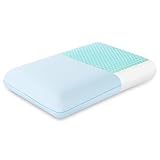
Professional cleaning rarely makes sense for a pillow; the service costs $30 to $60 and the results are similar to what you can do at home. Replacement is the smarter call when the foam no longer springs back within a few seconds after you press it, when it has developed a permanent dip where your head rests, when yellowing has progressed to brown or gray patches, or when odor returns within a week of a thorough clean. Most memory foam pillows last 2 to 3 years with regular care. If yours is due, mid-range cooling options are plentiful in 2026: the EGOHOME Cooling Gel Memory Foam Pillow with a reversible design and neck support runs about $39.99, and the Weekender Cooling Gel Memory Foam Pillow in queen size, ventilated with a washable cover and medium-firm feel, sells for around $34.99. Both include the removable cover that makes future cleaning far easier.
FAQ
Why does memory foam turn yellow even when I use a pillowcase?
Two things are happening. Sweat and skin oil migrate through fabric over months, and the polyurethane itself oxidizes when exposed to air, light, and warmth. The second cause is unavoidable and harmless; the first is what cleaning actually addresses.
Can I put a memory foam pillow in the sun to whiten it?
An hour or two of indirect sunlight helps with odor and drying, but prolonged direct sun accelerates oxidation and can make the foam brittle. Keep sun exposure short and use a fan for the bulk of the drying.
Is a yellow memory foam pillow unhealthy to sleep on?
Discoloration alone is not a health risk. The concern is what causes it: accumulated sweat and skin cells feed dust mites and bacteria. If the pillow smells fine and you clean the cover regularly, yellowing is mostly cosmetic.
How do I speed up drying without heat?
Maximize airflow. Stand the pillow upright between two objects so both faces are exposed, run a fan on high, and lower room humidity with a dehumidifier or air conditioning. Flipping it every few hours also helps moisture escape evenly.