Key takeaways
- How to Choose Premium Garage Cabinet Organization Systems with Workbenches: What Actually Matters
- Best Premium Garage Cabinet Organization Systems with Workbenches in 2026: Compared and Ranked
- How to Choose Vault Room Storage Systems for Secure Home Organization: What Actually Matters
- How to Choose Vault Room Storage Systems for Secure Home Organization: What Actually Matters
- How to Choose Pantry Organization Bins: What Actually Matters
What's inside
- Evaluating Steel Gauge and Structural Integrity
- Choosing the Right Workbench Surface Material
- Understanding Weight Capacities for Shelves and Drawers
- Balancing Modular Flexibility Versus Permanent Layouts
- Integrating Power Outlets, Lighting, and Cable Management
- Inspecting Hardware Quality: Hinges, Latches, and Locks
- Accounting for Spatial Clearance, Vehicles, and Workflow
- Related Guides
- FAQ
- Related Guides
Investing in a high-end garage setup is one of the most rewarding home improvement projects you can tackle in 2026. Combining heavy-duty storage cabinets with a dedicated workbench transforms a chaotic catch-all space into a streamlined, highly functional command center for automotive work, woodworking, and general household organization. However, because premium modular systems require a substantial financial and spatial commitment, selecting the right combination involves far more than simply picking the sleekest finish off a showroom floor.
- Evaluating Steel Gauge and Structural Integrity
- Choosing the Right Workbench Surface Material
- Understanding Weight Capacities for Shelves and Drawers
- Balancing Modular Flexibility Versus Permanent Layouts
- Integrating Power Outlets, Lighting, and Cable Management
- Inspecting Hardware Quality: Hinges, Latches, and Locks
- Accounting for Spatial Clearance, Vehicles, and Workflow
- Related Guides
- FAQ
- Related Guides
To ensure your investment stands up to daily wear, heavy tools, and changing storage demands, you need to look past aesthetic marketing and evaluate the core engineering principles that dictate long-term durability. This decision guide breaks down the critical specifications, layout considerations, and structural factors that actually matter when you are shopping for a premium garage storage system featuring an integrated workbench.
As an Amazon Associate we earn from qualifying purchases at no extra cost to you. Product prices and availability are accurate as of the date shown and are subject to change.
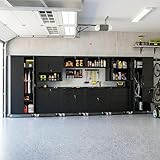
Evaluating Steel Gauge and Structural Integrity
The foundation of any heavy-duty garage cabinet system lies in its metal construction, specifically the gauge of the steel used for the frames and panels. In the realm of premium organization systems, lower gauge numbers indicate thicker, more resilient steel. Thin, flimsy sheet metal will eventually dent, warp under heavy loads, or vibrate noisily when you are working on the benchtop. Look for reinforced wall-mounting channels and fully welded frame corners rather than completely knock-down flat-pack designs that rely solely on small machine screws for structural rigidity. A robust frame prevents cabinet doors from sagging out of alignment over time and ensures that upper wall units securely anchor to your garage studs without pulling loose.
Choosing the Right Workbench Surface Material
The workbench is the operational heart of your garage system, and the material you choose for the countertop must align with your primary projects. Solid hardwood tops, such as heavy butcher block, offer a warm, forgiving surface that absorbs impacts well and can be easily sanded down and refinished if scarred by oil or gouges. On the other hand, stainless steel or powder-coated steel wrap-around surfaces provide exceptional resistance to moisture, chemicals, and intense heat, making them ideal for heavy automotive mechanics or messy fabrication work. Composite and high-density laminate surfaces strike a balance between cost and stain resistance, though they may chip if heavy metal objects are dropped directly onto sharp corners.
Understanding Weight Capacities for Shelves and Drawers
It is easy to underestimate how quickly heavy tools, bulk fluids, and hardware organizers add up in weight. When comparing premium systems, carefully examine the rated weight capacity for individual shelves, full-extension drawers, and the workbench surface itself. Premium drawers should feature heavy-duty ball-bearing slides that glide smoothly even when packed to capacity with sockets, wrenches, and power tools. Adjustable shelving inside tall floor cabinets should be thick enough to resist bowing in the middle after holding heavy automotive parts or paint cans for months on end. Always calculate the combined weight of your heaviest gear before loading your upper cabinets to guarantee safe operation.
Balancing Modular Flexibility Versus Permanent Layouts
Garage spaces evolve over time, which makes modular cabinet systems exceptionally popular for modern homeowners. A modular approach allows you to rearrange lower cabinets, tall towers, and rolling tool chests relative to your workbench as your storage needs shift or as you acquire new equipment. However, fixed or wall-anchored systems often provide a cleaner, built-in architectural look with integrated wire management and seamless trim pieces. Decide whether you prefer the adaptability of movable components or the monolithic stability of a permanent workstation installation before finalizing your purchase.
Integrating Power Outlets, Lighting, and Cable Management
A true workbench station needs to be a functional workspace, not just a flat surface. Modern premium garage systems frequently incorporate integrated power strips, USB ports, and dedicated cord-routing channels right into the backsplash or workbench framing. Before buying, consider where your garage wall outlets are located and whether the cabinet system includes knockouts or built-in channels to route power safely without messy extension cords running across your work area. Additionally, look for systems that accommodate under-cabinet LED strip lighting to illuminate your entire workspace effectively without casting shadows from overhead fixtures.
Inspecting Hardware Quality: Hinges, Latches, and Locks
The operational lifespan of your garage cabinets is often dictated by the small hardware components that get used multiple times every day. Premium systems should feature soft-close, adjustable steel hinges that allow you to fine-tune door alignment easily if your garage floor or walls settle. Look for secure magnetic latches or positive-engagement deadbolt locks on taller cabinets to keep hazardous chemicals, sharp tools, and expensive equipment safely away from children and pets. High-quality handles should be constructed from solid aluminum or heavy-gauge steel rather than hollow plastic that can crack under a firm pull with greasy hands.
Accounting for Spatial Clearance, Vehicles, and Workflow
Even the most advanced cabinet and workbench system will fail to satisfy if it interferes with your daily garage routines. Carefully measure your available wall space while factoring in protruding vehicle bumpers, open car doors, garage door tracks, and side-mount or ceiling-mounted garage door openers. Ensure that lower rolling tool chests or rolling cabinets can be pulled out fully without hitting parked cars or obstructing walkways. Establishing a logical workflow triangle—placing your most frequently used hand tools near the workbench and bulk storage in tall side towers—will maximize your daily efficiency.
Related Guides
To compare top-performing options currently available, read our detailed Best Premium Garage Cabinet Organization Systems with Workbenches in 2026: Tested and Ranked review.
FAQ
How thick should a garage workbench top be for heavy-duty projects?
For demanding tasks like automotive repair or woodworking, look for a workbench top that is at least 1.5 inches thick. This thickness prevents warping, absorbs heavy hammer impacts, and provides a rigid base for mounting heavy vises or bench grinders.
Can I install heavy wall cabinets on standard drywall?
No, heavy-duty upper garage cabinets must be anchored directly into wood or metal wall studs to support their weight safely. Hanging them solely on drywall will lead to catastrophic structural failure and property damage.
Are stainless steel benchtops better than wood butcher blocks?
Neither is universally superior; it depends entirely on your primary tasks. Stainless steel excels in fluid resistance and ease of cleaning for mechanics, while wood butcher blocks are preferred by woodworkers because they are gentler on finished projects and easy to refinish.
Should I choose rolling or stationary lower cabinets under my workbench?
Rolling lower cabinets offer ultimate versatility, allowing you to wheel your tools directly to your vehicle or project area. Stationary base cabinets provide higher weight capacities and a more seamless, built-in aesthetic appearance.