Key takeaways
- How to Choose Magnetic Tool Holder Bars: What Actually Matters
- How to Choose Steel Tool Chests with Drawers: What Actually Matters
- How to Choose Steel Tool Chests with Drawers: What Actually Matters
- How to Choose Bakers Racks: What Actually Matters
- How to Choose Cable Organizers under 20: What Actually Matters
What's inside
- Understanding Magnet Core Types: Neodymium vs. Ferrite
- Weight Capacity Ratings vs. Real-World Tool Loads
- Bar Lengths and Modular Layout Planning
- Surface Mounting Hardware and Wall Compatibility
- Rubberized Coatings and Scratch Prevention
- Single-Bar vs. Dual-Bar Parallel Systems
- Related Guides
- FAQ
- Related Guides
When you are trying to reclaim bench space in a crowded workshop, garage, or craft room, vertical storage is an absolute game-changer. Magnetic tool holder bars offer a streamlined, highly accessible way to keep hand tools off your surfaces and right at your fingertips. However, not all magnetic bars are created equal, and choosing the wrong model can lead to slipping wrenches, damaged walls, or frustrating installation experiences. As workshops and garages evolve in 2026, efficient tool storage remains a cornerstone of a functional workspace, making it more important than ever to look past marketing hype and focus on the engineering specifications that truly dictate performance.
- Understanding Magnet Core Types: Neodymium vs. Ferrite
- Weight Capacity Ratings vs. Real-World Tool Loads
- Bar Lengths and Modular Layout Planning
- Surface Mounting Hardware and Wall Compatibility
- Rubberized Coatings and Scratch Prevention
- Single-Bar vs. Dual-Bar Parallel Systems
- Related Guides
- FAQ
- Related Guides
Choosing the right hardware involves balancing magnetic strength, physical dimensions, mounting hardware quality, and your specific tool collection. Whether you are storing lightweight precision screwdrivers or heavy drop-forged mechanics’ wrenches, understanding how these variables interact will save you time, money, and wall repairs. This guide breaks down the core factors you need to evaluate before purchasing your next set of magnetic storage bars.
As an Amazon Associate we earn from qualifying purchases at no extra cost to you. Product prices and availability are accurate as of the date shown and are subject to change.
Understanding Magnet Core Types: Neodymium vs. Ferrite
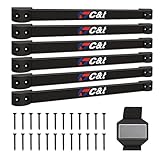
The foundation of any magnetic tool bar is the core material generating the magnetic field. Budget-friendly options typically rely on ferrite or ceramic magnets. These are generally wider, inexpensive to produce, and offer a broad magnetic field that is well-suited for holding medium-weight items like utility knives, pliers, and small screwdrivers. However, they lack the intense, concentrated pull force required for heavier professional gear.
On the other end of the spectrum are neodymium rare-earth magnets. Neodymium cores pack an incredible amount of magnetic strength into a remarkably small footprint. A bar utilizing neodymium can securely anchor heavy items like full-sized adjustable wrenches, hammers, and chisels without sliding. If your tool collection skews heavily toward professional-grade mechanics’ tools, prioritizing a neodymium core is essential for safety and reliability.
Weight Capacity Ratings vs. Real-World Tool Loads
Manufacturers often list impressive maximum weight capacities for their magnetic bars, but these numbers can be misleading if you do not account for real-world geometry. A rating of twenty pounds assumes the weight is distributed evenly across the entire surface of the bar and that the tools sit flush against the magnetic face. In practice, tools have irregular shapes, handles that stick outward, and varying contact surface areas.
When calculating your needs, look at how individual tools interface with the bar. A heavy steel hammer held only by its narrow neck has a high leverage ratio, making it much more likely to pivot and slide down compared to a flat-backed putty knife. Always discount the manufacturer’s maximum rating by about thirty percent to ensure a safe margin against accidental bumps or overloaded sections.
Bar Lengths and Modular Layout Planning
Magnetic bars typically come in standard lengths ranging from twelve to twenty-four inches. While it might be tempting to buy the longest bar available to maximize storage, longer bars are inherently more difficult to mount securely by yourself and can create a cluttered visual footprint if they are not fully utilized.
Instead of relying on a single massive bar, consider a modular approach using multiple medium-length bars spaced strategically around your workspace. This allows you to group tools by category—such as keeping measuring tools near your layout bench and pliers near your assembly area. Modular mounting also distributes the physical load across multiple wall studs rather than concentrating all your heavy tools in one continuous line.
Surface Mounting Hardware and Wall Compatibility
Even the strongest magnet is useless if the bar itself pulls out of the wall under the weight of your tools. Pay close attention to the mounting holes and the included hardware. High-quality bars feature pre-drilled holes with countersunk metal grommets, allowing screw heads to sit flush so they never scratch your tools as you snap them into place.
Evaluate your wall material before installation. Standard drywall requires heavy-duty toggle bolts or placement directly into wooden wall studs to support the combined weight of the steel bar and iron tools. If you are mounting onto concrete block or brick in a garage setting, you will need appropriate masonry anchors and a hammer drill to ensure a permanent, wobble-free hold.
Rubberized Coatings and Scratch Prevention
Raw steel or hard plastic outer housings can take a serious toll on the finish of your prized tools. Every time you pull a polished chrome ratchet or a painted handle off a bare metal bar, you risk scratching the surface. Over time, metal-on-metal contact can also lead to minor chipping on tool edges.
Look for magnetic bars that feature a protective rubberized coating, heavy-duty plastic end caps, or recessed magnetic strips embedded within a powder-coated aluminum channel. These features provide a soft buffer that protects your tools from cosmetic wear while slightly increasing friction to prevent side-to-side sliding.
Single-Bar vs. Dual-Bar Parallel Systems
If you primarily store long, slender items like screwdrivers, chisels, or extensions, a single magnetic bar often leaves the handles dangling loosely at an awkward angle. This makes it difficult to grab a single tool quickly without accidentally knocking adjacent items loose.
For specialized storage, consider setting up a dual-bar parallel system. By mounting two shorter magnetic bars horizontally—one near the top for the tool shafts and one lower down for the lower handles—you create a locked-in storage matrix that keeps long tools completely rigid and prevents them from pivoting when bumped.
Related Guides
For deeper product recommendations, hands-on testing notes, and direct comparisons of current options on the market, take a look at our top-rated magnetic tool holder bars guide.
FAQ
Will magnetic tool bars demagnetize my tools over time?
No, standard magnetic tool holder bars are not powerful enough to alter the magnetic polarity or metallurgical properties of high-carbon steel hand tools. Your screwdrivers and wrenches will remain completely functional and unaffected by prolonged contact with the storage bar.
Can I mount these magnetic bars on metal tool chests or rolling cabinets?
Yes, many magnetic bars feature strong enough rear fields or pre-existing mounting flexibility to attach directly to the side of a steel tool chest without drilling. However, verify that the cabinet skin is thick enough to support the combined weight of the bar and your loaded tools.
How do I clean metal shavings and debris off the magnetic surface?
Fine iron filings, dust, and metal shavings naturally accumulate on permanent magnets in a workshop environment over time. You can easily clean them off by wrapping a piece of strong duct tape around your fingers, pressing it against the magnetic face, and peeling it away to lift out the trapped debris.
Do I absolutely need to anchor the bar into wall studs?
While drywall anchors can hold lightweight items like small pliers and brushes, mounting into wooden wall studs or using heavy-duty toggle bolts is strongly recommended if you plan to store heavy hammers, full socket sets, or large wrenches. This prevents the mounting screws from tearing out of the wall under sudden downward force.