Key takeaways
- How to Choose Freestanding Garage Cabinets: What Actually Matters
- How to Choose Metal Garage Cabinets: What Actually Matters
- How to Choose Metal Garage Cabinets: What Actually Matters
- How to Choose Vinyl Record Storage Cabinets: What Actually Matters
- How to Choose Bakers Racks: What Actually Matters
What's inside
Setting up an organized workspace in 2026 requires more than just throwing bins on wire racks; it demands robust furniture that can handle fluctuating temperatures, heavy gear, and dust. Freestanding garage cabinets remain a top choice for homeowners because they offer heavy-duty storage without requiring permanent wall mounting, giving you the flexibility to reconfigure your shop whenever your needs change.
However, walking into the purchasing process without a clear strategy often leads to sagging shelves, rusted frames, or doors that won’t latch properly. In this guide, we break down the critical specifications, common pitfalls, and material choices that dictate whether your investment will last for decades or buckle under pressure.
As an Amazon Associate we earn from qualifying purchases at no extra cost to you. Product prices and availability are accurate as of the date shown and are subject to change.
Material Matters: Steel, Resin, and Wood
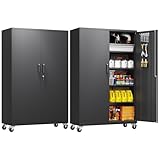
The material of your freestanding cabinet dictates its lifespan, maintenance needs, and overall weight tolerance. Heavy-gauge steel is the gold standard for durability and impact resistance, making it ideal for mechanics and serious DIYers who store heavy metal tools and automotive gear. Look for powder-coated finishes that actively prevent rust and resist scratching from everyday garage traffic.
Resin or heavy-duty plastic cabinets offer an excellent alternative if your garage is prone to high humidity or moisture. Unlike metal, resin will never rust, dent, or corrode, and it handles damp environments effortlessly without requiring special upkeep. Wood and engineered wood composites provide a clean, workshop-bench aesthetic, but they require strict climate control to prevent warping and swelling from seasonal humidity shifts.
Weight Capacities and Shelf Reinforcement
A cabinet is only as good as its individual shelves. When evaluating options, always look at the weight capacity per shelf rather than the total unit capacity. Standard particle board or thin wire shelves will quickly bow under the weight of cast-iron parts, heavy paint cans, or bulk automotive fluids.
Opt for fully adjustable steel shelves with center reinforcement channels if you plan on storing dense items. Quality freestanding units typically support higher weights per shelf on the bottom tier, scaling down slightly for upper shelves to maintain the center of gravity and prevent tipping hazards.
Mobility vs. Stability: Casters vs. Leveling Feet
Decide early whether you want a stationary unit or a mobile workstation. Heavy-duty locking casters allow you to roll the cabinet out of the way for sweeping or to position your tools right next to your active project. However, casters can raise the overall height and introduce slight wobbling if the garage floor slopes.
If you prefer a stationary setup, look for adjustable leveling feet. Garage floors are almost always sloped toward the door for drainage, meaning a rigid cabinet without adjustable feet will have crooked doors and uneven gaps. Leveling feet let you dial in a plumb, stable stance regardless of floor imperfections.
Security and Locking Mechanisms
Garages are often entry points to the home, and keeping dangerous chemicals, sharp tools, or expensive power equipment secure is a priority. Premium freestanding cabinets feature three-point locking systems that secure the top, bottom, and middle of the doors simultaneously, offering much better security than a simple single-point latch.
Inspect the actual lock cylinder and handle construction. Flimsy plastic handles snap easily under torque, whereas solid cast-metal or stainless steel handles withstand daily wear and tear. If you are storing hazardous items away from children, ensure the keys are distinct or the lock mechanism can be upgraded.
Assessing Clearance and Door Swing Constraints
Measuring your available floor space is only half the battle; you must also account for the door swing radius. Many garage layouts are tight, squeezed between parked cars, bicycles, and wall studs. Standard swinging doors require significant clearance in front of the unit.
If your garage is narrow, consider sliding-door cabinets or configurations with narrow double doors that minimize the required aisle space. Always check the hinge quality as well. European-style concealed hinges that offer multi-way adjustments allow you to correct sagging doors over time, ensuring your storage remains functional year after year.
When to Spend More on Premium Build Quality
Entry-level freestanding cabinets often tempt buyers with low price tags, but they frequently feature thin sheet metal that vibrates, lacks sound-dampening insulation in the doors, and arrives with frustrating assembly quirks. You should consider spending more when you require high load tolerances, heavy-duty continuous hinges, and full double-wall door construction.
Investing in higher-end models also guarantees better customer support, replacement part availability, and powder-coat finishes that won’t chalk or fade over years of exposure. Reviewing top-tier options like our expert model rankings demonstrates how premium engineering translates to effortless daily utility.
Related Guides
To explore more ways to organize your entire home, check out our other expert roundups. For specialized storage needs, read our guide on stylish vinyl organization, or compare heavy-duty options in our breakdown of durable metal storage to find the ideal match for your workshop setup.
FAQ
Do freestanding garage cabinets need to be bolted to the wall?
While designed to stand on their own, tall freestanding cabinets should ideally be secured to a wall stud with an anti-tip bracket. This prevents the unit from tipping over when heavy loads are shifted or multiple drawers are opened simultaneously.
Can I place resin cabinets in an unheated garage?
Yes, heavy-duty resin cabinets are exceptionally well-suited for unheated garages because they are completely immune to rust, rot, and moisture damage. They handle sub-zero winters and humid summers without degrading structurally.
How much weight can a standard garage cabinet shelf hold?
Standard shelves typically hold between 50 and 150 pounds depending on the material thickness and reinforcement. Always check the manufacturer specifications to ensure the shelf can support dense items like toolboxes or paint cans.
Are adjustable leveling feet necessary on garage floors?
Leveling feet are highly recommended because concrete garage floors are almost always sloped toward the exterior for drainage. Without adjustable feet, your cabinet doors may not close correctly or evenly.