Key takeaways
- Percale vs Sateen Cotton Sheets for Hot Sleepers: Which Is Right for Your Home (2026)
- Percale vs Sateen Cotton Sheets for Hot Sleepers: Which Is Right for Your Home (2026)
- Percale vs Sateen Cotton Sheets for Hot Sleepers: Which Is Right for Your Home (2026)
- 6 Best Mattress Toppers For Hot Sleepers (2026)
- 6 Best Mattresses For Hot Side Sleepers (2026)
What's inside
Waking up at 2:00 AM in a pool of sweat is a frustrating experience that many hot sleepers know all too well. You toss and turn, flip the pillow to find the cool side, and kick off the duvet, only to find that your sheets are trapping your body heat like a greenhouse. When you are looking to upgrade your bedding to prevent these night sweats, the decision almost always comes down to a classic battle of weaves: percale vs sateen cotton sheets for hot sleepers.
While both fabrics are made from 100% cotton, the way the cotton fibers are woven together completely changes how they perform overnight. The real decision you face isn’t just about choosing the prettiest set of sheets; it is about choosing between a crisp, matte, highly breathable fabric that acts like a built-in fan, and a silky, heavier, lustrous fabric that drapes closely over your body. Making the wrong choice can mean the difference between eight hours of uninterrupted, cool sleep and a restless night of temperature spikes.
As an Amazon Associate we earn from qualifying purchases at no extra cost to you. Product prices and availability are accurate as of the date shown and are subject to change.

Quick Verdict
If your primary goal is staying cool, percale is the undisputed winner. Its simple, grid-like weave allows maximum airflow, keeping your body temperature regulated throughout the night. Sateen sheets, while incredibly smooth and luxurious, feature a denser weave that naturally traps more heat, making them better suited for those who sleep cold or live in chilly climates.
Side by Side
To help you quickly understand the structural and functional differences between these two popular weaves, here is a direct comparison of how they stack up in everyday use:
| Feature | Percale Cotton Sheets | Sateen Cotton Sheets |
|---|---|---|
| Comfort & Feel | Crisp, cool, matte, similar to a high-end hotel sheet or a freshly ironed button-down shirt. | Silky-smooth, heavy drape, subtle sheen, slippery texture against the skin. |
| Durability | Highly durable; the tight grid weave resists pilling and tears for many years. | Moderately durable; the exposed “floating” threads are more prone to snagging and pilling. |
| Price Range | Typically $30 to $150+ depending on organic certifications and thread count. | Typically $25 to $180+ depending on cotton quality (e.g., Egyptian or long-staple cotton). |
| Maintenance | Easy to wash, but highly prone to wrinkling; requires prompt removal from the dryer. | Easy to wash, naturally wrinkle-resistant, retains its smooth look with minimal effort. |
| Space Needed | Folds down compactly; takes up very little space in your linen closet. | Slightly bulkier due to the thicker weave and heavier fabric weight. |
| Look & Aesthetic | Casual, matte, relaxed, and classic. Often shows natural, charming wrinkles. | Formal, elegant, lustrous, and polished. Drapes smoothly over the mattress edges. |
| Average Lifespan | 3 to 5+ years (gets softer and more comfortable with every single wash). | 2 to 4 years (can lose its signature sheen and smoothness over time with heavy washing). |
| Best For | Active hot sleepers, night sweat sufferers, summer months, and warm climates. | Mild hot sleepers who prefer a silky touch, cold sleepers, and winter months. |
Where Percale Wins
Percale weaves utilize a classic “one-over, one-under” pattern. This simple structure produces a fabric that is incredibly light and breathable. Because the threads are woven evenly in a grid, there is plenty of space between the fibers for hot air to escape and cool air to circulate. If you weigh a standard queen-size percale sheet, you will notice it is significantly lighter than its sateen counterpart, usually weighing in around 100 to 115 grams per square meter (GSM).
For hot sleepers, this structural breathability is a lifesaver. Percale sheets do not cling to your body; instead, they loft slightly over your skin, creating a small pocket of air that prevents heat from getting trapped. This crispness is why percale is the standard choice for luxury hotels in warm tropical destinations.
Another major benefit of percale is its longevity. Because the threads are tightly locked in a basic grid, they do not easily pull or pill. In fact, percale sheets actually improve with age. While they might feel slightly stiff out of the box, every trip through the washing machine breaks down the cotton fibers slightly, making them buttery-soft while maintaining their signature crispness.
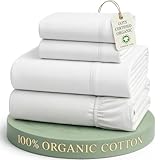
If you want to experience this cooling effect without breaking the bank, options like the LANE LINEN Queen Sheets 100% Organic Cotton 4pc Percale Cooling in White ($35.99) or the larger LANE LINEN King Sheets 100% Organic Cotton 4pc Percale Cooling Soft in White ($49.99) offer an excellent entry point. These organic sets provide the raw, unadulterated breathability of pure cotton without heavy synthetic coatings that can trap heat.
Where Sateen Cotton Sheets for Hot Sleepers Wins
Sateen is constructed using a “three-over, one-under” or “four-over, one-under” weave. This weave pattern exposes more of the cotton thread’s surface on the face of the fabric. The result is an incredibly smooth, silky surface with a beautiful, lustrous sheen that catches the light.
So, where do sateen cotton sheets for hot sleepers actually win? The answer lies in sensory preference and climate control. Not all hot sleepers like the crisp, paper-like feel of percale. Some find it too stiff or abrasive against sensitive skin. If you sleep with an air conditioner set to a cool 65 degrees Fahrenheit, sateen sheets can provide a cozy, protective weight without causing you to overheat, provided you choose a high-quality, 100% cotton set.
Sateen also wins handily when it comes to aesthetics and maintenance. Because of the floating threads, sateen is naturally heavy and wrinkle-resistant. It drapes elegantly over the bed, looking neat and polished straight out of the dryer. If you hate the crumpled look of percale but still want the natural moisture-wicking properties of pure cotton, a sateen set is your best bet.
For a smooth, silky feel at an affordable price point, you can look to options like the Soft Natural 100% Cotton Sateen Twin Sheets, 3 Pc Set in Bright White ($25.49) or the Soft Natural 100% Cotton Sateen King Size Sheets Set, 4 Pcs in Bright White ($38.24). These sets give you that luxurious, heavy drape and silky glide against your skin while remaining far more breathable than synthetic microfiber or polyester satin sheets.
Cost Over 5 Years
When investing in bedding, looking at the upfront price tag only tells half the story. You must consider the cost per sleep over a five-year horizon. Because percale and sateen wear differently, their long-term value varies significantly.
Let’s look at the math. A high-quality set of organic percale sheets, such as the LANE LINEN King set priced at $49.99, is built to withstand frequent washing. Because the one-over, one-under weave is structurally stable, a single set can easily last five years of regular, bi-weekly washing without thinning out or pilling. Over five years, that $49.99 investment costs you just $10.00 per year.
On the other hand, sateen sheets have exposed threads that rub against your pajamas and skin. Over time, this friction causes those floating threads to break, leading to pilling and a loss of that signature silky softness. A budget-friendly sateen set like the Soft Natural King set at $38.24 will likely need to be replaced after two to three years of heavy use to maintain its comfort level. Buying two sets over a five-year period brings your total cost to $76.48, or roughly $15.30 per year. While sateen is still incredibly affordable, percale remains the champion of long-term durability and value.
Which One for Your Home
Your sleeping temperature isn’t the only factor to consider when choosing between these two weaves. Your living situation, family structure, and lifestyle should also guide your decision as we head into 2026.
Small Apartment
If you live in a small apartment with limited storage space or no in-unit dryer, percale is the clear winner. Percale sheets are lightweight, meaning they fold down into a compact square that takes up minimal space in a small linen closet. Furthermore, because the weave is so breathable, percale sheets dry incredibly fast on an indoor drying rack or during a short cycle in a compact dryer, saving you time and energy.
Family with Kids and Pets
For busy households with children and pets, percale is usually the more practical choice. Kids and pets bring dirt, spills, and claws into the bed. Percale’s tight, durable weave can handle frequent hot-water washes to sanitize the fabric, and pet claws are far less likely to snag the tight threads. However, if your pet sheds heavily, note that sateen’s slippery surface makes it easier to brush off pet hair, whereas hair can sometimes weave itself into the matte texture of percale.
Rental Property
If you are outfitting a guest room or a vacation rental, sateen offers a touch of instant luxury. Guests love the silky, heavy feel of sateen, which feels expensive and cozy. Because sateen resists wrinkles, your rental will look pristine and professionally styled without the need for time-consuming steam-ironing between guests.
Long-Term Home
For your primary bedroom in a long-term home, the choice comes down to your personal sleep climate. If you are a dedicated hot sleeper who wants a reliable, crisp, and cooling setup that will get softer and more comfortable with every passing year, investing in a high-quality organic percale set is the absolute best choice for your sleep health and comfort.
FAQ
What is the ideal thread count for percale vs sateen sheets?
For percale sheets, the sweet spot for maximum breathability and durability is between 200 and 400 thread count. Anything higher than 400 often means the threads are too tightly packed, which ruins the fabric’s cooling properties. For sateen sheets, look for a thread count between 300 and 600. Sateen requires a slightly higher thread count to achieve its signature smooth drape and weight.
Do sateen sheets make you sweat more than percale?
Yes, sateen sheets are generally warmer than percale sheets. The three-over-one or four-over-one weave structure creates a denser fabric with fewer air gaps. This density traps your body heat close to your skin, which can trigger night sweats in hot sleepers. Percale’s open grid weave allows that heat to escape immediately.
How should hot sleepers wash cotton sheets to keep them breathable?
To maintain the cooling properties of both percale and sateen, wash them in cool or warm water with a mild, liquid detergent. Avoid using fabric softeners or dryer sheets. These products leave a microscopic chemical film over the cotton fibers, which clogs the natural pores of the fabric and severely reduces its ability to wick away moisture and breathe.
Will percale sheets always feel rough and wrinkly?
Percale sheets are naturally prone to wrinkling because they do not contain synthetic wrinkle-resistant chemicals. However, they are not rough. While they start out with a crisp, structured feel similar to a paper bag, they soften beautifully with every wash. Within a few months of regular use, high-quality percale sheets will feel incredibly soft while keeping their cool, airy properties.