Key takeaways
- Percale vs Sateen Cotton Sheets for Hot Sleepers: Which Is Right for Your Home (2026)
- Percale vs Sateen Cotton Sheets for Hot Sleepers: Which Is Right for Your Home (2026)
- Percale vs Sateen Cotton Sheets for Hot Sleepers: Which Is Right for Your Home (2026)
- 6 Best Mattress Toppers For Hot Sleepers (2026)
- 6 Best Mattresses For Hot Side Sleepers (2026)
What's inside
Both percale and sateen are 100% cotton, so the fiber is not the variable here; the weave is. Percale is a one-over-one-under plain weave that produces a crisp, matte, breathable sheet. Sateen floats three or four yarns over one, which packs more thread onto the surface and produces the smooth, slightly shiny fabric hotels favor. For a hot sleeper, the trade is straightforward: percale lets more air through and feels cool and dry, while sateen feels softer and heavier and holds a little more warmth. The buyer’s real decision is how much softness you are willing to give up for airflow, and whether you sleep hot all year or only in summer.
Quick Verdict
Percale is the correct pick for anyone who wakes up warm or sweaty. Its open weave moves air, it dries faster, and it does not develop the clinging feel sateen can have once it gets damp. Choose sateen only if you sleep warm but not sweaty, you dislike a crisp hand, or you want wrinkle-resistant sheets that look smooth without ironing. Price is nearly a wash: a percale queen set runs $35-$120 and a comparable sateen set $35-$130, so the decision comes down to feel, not budget.
As an Amazon Associate we earn from qualifying purchases at no extra cost to you. Product prices and availability are accurate as of the date shown and are subject to change.

Side by Side
| Factor | Percale | Sateen |
|---|---|---|
| Comfort for hot sleepers | Cool, crisp, dry; feels like a pressed shirt | Soft, smooth, slightly warmer; can cling when damp |
| Breathability | High; plain weave leaves more open space between yarns | Moderate; denser surface traps more air near the body |
| Durability | 5-10 years; tight interlacing resists pilling and snags | 4-8 years; long floats snag and pill sooner |
| Typical thread count | 200-400; 250-300 is the sweet spot | 300-600; 400-500 is the sweet spot |
| Price range (queen set) | $35-$120 for quality cotton; $150+ for long-staple luxury | $35-$130; $150+ for long-staple luxury |
| Maintenance | Warm wash, tumble dry; wrinkles noticeably | Warm wash, low tumble; wrinkles less, shows wear from friction |
| Weight (queen set) | About 4-5 lb | About 5-6 lb |
| Space needed | Folds to roughly 11 x 13 x 4 inches | Folds to roughly 11 x 13 x 5 inches |
| Look | Matte, crisp, tailored | Subtle sheen, fluid drape, hotel-style |
| Best for | Hot and sweaty sleepers, humid climates, summer use | Warm-but-dry sleepers, cooler bedrooms, softness seekers |
Where Percale Wins
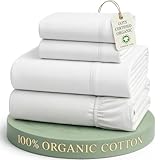
Percale wins on airflow, and airflow is what a hot sleeper needs most. With each yarn crossing over and under its neighbor, the fabric has more tiny gaps per square inch than sateen at the same thread count, so heat and moisture escape rather than pool. That is why a set like the LANE LINEN 100% organic cotton percale queen set at $35.99 is marketed specifically as cooling: it is the weave doing the work, not a coating.
Percale also wins on drying speed and on how it feels once it does get damp. Because it holds less fabric against the skin and dries faster, a percale sheet that catches sweat at midnight is usually dry again by 2 a.m. instead of staying clammy. It also gets crisper and softer with washing without losing structure.
Durability is the third win. The tight one-over-one interlacing means there are no long exposed floats to catch on a toenail, a ring, or a pet claw, so percale resists pilling and holds up to hot washes better than sateen does. The king version of the LANE LINEN set at $49.99 shows how modest the size premium is at this price tier: about $14 more for roughly 25% more fabric. Bonus for allergy sufferers: percale tolerates the hot water cycles needed to kill dust mites without degrading.
Where Sateen Cotton Sheets for Hot Sleepers Wins
Sateen wins on softness and appearance. The satin-style weave puts most of the yarn on the surface, so the fabric feels silky and drapes over the body instead of sitting on top of it. If percale’s crispness reads as scratchy to you, sateen is the more comfortable choice even on warm nights, particularly in a bedroom kept at 68°F or below with a fan or air conditioning doing the cooling work.
It also wins on wrinkles. Sateen comes out of the dryer looking nearly pressed, while percale needs a quick shake and smoothing to avoid a crumpled look. For anyone who wants the bed to look finished without ironing, that is a daily convenience.
Sateen is often the better value at the low end of the market. Budget sets like the Soft Natural 100% cotton sateen king set at $38.24 or the three-piece twin set at $25.49 feel more expensive than they are because the weave hides shorter fibers well, whereas budget percale can feel rough. Sateen also holds dye evenly and resists fading, so colored sets stay saturated longer. For a warm sleeper who is not actually sweating through the night, the small increase in retained heat is a fair trade for the softer hand.
Cost Over 5 Years
Assume one queen set on the bed, washed weekly, with one backup set purchased at the start.
| Cost item | Percale | Sateen |
|---|---|---|
| Two initial sets | $70-$240 | $70-$260 |
| Replacements in 5 years | 0-1 set (fitted sheet usually wears first) | 1 set (pilling and thinning at shoulder and hip zones) |
| Extra pillowcases | $15-$30 per pair | $15-$35 per pair |
| Drying energy | Slightly lower; dries 10-15% faster | Slightly higher; heavier fabric |
| Approximate 5-year total | $120-$330 | $140-$400 |
The totals overlap heavily, and the difference is driven more by fiber quality than by weave. A long-staple cotton set in either weave will outlast two budget sets. If you are going to spend more, spend it on longer fibers (look for “long-staple” or “combed cotton” on the label) rather than on a higher thread count, which past about 400 adds weight and heat without adding comfort.
Which One for Your Home
Small Apartment
Percale. Apartments often run warm because of shared walls and limited cross-ventilation, and you may not control the thermostat. Percale’s airflow does the cooling that your building will not. It also dries faster on a rack if you rely on shared laundry, and a folded set takes up an inch less shelf space than sateen.
Family With Kids or Pets
Percale for the master bed and any bed a pet sleeps on; its tight weave shrugs off claws and frequent hot washes. Sateen is fine for guest rooms or a child’s bed that gets less friction. If you buy sateen for a pet household, choose a higher thread count in the 400-500 range, which shortens the floats slightly and reduces snagging.
Rental
Either, but percale is safer if the unit’s laundry runs hot or you use a laundromat, since it handles heat without pilling. Renters who might move to a different bed size should buy at the $35-$50 tier rather than premium, and percale at that price feels better than sateen at that price once it has been washed a few times.
Long-Term Home
Both, by season. In a home you plan to stay in through 2026 and beyond, keep a percale set for late spring through early fall and a sateen set for the colder months when a little retained warmth is welcome. Buying long-staple cotton in both weaves at $100-$150 per set means each lasts 8-10 years on a half-year rotation, which is the cheapest cotton bedding you will ever own per night.
FAQ
Does thread count matter for hot sleepers?
Less than the weave does. A 250-300 thread count percale breathes better than a 600 thread count sateen, and anything above roughly 400 in either weave is denser and warmer, not cooler. Very high counts often use multi-ply yarns to inflate the number, which adds weight and reduces airflow.
Why does sateen feel warmer if it is also 100% cotton?
The weave structure. Sateen’s floating yarns pack more fiber onto the surface with fewer gaps, so less air moves through and more body heat is held near the skin. The smooth surface also lies flatter against you, reducing the tiny air pockets that percale’s textured surface preserves.
Will percale soften over time or stay crisp?
It softens with washing but keeps its crisp character. Most percale reaches its best feel after 5-10 washes. Skip fabric softener, which coats the fibers and reduces breathability; a half cup of white vinegar in the rinse does the same job without the residue.
Which weave is better for night sweats specifically?
Percale. It absorbs moisture, releases it faster, and does not cling once damp. If night sweats are frequent, pair percale sheets with a breathable cotton or Tencel mattress protector rather than a vinyl-backed one, and keep a second set so you can change the bed without waiting for laundry.