Key takeaways
- Works the first night, if it works. There is no adjustment period or dosing schedule. You know within a week whether it helps.
- Cheap relative to other sleep aids. $25-$50 for a basic glass-bead blanket, no refills, no subscription, and it lasts 3-5 years with reasonable care.
- Reduces tossing. The weight makes shifting position take more effort, which for restless sleepers means fewer wake-ups from movement.
- Doubles as a sensory tool. Sitting under it on the sofa during an anxious evening delivers the same pressure as at bedtime. Many people with sensory processing differences use it this way.
- No interaction with medication or other treatments. It sits alongside therapy, medication, or breathing exercises without conflict.
- Glass beads run cooler than pellets. Glass is denser, so the blanket is thinner for the same weight and traps less heat than a plastic-pellet blanket of equal weight.
What's inside
The Short Answer
Yes, a weighted blanket is worth trying for anxiety, with one condition: the weight has to be right for your body. The standard guidance is roughly 10% of your body weight, so a 150 lb adult wants a 15 lb blanket, and a blanket that is too light does little while one that is too heavy feels trapping rather than calming. Within that condition, a $25-$50 glass-bead blanket is one of the cheapest anxiety tools you can buy, it works the first night if it is going to work at all, and it has no side effects beyond warmth. It is not a treatment for an anxiety disorder, and it does nothing for daytime anxiety unless you are sitting under it.
What You Actually Get
A weighted blanket is a quilted cover sewn into pockets, usually 4-6 inch squares, each filled with fine glass beads or plastic poly pellets. The pockets keep the weight distributed evenly so pressure lands across the whole body instead of pooling in one spot. Adult blankets weigh 12-25 lb, with 15 lb the most common size. A twin/full throw measures about 48 x 72 inches and covers one person; a queen size at 60 x 80 inches covers the mattress top and shares weight across two sleepers, which halves the pressure each person feels.
As an Amazon Associate we earn from qualifying purchases at no extra cost to you. Product prices and availability are accurate as of the date shown and are subject to change.
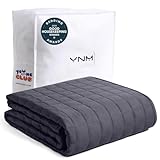

What the weight does is called deep pressure stimulation: firm, even pressure that the body reads as being held. Many people find it slows their breathing and quiets a racing mind at bedtime, which is why the blankets are marketed for anxiety, insomnia, and restlessness. The effect is immediate rather than cumulative; if you feel calmer under the blanket in the first few nights, it works for you, and if you feel pinned or hot, it does not.
Pricing is low at the entry level. A 15 lb, 48 x 72 inch glass-bead blanket like the YnM adult throw at $23.89 covers one person up to about 140-160 lb; a 15 lb queen cooling blanket at 60 x 80 inches like the Mr. Sandman at $46.99 is sized for a bed rather than a body. Premium knitted or bamboo-covered blankets run $100-$250.
Pros
- Works the first night, if it works. There is no adjustment period or dosing schedule. You know within a week whether it helps.
- Cheap relative to other sleep aids. $25-$50 for a basic glass-bead blanket, no refills, no subscription, and it lasts 3-5 years with reasonable care.
- Reduces tossing. The weight makes shifting position take more effort, which for restless sleepers means fewer wake-ups from movement.
- Doubles as a sensory tool. Sitting under it on the sofa during an anxious evening delivers the same pressure as at bedtime. Many people with sensory processing differences use it this way.
- No interaction with medication or other treatments. It sits alongside therapy, medication, or breathing exercises without conflict.
- Glass beads run cooler than pellets. Glass is denser, so the blanket is thinner for the same weight and traps less heat than a plastic-pellet blanket of equal weight.
Cons
- Heat. Even “cooling” blankets add a layer of 15 lb of fabric and fill. Hot sleepers often kick it off by 2 a.m., which ends the benefit.
- Wrong weight ruins it. Too light feels like a normal blanket; too heavy causes claustrophobia, shoulder pressure, or numb feet. Couples with different body weights sharing one queen blanket rarely find a weight that suits both.
- Laundry is a chore. A 15 lb blanket exceeds most home washers’ safe load once wet; many need a commercial machine or a removable duvet cover, which adds $20-$40.
- It does not treat anxiety. It can ease the bedtime symptoms, but it changes nothing about the source. People expecting it to replace therapy or medication are disappointed.
- Not safe for everyone. Children under 3 and anyone who cannot lift the blanket off themselves should not use one. People with sleep apnea, circulation problems, or asthma should ask a clinician first.
- Bead leaks and shifting. Budget blankets with large pockets or thin stitching let beads migrate to one end or leak through seams within a year.
Who Should Buy It
Buy one if your anxiety peaks at bedtime, you lie awake with a racing mind, or you toss for the first hour. Buy one if you already find comfort in heavy quilts, a partner’s arm, or a firm hug, since those are the same pressure response. Buy one if you run cool at night or your bedroom stays under 68°F. Buy one if you have tried breathing exercises and a fixed sleep schedule and want a physical tool to add on top. Start at 10% of your body weight, rounded down, and choose a throw sized to your body (about 48 x 72 inches) rather than to the bed, so the full weight stays on you.
Who Should Skip It
Skip it if you sleep hot, sweat at night, or already sleep with a fan and a single sheet; the heat will cancel the calm. Skip it if your anxiety is mostly during the day, since a blanket only helps while you are under it. Skip it if you share a bed with someone 40 or more pounds heavier or lighter than you and want one blanket for both, because no single weight will suit you both. Skip it if you have a mobility limitation that makes shifting 15 lb difficult, or a respiratory or circulatory condition, unless a clinician clears it. And skip the queen size if you are buying for one person; the weight spreads across the mattress and you feel only part of it.
Cheaper Alternatives
| Option | Cost | Trade-off |
|---|---|---|
| Stack two or three regular quilts or comforters | $0 if you own them | Adds warmth faster than weight; pressure is uneven and shifts off during the night |
| Weighted lap pad (5-7 lb, 20 x 24 inches) | $20-$35 | Portable and cool, works for daytime anxiety on the sofa or at a desk, but does nothing for full-body pressure in bed |
| Weighted sleep mask or eye pillow (1-2 lb) | $10-$25 | Gentle pressure on the face and blocks light; a fraction of the calming effect of a body blanket |
| Snug fitted sheet or compression sheet | $25-$45 | Delivers pressure without heat and stays put; feels more like a hammock than a hug, and is hard to get in and out of |
| Body pillow to hug (20 x 54 inches) | $20-$40 | Cheap and cool, mimics the “held” feeling for side sleepers, but the pressure is on the front only |
| Free breathing or body-scan routine | $0 | Addresses the racing mind directly and works anywhere, but takes practice over 2-4 weeks to feel reliable |
FAQ
How heavy should a weighted blanket be for anxiety?
About 10% of your body weight, give or take 1-2 lb. A 120 lb adult should start at 12 lb, a 150 lb adult at 15 lb, and a 200 lb adult at 20 lb. If you are between sizes or new to weighted blankets, go lighter; you can always add a regular blanket on top. Children over 3 should use 10% of body weight plus 1 lb, and only with adult supervision.
Can two people share one weighted blanket?
Physically yes, on a queen or king size, but each person feels only the weight over their own body, and the blanket’s weight is chosen for one person. A 15 lb queen blanket delivers roughly 7-8 lb to each sleeper, which is usually too light to matter. Most couples do better with two individual throws at the correct weight for each.
Do weighted blankets make you hot?
Somewhat, always. The fill adds mass that holds body heat, and a 15 lb blanket is thicker than a comforter. Glass beads run cooler than plastic pellets, and a cotton, bamboo, or Tencel cover breathes better than minky or fleece. Keeping the bedroom at 65-68°F and using the blanket over a single sheet, with nothing else on top, keeps most people comfortable.
How do I wash a 15 lb weighted blanket?
Check the label first; most glass-bead blankets can be machine washed cold on gentle if your washer is rated for at least 15-20 lb of load, which usually means a front-loader or a large-capacity top-loader without an agitator. Otherwise use a laundromat’s commercial machine, or buy a removable duvet cover and wash only that. Air dry or tumble on low; in 2026 nearly all blankets in the $25-$50 range include a duvet-cover loop system for exactly this reason.