Key takeaways
- Choosing between kapok and shredded memory foam is really a choice between two philosophies of pillow. Kapok is a silky plant fiber harvested from the seed pods of a tropical tree; it feels like a lighter, fluffier version of down…
What's inside
Choosing between kapok and shredded memory foam is really a choice between two philosophies of pillow. Kapok is a silky plant fiber harvested from the seed pods of a tropical tree; it feels like a lighter, fluffier version of down and compresses softly under your head. Shredded memory foam is polyurethane foam torn into pieces the size of croutons; it molds around your neck, pushes back gently, and holds its shape through the night. Both are usually sold in adjustable pillows with a zipper so you can add or remove fill, and both cost more than a basic polyester pillow. The real decision a buyer faces is whether you want a pillow that yields and breathes like a natural fiber, and accept that it needs regular fluffing and eventual re-stuffing, or a pillow that supports and contours like foam, and accept that it runs warmer, smells at first, and comes from a factory rather than a tree. Sleep position, heat, allergies, and how much you care about materials all push the answer one way or the other.
Quick Verdict
Pick kapok if you sleep hot, prefer a soft cloud-like feel, want a plant-based fill without chemical odor, and do not mind fluffing the pillow every morning. Pick shredded memory foam if you need firm, moldable neck support, sleep on your side, wake with neck pain on soft pillows, or want a pillow that keeps its shape with almost no daily attention. Back sleepers who like a medium feel can be happy with either; stomach sleepers should lean toward a thin kapok pillow, and side sleepers toward memory foam.
As an Amazon Associate we earn from qualifying purchases at no extra cost to you. Product prices and availability are accurate as of the date shown and are subject to change.


Side by Side
| Factor | Kapok Pillow | Shredded Memory Foam Pillow |
|---|---|---|
| Comfort feel | Soft, airy, down-like; compresses under the head with little pushback | Moldable and supportive; contours to the neck and holds the shape |
| Temperature | Very breathable; fibers do not retain heat | Warmer; shredding helps airflow but the foam still holds heat |
| Durability | Fibers flatten over 1 to 3 years; refillable to extend life | Foam softens over 2 to 4 years; refillable with new shreds |
| Price range | $50 to $120 per pillow; a set of two organic standard 20-by-28-inch pillows around $59.99, a single organic queen 20-by-30-inch around $95.95 | $30 to $90 per pillow; bulk refill fill $6 to $30 per bag |
| Maintenance | Daily fluffing; spot clean or hand wash fill, machine wash cover | Occasional shake; foam cannot be machine washed, cover can |
| Weight (queen) | 2 to 3.5 pounds | 3.5 to 5.5 pounds |
| Space needed | Standard pillow footprint; loft 4 to 6 inches when fluffed | Standard footprint; loft 4 to 7 inches, adjustable |
| Look | Plump, rounded, natural cotton shell; looks like a down pillow | Fuller and more uniform; often a bamboo-blend or knit cover |
| Odor | Faint natural scent that fades in a day | Chemical off-gassing for 1 to 3 days, longer for sensitive noses |
| Resale or reuse | Fill can be composted or reused in cushions | Fill reusable in bean bags or pet beds; not compostable |
| Best for | Hot sleepers, stomach and back sleepers, allergy-conscious buyers who want plant fibers | Side sleepers, neck pain sufferers, anyone wanting firm adjustable support |
Where Kapok Pillow Wins
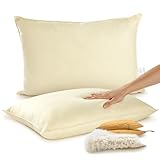
Kapok wins on breathability and feel. The fibers are hollow and coated in a natural wax, so they shed moisture and let air move freely; a kapok pillow rarely feels warm even in summer, which memory foam cannot match. The softness is closer to down than anything synthetic, with a gentle sinking sensation that stomach and back sleepers find easier on the neck than a firm foam ridge. It is also the cleaner story for anyone who cares about what is in their bedding: kapok is harvested without cutting the tree, requires no pesticides, and arrives with no chemical smell. People with latex or foam sensitivities often tolerate kapok well. Because it is so light, roughly 2 to 3.5 pounds for a queen, a kapok pillow is easy to fluff, flip, and reshape, and the fill can be topped up cheaply. Products like the Cheer Collection Set of 2 Organic Kapok Bed Pillows in standard 20 by 28 inches with a breathable cotton shell, or the Bean Products Organic Kapok Pillow in queen 20 by 30 inches, come with the kind of unbleached cotton casing that suits this approach.
Where Shredded Memory Foam Pillow Filling Wins
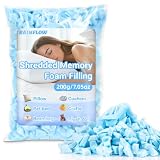
Shredded memory foam wins on support and consistency. The pieces interlock and hold a shape once you press your head into them, so a side sleeper’s neck stays level with the spine all night instead of sinking as the fill compresses. It is the better choice for anyone who wakes with neck or shoulder pain from a pillow that goes flat. Adjustability is another advantage: because the fill is sold loose, you can dial in loft precisely, and refills are inexpensive. A 10-pound bag of shredded memory foam stuffing, sold for bean bags, cushions, and pillows, runs about $28.49, and a small 7.05-ounce bag of shredded memory foam pillow filling costs about $6.59, so topping up a pillow costs a few dollars. Foam also needs far less daily attention; a shake once a week keeps it even. It is denser and heavier, 3.5 to 5.5 pounds for a queen, which some people find reassuring, and it resists the flattening that natural fibers eventually suffer. For couples with different needs, a shredded foam pillow can be adjusted for one partner and a second pillow for the other with the same bag of fill.
Cost Over 5 Years
A kapok pillow costs $50 to $120 up front. Expect to add or replace fill after about 18 to 30 months; a pound of loose kapok runs $15 to $30, and a queen pillow holds 2 to 3 pounds, so a full refresh is $40 to $80 while a top-up is $15 to $30. Over five years you will likely buy one to two rounds of fill, putting the total at roughly $80 to $200 per pillow. A shredded memory foam pillow costs $30 to $90 up front and needs a refill about every 3 to 4 years as the foam softens. Using bulk refill at about $28 for 10 pounds, adding a pound or two costs $3 to $6, so the five-year total lands around $40 to $110 per pillow. Memory foam is the cheaper path in 2026, mainly because refill fill is so inexpensive and the pillow needs it less often. Kapok’s premium buys breathability and a natural fiber, not longevity.
Which One for Your Home
Small apartment
Shredded memory foam is the practical pick. It needs no daily fluffing space or routine, holds its shape when stuffed into a small bed, and the refill bag can double as fill for a floor cushion or dog bed. If your apartment runs hot and you have no air conditioning, kapok’s cooling advantage is worth the extra maintenance, but buy a thinner pillow so it fluffs quickly.
Family with kids or pets
Kapok, with a caveat. It is a natural fiber with no off-gassing, and spills on the cotton shell can be spot-cleaned or the fill removed and hand washed. The caveat is that loose kapok fibers escape when a child unzips the pillow and are messy to clean up, so choose pillows with an inner liner. Shredded foam is more durable against rough use and pet claws, but if a dog tears it open, you will find foam croutons everywhere.
Rental
Either works, since pillows go with you. Shredded memory foam travels better because it compresses in a moving box and springs back, while kapok can mat if crushed for weeks. If you are staying short-term and want the lowest cost, shredded foam with a bulk refill bag covers every pillow in the house for under $100.
Long-term home
Buy both and assign them by sleeper. Side sleepers and anyone with neck complaints get shredded memory foam; hot sleepers, stomach sleepers, and guests get kapok. Keep a bag of each fill in the linen closet so pillows can be adjusted as people’s preferences change. Over a decade, the difference in cost between the two is under $100 per pillow, so comfort should decide.
FAQ
Is kapok a good choice for allergy sufferers?
Generally yes. Kapok is hypoallergenic in the sense that it is a plant fiber with no animal proteins, no latex, and no chemical treatments, and its wax coating resists moisture that dust mites need. It is not sterile, so use a zippered protector and wash covers regularly as you would with any pillow.
Does shredded memory foam sleep as hot as a solid memory foam pillow?
No. The gaps between the pieces let air move, so a shredded pillow runs noticeably cooler than a solid block of the same foam. It is still warmer than kapok, down, or buckwheat, and a breathable cover helps.
Can I mix kapok and shredded memory foam in one pillow?
Yes, and some brands sell exactly that blend. A mix of roughly 60 percent foam to 40 percent kapok gives support with more breathability and a softer surface feel. Blend the fills thoroughly before stuffing so you do not get a foam core and a kapok shell.
How do I know how much fill to add or remove?
Lie in your usual sleep position and have someone check that your head and neck line up with your spine. Side sleepers usually need 4 to 6 inches of loft, back sleepers 3 to 5, and stomach sleepers 2 to 3. Adjust in half-cup increments and sleep on it for two or three nights before changing again.