Key takeaways
- 💸 Place Your Bets!
- 🏁 And They’re Off!
- 🤪 Mascot Mayhem
A hot streak board game solves a specific problem: how do you keep a group of adults or mixed-age families leaning across the table, groaning and cheering at the same time? The best titles in this category build tension through push-your-luck mechanics, streak bonuses, or social pressure rather than random draws alone. The difference between a forgettable purchase and a game that hits the table every weekend is usually whether the design rewards nerve or pure dice luck.
This roundup compares eight games that owner feedback consistently groups under that label, evaluated on published specifications, listed prices, and recurring themes in buyer reviews. We weighted component quality at the price point, player-count flexibility, and whether the core loop creates genuine moment-to-moment tension. The result is a list that spans under ten dollars to just over forty, so you can match the table energy you want to your budget.
Our top picks
 Hot Streak Party Game
- 💸 Place Your Bets!
- 🏁 And They’re Off!
- 🤪 Mascot Mayhem
 USAOPOLY Flip 7 Card Game
- Play it Safe or Risk it All? -…
- How to Win - Be the first to…
- Beware of Busting - Rack up points based…
 The Chameleon Social Deduction Game for Adults
- A bluffing board game where players must race…
- In this board game for adults and family…
- Use hidden codes, carefully chosen words, and a…
| Product | Key specs | |
|---|---|---|
| Hot Streak Party Game | 💸 Place Your Bets! 🏁 And They’re Off! 🤪 Mascot Mayhem | Check price |
| USAOPOLY Flip 7 Card Game | Play it Safe or Risk it All? -… How to Win - Be the first to… Beware of Busting - Rack up points based… | Check price |
| The Chameleon Social Deduction Game for Adults | A bluffing board game where players must race… In this board game for adults and family… Use hidden codes, carefully chosen words, and a… | Check price |
 SEQUENCE- Original SEQUENCE Game with Folding Board SEQUENCE- Original SEQUENCE Game with Folding Board | Play a card from your hand, and place… Each player or team tries to score the… Easy enough for children, challenging for adults! | Check price |
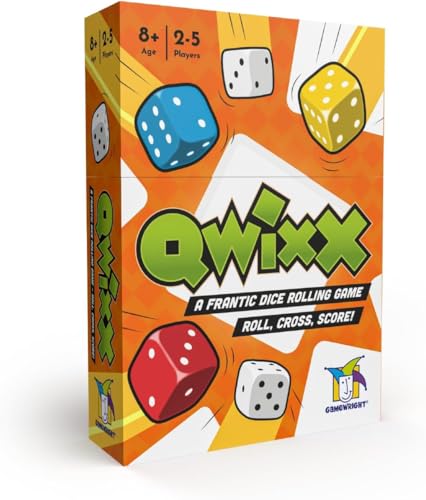 Qwixx Fast Family Dice Game Qwixx Fast Family Dice Game | FAST PLAYING DICE ROLLING GAME! A Frantic dice… EVERYONE PLAYS AT ONCE! get ready for fast… Play is simple, you roll the dice and… | Check price |
 Asmodee Just One Party Game Asmodee Just One Party Game | Just One is a cooperative party game where… The challenge is to think of the best… Designed for 3-7 players, Just One is ideal… | Check price |
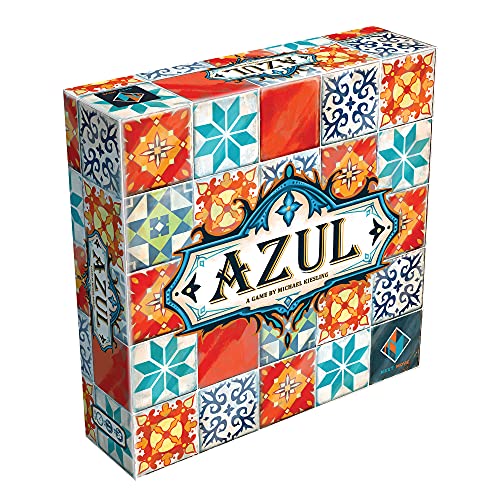 Azul Mosaic Tile-Placement Strategy Board Game Azul Mosaic Tile-Placement Strategy Board Game | Azul won the 2018 Spiel des Jahres Select tiles from shared factory displays, complete pattern… Easy rules get you playing in minutes, yet… | Check price |
 Asmodee Ticket to Ride Board Game Asmodee Ticket to Ride Board Game | Embark on a journey across early 20th century… EASY TO LEARN, HARD TO MASTER: With simple… Features a giant map of the North American… | Check price |
As an Amazon Associate we earn from qualifying purchases at no extra cost to you.
Quick Picks
| Product | Best for | Price |
|---|---|---|
| Hot Streak Party Game | Maximum energy, big groups | $39.99 |
| USAOPOLY Flip 7 | Solo push-your-luck, travel | $7.97 |
| The Chameleon | Social deduction, adults 12+ | $24.99 |
| SEQUENCE | Strategy and luck balance, families | $19.97 |
| Qwixx | Quick dice games, kids 8+ | $11.99 |
| Just One | Cooperative word play, families | $24.49 |
| Azul | Tile placement, competitive strategy | $31.99 |
| Ticket to Ride | Cross-generational strategy nights | $39.99 |
How We Picked
We filtered these titles on three criteria that recur in owner feedback for this category. First, tension architecture: does the game create a genuine decision point each turn where a player can push a streak or walk away? Second, accessibility floor: can new players understand the core loop within one round, or does rule overhead kill party momentum? Third, value at price: component count, box footprint, and replayability relative to the listed cost. Games scoring high on all three carry the most table time per dollar.
The 8 Best Hot Streak Board Game in 2026
Hot Streak Party Game – Bet. Race. Scream!
This is the loud pick. Designed for groups of six or more, it layers betting, physical challenges, and speed-round trivia into a single escalating session. Owner reviews highlight that it generates the most spontaneous laughter of anything on this list. Pros: high-energy social loop that works even with non-gamers; minimal setup since components are card-based with a simple tracker. Con: at $39.99 it is the most expensive option here and requires larger groups to hit its stride. Skip it if your regular table is three or four people, or if you prefer strategic depth over party chaos.
USAOPOLY Flip 7 Card Game
Flip 7 is the purest expression of push-your-luck in a card game and it costs under eight dollars. You draw cards to build streaks of matching numbers; each consecutive draw raises your score multiplier but also raises the chance of busting. It is solvable in two minutes, plays in ten, and fits in a jacket pocket. Pros: exceptional value; the risk curve is easy to feel viscerally. Con: limited to about seven players before turns drag, and advanced gamers may find the strategy shallow after many plays. Skip it if you want a full evening of decision-making.
The Chameleon Social Deduction Game
The Chameleon pairs one player with a secret word and everyone else with a different word; the odd player out must bluff. Rounds last about three minutes, making it ideal as a filler between heavier games. Owner feedback praises the social pressure mechanic. Pros: fast rounds keep energy high; scales well from four to eight players. Con: requires a confident table — shy groups or players who dislike bluffing will feel the game flatten out. Skip it if your group prefers cooperative experiences or hates being called out in front of friends.
SEQUENCE
SEQUENCE has been a staple family game for decades, and its appeal is simple: place chips to create rows of five on a board while playing cards that correspond to those spaces. The strategic layer is real — you can block opponents, hold cards for double-score spots, and manage your hand. Pros: accessible to kids eight and up while offering genuine decision-making for adults; the folding board makes storage easy. Con: the box is bulky relative to contents, and the game can drag at six players. Skip it if you want quick rounds or a portable design.
Qwixx Fast Family Dice Game
Qwixx is a dice game where everyone rolls simultaneously and crosses off number sequences on a shared scoresheet. You cannot take turns off, which keeps all players engaged every round. Owner reviews consistently note that the first ten-minute game hooks a family instantly. Pros: at $11.99 it is the best dollar-per-fun entry point on this list; rules fit on one page. Con: scoresheets mean pencils and paper rather than tactile components, and the arithmetic can frustrate players who dislike mental math under time pressure. Skip it if you want a component-rich box or your group includes players under eight.
Asmodee Just One Party Game
Just One is a cooperative word game where players write one-word clues for a shared guesser, then duplicate clues get erased. It is the pick for families who want everyone on the same team rather than competing. Owner feedback highlights that children and adults genuinely contribute equally, which is rare for mixed-age play. Pros: cooperative design removes elimination anxiety; fifteen-minute sessions fit tight evenings. Con: at $24.49 you are paying for a game whose replayability depends on the breadth of its word list, and veteran players report exhausting the vocabulary in roughly twenty to thirty rounds. Skip it if your group enjoys head-to-head tension more than collaboration.
Azul Mosaic Tile-Placement Strategy Board Game
Azul is a tile-placement game where you draft colorful tiles from market rows and arrange them on personal boards to maximize point patterns. It is often described as elegant strategy, and owner reviews confirm that the first game hooks players who claim they do not do board games. Pros: component quality with resin tiles and wooden boards justifies the $31.99 price; rules are simple but the decision space is deep. Con: limited to two to four players, and analytical players can push the 30-to-45-minute window longer than planned. Skip it if you need a party format or a larger player count.
Asmodee Ticket to Ride Board Game
Ticket to Ride is the classic route-building game where players claim train routes across a map to complete destination tickets. It sits at the top of the gateway-strategy tier because rules take five minutes to explain and the map geography teaches itself. Pros: plays well from two to five players with minimal downtime complaints in owner feedback; the recent refresh updated artwork without touching the proven core loop. Con: at $39.99 it is the priciest strategic pick here, and the 30-to-60-minute playtime means an evening commitment, not a filler. Skip it if you want streak-based push-your-luck mechanics or a quick party format.
Buying Guide
Streak mechanics: what actually creates tension
The defining feature of a hot streak board game is whether the design forces a decision each turn between playing safe and pushing for more. Look for explicit streak multipliers like Flip 7, social bluffing pressure like The Chameleon, or cumulative scoring that punishes greed like SEQUENCE blocked columns. Games relying purely on random draws without a walk-away option will not give you the same table electricity regardless of theme.
Player count and table size
Check the stated range against your realistic group. A game listed for two to five players will not feel the same at four as at five. For party energy, anything under six players is a hard constraint — Hot Streak Party Game and The Chameleon scale to eight or more. For couples or small families, Azul and Ticket to Ride hit their best balance in the middle of their range.
Setup time and session length
If you want something that starts in under two minutes and ends before the next show, Flip 7 and Qwixx are the only options here. For fifteen-minute slots, Just One and SEQUENCE fit cleanly. Azul and Ticket to Ride demand a full evening window. Mismatching session length to your actual available time is the most common reason a well-reviewed game ends up in the closet.
Our Verdict
If you can reliably get six or more people to the table, Hot Streak Party Game is the clear top pick for the most immediate fun per minute played. For a budget entry that still nails the push-your-luck core, USAOPOLY Flip 7 at $7.97 is the best value in 2026 without a close second. One condition flips the answer entirely: if your group is two to four strategic players who dislike shouting and prefer quiet optimization, Azul wins over everything else on this list because its decision depth compounds over repeated plays in a way party games never do.
FAQ
Is a hot streak board game suitable for families with young children?
Qwixx and Just One both recommend ages eight and up and are the most family-accessible picks on this list. Flip 7 works with older kids who understand risk. Most others recommend ages twelve or higher because of bluffing, strategic blocking, or vocabulary demands.
How many players do I need for a hot streak board game to feel good?
It depends on the mechanic. Party titles like Hot Streak and The Chameleon need six or more to hit their peak. Push-your-luck games like Flip 7 work at two. Strategy games like Ticket to Ride and Azul are best in their stated mid-range of three to four players.
Can I play these games solo?
No game on this list is designed for solo play. However, Ticket to Ride and Azul can serve as light solo puzzles if you ignore competitive scoring and simply try to maximize your own board. Owner feedback rarely treats solo as a primary use case.
Are component quality issues common at these price points?
Owner reviews flag Qwixx paper scoresheets as a durability concern for households with small children, and Flip 7 thin cards can bend with heavy use. Azul tiles and SEQUENCE folding board receive consistent praise for build quality at their respective prices.