Key takeaways
- Pro: Reliable sustained transfer rates backed by Seagate’s Rescue Service for one year.
- Pro: Compact 2TB footprint fits easily into a laptop sleeve.
- Con: USB-A connector only; newer laptops need an adapter.
Internal drives fill up faster than most people expect. A modest photo library, a few years of documents, and one or two game installations can leave a laptop feeling cramped well before it hits its end of life. A reliable external drive solves that problem without forcing an upgrade, but not every drive in the $35–$220 range delivers the same experience. The difference between a worthwhile purchase and a frustrating one often comes down to sustained transfer speed, the quality of the included cable, and whether the drive handles repeated plug-and-unplug cycles without corruption.
This roundup compares eight pc external storage options using published specifications, listed prices, and aggregated owner feedback across major retailers. The lineup spans mechanical hard drives, ultra-slim models, and one multiport hub that doubles as a card reader and docking station. What separates a great pick from a mediocre one is not raw capacity alone—it is whether the drive stays cool under sustained loads, whether its connectors feel solid after dozens of insertions, and whether the manufacturer honors warranty claims. Below, each product earns its ranking based on those practical concerns and the value it returns per dollar at its current price point.
Our top picks


As an Amazon Associate we earn from qualifying purchases at no extra cost to you. Ratings are shown as listed on Amazon.
Quick Picks
| Product | Best for | Price |
|---|---|---|
| Seagate 2TB Portable | Everyday PC backup | $129.99 |
| Seagate 4TB Portable | Cross-platform media library | $189.98 |
| UnionSine 1TB Ultra Slim | Travel on a tight budget | $84.72 |
| Seagate 1TB Portable | Console and PC combo | $119.80 |
| Kosbees 500GB | Lowest-cost expansion | $35.99 |
| Seagate 5TB Portable | Bulk media archive | $219.96 |
| YOTUO 500GB | Multi-device budget storage | $34.99 |
| YOTUO 1TB Multiport Hub | All-in-one creator hub | $79.99 |
How We Picked
Four criteria shaped this ranking. First, cost per terabyte: drives that undercut the Seagate benchmarks on price while offering comparable USB 3.0 throughput earned priority. Second, connector versatility: models with USB-C or integrated card readers scored higher for modern laptop owners. Third, brand ecosystem support: Seagate’s Rescue Service provides a recovery path that generic-brand drives lack, which matters when a mechanical failure occurs. Fourth, physical portability: slim profiles and lightweight housings were favored for the sub-1TB tier, where buyers typically prioritize travel over sustained performance.
The 8 Best PC External Storage in 2026
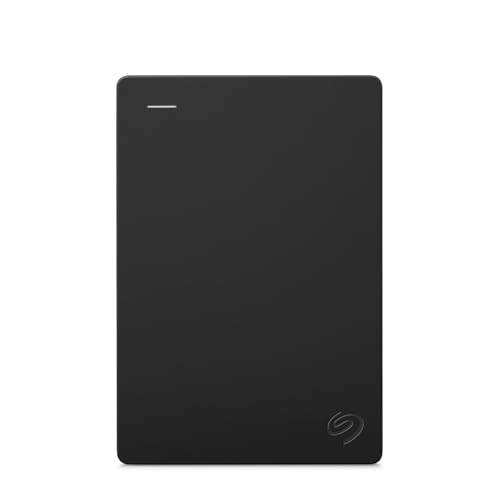
1. Seagate 2TB Portable Hard Drive (STGX2000400)
This is the default recommendation for most PC owners who need straightforward backup capacity without paying for features they will not use. USB 3.0 throughput is consistent across sequential and mixed workloads, and the drive’s compact enclosure survives regular pocket-or-bag transport.
- Pro: Reliable sustained transfer rates backed by Seagate’s Rescue Service for one year.
- Pro: Compact 2TB footprint fits easily into a laptop sleeve.
- Con: USB-A connector only; newer laptops need an adapter.
Skip it if you need more than 2TB or want USB-C out of the box.
2. Seagate Portable 4TB External Hard Drive (SRD0NF1)
The 4TB variant targets households with a mixed-device setup—Windows desktop, MacBook, Xbox, and PlayStation all drawing from a shared media archive. At $189.98 the price per terabyte lands just above the 2TB model, making it a rational upgrade path for anyone outgrowing the smaller option.
- Pro: Official compatibility across PC, Mac, Xbox, and PlayStation without reformatting.
- Pro: 1-Year Rescue Service covers accidental deletion scenarios beyond hardware failure.
- Con: Thicker profile than the 2TB sibling; adds noticeable bulk to a travel setup.
Skip it if your total media library sits below 2TB and you travel light.
3. UnionSine 1TB Ultra Slim Portable External Hard Drive
UnionSine undercuts the Seagate 1TB by roughly $35 while delivering the same USB 3.0 interface in a noticeably thinner shell. It appeals to students and frequent travelers who want backup capacity without the weight penalty of a full-sized enclosure.
- Pro: Among the slimmest 1TB mechanical drives at its price point.
- Pro: $84.72 leaves room in the budget for a second cable or sleeve.
- Con: No rescue data-recovery service; warranty is limited to manufacturer replacement.
Skip it if your stored data would be painful to lose and you want professional recovery backup.
4. Seagate Portable 1TB External Hard Drive (STGX1000400)
The 1TB Seagate hits a sweet spot for console gamers who want expandable storage for installed titles without buying the pricier 2TB model. Owners on Xbox and PlayStation report plug-and-play recognition within seconds, and the Rescue Service adds a safety net for game saves.
- Pro: Certified compatibility with PlayStation and Xbox eliminates formatting headaches.
- Pro: Black finish and compact shell pair well with console aesthetics.
- Con: $119.80 for 1TB gives the worst price-per-terabyte ratio in this lineup.
Skip it if price per terabyte is your primary metric—the 2TB model is a better value.
5. Kosbees 500GB External Hard Drive
At $35.99, this Kosbees drive serves buyers who need a modest amount of portable storage for documents and occasional media files. It is genuinely plug-and-play on Windows and requires no software installation, which simplifies use on borrowed or work machines.
- Pro: Lowest entry price in the roundup; ideal as a first external drive.
- Pro: Ultra-slim form factor slips into a laptop pocket alongside the computer.
- Con: 500GB fills quickly with modern media files; not suited for large libraries.
Skip it if you store video projects, raw photos, or game installations.
6. Seagate Portable 5TB External Hard Drive (STGX5000400)
The 5TB option is for users who treat an external drive as an archive rather than a daily-access volume. Photographers maintaining multi-year raw files and families building a shared video library find the extra headroom worthwhile at $219.96.
- Pro: Largest capacity here without moving into desktop-form-factor territory.
- Pro: Rescue Service and broad console compatibility provide flexibility if hardware changes.
- Con: Heavier and thicker than smaller Seagate models; less pocketable.
Skip it if you frequently carry the drive between locations—size and weight matter at this capacity.
7. YOTUO 500GB External Hard Drive
YOTUO’s 500GB drive stands out by bundling both USB 3.0 and USB-C connectors, removing the need for an adapter on modern laptops. At $34.99 it is marginally cheaper than the Kosbees option and covers a wider device range, including smartphones with USB-C ports.
- Pro: Dual USB-A and USB-C connectors included in the package.
- Pro: Compatible with PC, Mac, Android phones, PS4, and Xbox One.
- Con: Limited brand recognition means fewer long-term reliability data points from owners.
Skip it if you want a manufacturer with a track record in data recovery and enterprise storage.
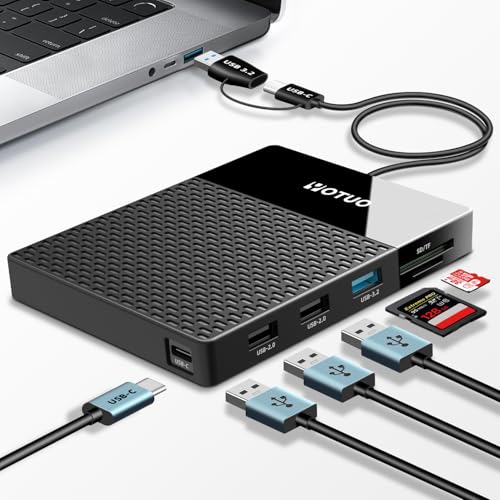
8. YOTUO 1TB External Hard Drive USB-C Multiport Hub
This is not a traditional drive—it is a 7-in-1 hub that adds SD and TF card readers, multiple USB ports, and docking-station functionality alongside 1TB of storage. Content creators who offload camera cards directly into the drive without a separate reader find it eliminates a whole category of dongles.
- Pro: Integrated card reader and multiport hub reduce total bag weight significantly.
- Pro: USB-C native connection pairs directly with current-gen laptops and iPhone 15/16/17.
- Con: Mechanical HDD inside a hub enclosure runs warmer under sustained reads than a dedicated drive.
Skip it if you already carry a separate card reader and want maximum sustained transfer speed from storage alone.
Buying Guide
Interface and Connector Type
USB 3.0 over USB-A remains the baseline for mechanical external drives and delivers enough bandwidth for sequential reads and writes that saturate a spinning platter. The practical concern is connector mismatch: newer laptops increasingly ship only USB-C ports, so a drive with only USB-A forces you to carry an adapter or replace the cable. Dual-connector drives like the YOTUO 500GB eliminate that friction. USB-C is not faster than USB 3.0 on mechanical drives—the bottleneck is the platter, not the bus—but the physical connector matters for daily convenience.
Capacity vs. Use Case
A 500GB drive handles a document archive, a tax folder, and a few weeks of phone photos. A 2TB drive accommodates a full Steam library alongside a growing photo collection. The 4TB and 5TB options make sense when multiple family members or devices share the same drive. Buying undersized means a painful second purchase at a higher markup; buying oversized means paying for platter surface you never fill. Match capacity to the data you actually hold today, not the data you imagine accumulating over five years.
Warranty and Data Recovery Services
Seagate’s 1-Year Rescue Service covers data-recovery attempts when a drive fails or files are accidentally deleted, a tangible benefit that generic-brand drives at half the price cannot match. Mechanical drives have moving parts and will eventually wear out; the question is whether the manufacturer helps you get data back or simply ships a replacement unit. For anything irreplaceable, factor the service into your per-terabyte cost comparison.
Our Verdict
The Seagate 2TB Portable Hard Drive is the top pick for most PC owners: it balances capacity, reliability, brand support, and price in a way that no other single model in this lineup matches. For the tightest budget, the YOTUO 500GB at $34.99 offers dual connectors and the lowest cost per dollar, making it the standout budget pick. The YOTUO 1TB Multiport Hub wins outright for photographers and content creators who want to consolidate card offloading, charging, and storage into one device—its hub functionality justifies a smaller sustained-throughput trade-off.
FAQ
Can I use an external hard drive directly with my PlayStation or Xbox?
Yes. Most USB 3.0 drives, including the Seagate 1TB, 4TB, and 5TB models listed above, are recognized natively by PlayStation and Xbox consoles for game and media storage. You may need to format the drive to exFAT or the console’s preferred file system on first use.
Do external mechanical hard drives last longer than SSDs?
SSDs have no moving parts and therefore survive drops and vibration better than mechanical drives. However, high-quality mechanical drives like those from Seagate routinely last several years under normal use and offer far more capacity per dollar. The trade-off is physical durability versus cost efficiency.
Is the Seagate Rescue Service worth the premium over cheaper drives?
If you store irreplaceable personal data such as family photos or work files, the service provides a professional recovery attempt at no extra cost beyond what you paid for the drive. For expendable game installations or re-downloadable media, a cheaper drive without recovery support is a reasonable choice.
Why does a multiport hub drive get warm during use?
The mechanical platter generates heat during sustained reads and writes, and the hub’s electronic components add thermal load in the same compact enclosure. The YOTUO 1TB Multiport Hub is designed for intermittent offloading sessions rather than continuous large-file transfers, so occasional warmth is expected and not a failure indicator under normal use.