Key takeaways
- Material tier: Distinguish solid hardwood, hardwood veneer over quality core, and laminate over particleboard. Veneer over a stable core is often the smarter buy — it resists seasonal movement better than wide solid panels and costs far less. Avoid anything that won’t name its material.
- Drawer mechanics: Ball-bearing metal slides run near-silent; wooden runners and roller slides squeak and stick within a year. Soft-close is a genuine sleep feature if a partner dresses while you’re still asleep. Check whether slides are full-extension — half-extension wastes the back third of every drawer.
- Emissions and finish: Look for CARB Phase 2 or TSCA Title VI compliance, and water-based or low-VOC topcoats. Air new furniture in a garage or spare room for several days before it enters the bedroom; that “new furniture smell” is not neutral.
- Height versus reach: Anything above roughly 48 inches means overhead drawers and a higher tip risk. Under-40-inch wide models work as nightstand alternatives; 55-inch-plus models are horizontal storage that doubles as a TV stand or lamp surface.
- Anchoring hardware: Confirm an anti-tip kit is included and that the back panel is thick enough to take a screw. Tall, narrow dressers with children in the house should be wall-mounted without exception — this is non-negotiable, not optional.
What's inside
Most people shop for a dresser the way they shop for a suitcase — by cubic inches. But the piece of furniture sitting three feet from your pillow does more than hold socks. It sets the visual temperature of the room you fall asleep in, it either absorbs or reflects the small sounds that fragment light sleep, and depending on its finish, it may be quietly releasing volatile compounds into the air you breathe for eight hours a night. Cheap engineered panels warp, off-gas, and develop that gritty drawer-slide sound that greets you every single morning. Solid and veneered hardwood behaves differently: it stays square, it stays quiet, and it ages into something you stop noticing — which, in a bedroom, is exactly the point.
This guide evaluates six wood dressers on the criteria that actually matter for rest: material honesty, drawer glide quality, finish and emissions, footprint versus usable storage, and how each piece handles the low-light, low-stimulation aesthetic that supports a wind-down routine. I’ve flagged which models suit small bedrooms, which double as media consoles, and which are worth the extra assembly time.
As an Amazon Associate we earn from qualifying purchases.




🛒 Best Price Today on Amazon
Prime members get fast, free shipping on everything above, plus member-only deals. New members get a 30-day free trial — cancel anytime.
How to Choose a Wood Dresser (2026)
- Material tier: Distinguish solid hardwood, hardwood veneer over quality core, and laminate over particleboard. Veneer over a stable core is often the smarter buy — it resists seasonal movement better than wide solid panels and costs far less. Avoid anything that won’t name its material.
- Drawer mechanics: Ball-bearing metal slides run near-silent; wooden runners and roller slides squeak and stick within a year. Soft-close is a genuine sleep feature if a partner dresses while you’re still asleep. Check whether slides are full-extension — half-extension wastes the back third of every drawer.
- Emissions and finish: Look for CARB Phase 2 or TSCA Title VI compliance, and water-based or low-VOC topcoats. Air new furniture in a garage or spare room for several days before it enters the bedroom; that “new furniture smell” is not neutral.
- Height versus reach: Anything above roughly 48 inches means overhead drawers and a higher tip risk. Under-40-inch wide models work as nightstand alternatives; 55-inch-plus models are horizontal storage that doubles as a TV stand or lamp surface.
- Anchoring hardware: Confirm an anti-tip kit is included and that the back panel is thick enough to take a screw. Tall, narrow dressers with children in the house should be wall-mounted without exception — this is non-negotiable, not optional.
The Best Wood Dressers of 2026, Reviewed
Walnut 5-Drawer Tall Dresser with Wood Legs
A genuinely small-footprint solution: five stacked drawers on splayed legs give you vertical capacity without eating floor space, and the raised base keeps dust from collecting underneath. The warm walnut tone reads calm rather than stark under low-wattage bedside lighting, which is exactly what you want in a room meant for sleep.
Tradare 55″ Walnut 6-Drawer Dresser
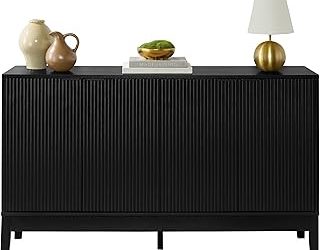
The most versatile piece here — at 55 inches wide with solid wood legs, it works equally well as bedroom storage, an entryway console, or a media stand. Six drawers in a low, horizontal layout mean nothing lives above shoulder height, and the top surface is deep enough for a lamp, a book, and a charging station without feeling cluttered.
Farmhouse 48″ Reclaimed Barnwood 5-Drawer Dresser
Reclaimed barnwood brings visual texture that mass-produced flat panels can’t fake, and the aged surface hides fingerprints and minor dings that would show badly on a high-gloss finish. At 48 inches tall it’s the tallest pick I’d recommend for a bedroom, and it absolutely needs anchoring.
Solid Wood 6-Drawer Mid-Century Dresser (45.3″)
Real solid wood construction at a moderate height, with a natural finish that keeps the grain visible instead of burying it under pigment. Six drawers in a taller configuration suit renters and smaller rooms where width is the constraint rather than ceiling height.
Aitjunz Modern 8-Drawer Dresser, Natural Oak
The curved profile is the differentiator — softened edges matter in a dark room you navigate half-asleep, and eight drawers across 55 inches gives you real category separation instead of one chaotic sweater drawer. Natural oak stays light and airy in rooms that don’t get much daylight.
CHUWELL 63″ Oak 9-Drawer Dresser
For couples sharing a single dresser, this is the capacity answer: nine drawers, 63 inches wide, hidden handles that keep the front face uninterrupted and snag-free. The solid wood legs lift the mass off the floor so it doesn’t visually dominate the room.
Frequently Asked Questions
Does new furniture really affect sleep quality?
It can. Formaldehyde-based adhesives in low-grade composite furniture off-gas most heavily in the first weeks and are associated with airway irritation and disrupted sleep in sensitive individuals. Choosing compliant, low-VOC pieces and airing them out beforehand removes most of the concern.
Solid wood or veneer — which lasts longer?
Well-executed veneer over a stable engineered core often outlasts wide solid panels, which cup and crack as humidity swings. Solid wood wins for edges, legs, and drawer fronts you’ll knock into repeatedly.
How wide should a dresser be for a small bedroom?
Leave at least 30 inches of clearance in front for a fully extended drawer plus your body. In tight rooms, go vertical with a five-drawer tall model rather than squeezing in a wide one.
Can a dresser replace a nightstand?
Yes, if the top surface sits between 24 and 30 inches — comfortable reaching height from a standard mattress. Taller dressers force you to sit up and reach overhead, which is enough stimulation to cost you a few minutes of falling back asleep.
Final Thoughts
For most bedrooms, the Tradare 55″ walnut six-drawer offers the best balance of low-profile design, room-to-room versatility, and warm finish. Couples needing serious capacity should look at the CHUWELL 63″ oak nine-drawer, while anyone working with limited floor space will get more from the tall walnut five-drawer on wood legs. Whichever you choose, anchor it to the wall and let it breathe for a few days before it moves in next to your bed.