Key takeaways
- Measure before you browse: Drawer depth is the number people forget. Take internal height, width and depth with a tape, then subtract a few millimetres for slide clearance — a tray that binds on the runners gets removed within a week.
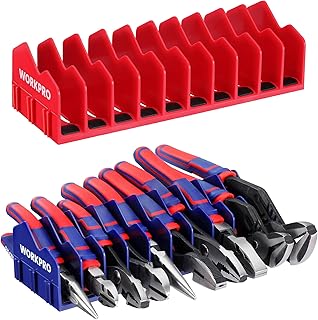
- Match the format to the tool: Loose fasteners belong in sealed compartment cabinets; wrenches and pliers want vertical or clip-based racks that hold shape; sockets and odd-shaped hand tools do best in modular trays you can rearrange.
- Judge the plastic, not the count: A 100-piece set of thin, flexing bins is worse than 40 rigid ones. Look for thick sidewalls, moulded corners and bases that don’t bow when loaded with steel.
- Insist on legibility: Printed metric and SAE labels, clear drawer fronts or colour-coded sizes let you retrieve a tool by glance rather than by search. Visual clarity is what turns storage into genuine organization.
- Plan for grip and gravity: Non-slip bases, magnetic backs or wall-mount points stop everything sliding into a heap the first time you shut a drawer firmly or wheel the cart across a threshold.
What's inside
As someone who spends most of my working life talking to people about sleep, I’ve learned that the hour before bed rarely goes wrong in the bedroom. It goes wrong in the garage. A quick “I’ll just find that socket” turns into twenty minutes of rummaging through a drawer that rattles like a coin jar, and by the time the job is abandoned, the nervous system is wide awake and mildly annoyed. Clutter creates decisions, decisions create arousal, and arousal is the enemy of a smooth wind-down. A workshop where every tool has a home is, quietly, a sleep intervention.
This guide looks at tool box organizers through that lens: less friction, fewer micro-frustrations, faster closure on the day’s projects. Below you’ll find the trays, dividers, racks and small-parts cabinets worth your money in 2026, plus a short buying framework so you can match a system to the drawers and walls you actually have — not the dream workshop you’ll build someday.
As an Amazon Associate we earn from qualifying purchases.




🛒 Best Price Today on Amazon
Prime members get fast, free shipping on everything above, plus member-only deals. New members get a 30-day free trial — cancel anytime.
How to Choose a/an Tool Box Organizer (2026)
- Measure before you browse: Drawer depth is the number people forget. Take internal height, width and depth with a tape, then subtract a few millimetres for slide clearance — a tray that binds on the runners gets removed within a week.
- Match the format to the tool: Loose fasteners belong in sealed compartment cabinets; wrenches and pliers want vertical or clip-based racks that hold shape; sockets and odd-shaped hand tools do best in modular trays you can rearrange.
- Judge the plastic, not the count: A 100-piece set of thin, flexing bins is worse than 40 rigid ones. Look for thick sidewalls, moulded corners and bases that don’t bow when loaded with steel.
- Insist on legibility: Printed metric and SAE labels, clear drawer fronts or colour-coded sizes let you retrieve a tool by glance rather than by search. Visual clarity is what turns storage into genuine organization.
- Plan for grip and gravity: Non-slip bases, magnetic backs or wall-mount points stop everything sliding into a heap the first time you shut a drawer firmly or wheel the cart across a threshold.
The Best Tool Box Organizer (2026)s Reviewed
A-LuGei 69-Piece Tool Box Organizer Tray Divider Set
This is the most flexible option here: five tray sizes in a generous count, which means you can tile out a shallow chest drawer or build tiers in a deep one without leaving dead space. The extra-large pieces are the standout, since most divider sets fall short once you’re storing anything bigger than a spanner.
A-LuGei 6-Size Tool Box Organizer Tray Set
The thicker-walled sibling, and the one I’d choose for a rolling cart that gets moved daily. Six sizes covers roughly a hundred tools across a couple of drawers, and the rigidity means the trays keep their footprint instead of splaying apart under weight.
IRIS USA 44-Drawer Small Parts Storage Cabinet
A genuinely well-made small-parts cabinet: the drawers run smoothly, the shell is stackable, and it can be wall-mounted to reclaim bench space. Ideal if your frustration is screws, anchors and building bricks rather than hand tools — and the see-through fronts remove the guessing entirely.
75-Drawer Parts Storage Cabinet
Where the IRIS unit prioritises build quality, this one prioritises granularity — 75 compartments lets you separate by both size and thread type, which pays off in any workshop where a wrong fastener costs you a trip to the hardware store. Best mounted or shelved rather than moved around.
60-Piece Magnetic Modular Wrench Organizer
Magnetic modules with pre-printed metric and SAE markings, so wrenches sit in order and stay in order inside a drawer. The modular design is the real advantage: add or remove holders as your set grows, instead of buying a fixed rail that fits one brand’s spacing.
Frequently Asked Questions
Do tray dividers really stop tools shifting?
Good ones do, provided you fill them reasonably snugly and choose a set whose footprint covers most of the drawer. Rattling usually means undersized trays with room to travel, not a flaw in the concept.
Should I use a cabinet or a drawer organizer for screws?
A compartment cabinet, almost always. Fasteners migrate between open bins the moment a drawer moves, and enclosed drawers keep threads clean and sorted.
Are magnetic organizers safe near electronics?
The magnets used in wrench holders are modest and pose no risk to ordinary hand tools. Keep them away from mechanical watches, older hard drives and magnetic-strip cards as a sensible precaution.
How does this actually help my sleep?
Indirectly but reliably. Unfinished tasks and repeated small frustrations keep cognitive arousal elevated into the evening; a system that lets you finish and close out a job removes that residue before bedtime.
Final Thoughts
For most workshops, start with the A-LuGei 69-Piece Tray Divider Set for general drawer control, add the 6-Size Tray Set if you’re kitting out a rolling chest that sees daily movement, and hang the IRIS USA 44-Drawer Cabinet on the wall for fasteners. Between them you’ll cover almost every storage problem — and reclaim the calm end to the day that a chaotic garage quietly steals.