Key takeaways
- Height versus reach: Anything above roughly 50 inches puts the top drawer near shoulder level, which is fine for storage but awkward for daily rummaging. Measure to your own shoulder before committing to a 55-inch model, and reserve the highest drawers for off-season or rarely worn items.
- Drawer glides: This is the single biggest predictor of long-term satisfaction. Steel ball-bearing slides run quietly and carry weight without sagging; basic wooden runners stick and squeak, which is a real problem if you’re dressing while a partner sleeps.
- Anti-tip anchoring: Non-negotiable on any vertical dresser, and doubly so in homes with children or pets. Confirm the model ships with a wall strap, locate a stud before you assemble, and never open more than one loaded drawer at a time.
- Footprint and depth: Depth between 15 and 18 inches is the sweet spot — deep enough for folded sweaters, shallow enough to avoid crowding a walkway. Sketch the footprint in painter’s tape on your floor before ordering.
- Material honesty: Engineered wood with a quality laminate is entirely reasonable at this price tier and often more dimensionally stable than cheap solid pine. What matters is a reinforced back panel and thick drawer bottoms, not marketing language about “solid construction.”
What's inside
Most bedrooms don’t run out of storage space — they run out of floor space. When you’re working with a room that has to fit a bed, nightstands, and a walkable path to the closet, a wide six-foot dresser simply isn’t an option, so clothing migrates onto chairs, into laundry baskets that never get emptied, and eventually into piles that make the room feel unsettled. From a sleep-wellness perspective, that matters more than people expect: visual clutter in a bedroom is associated with a longer wind-down period and a lower sense of restfulness, because your brain keeps registering unfinished tasks in its peripheral vision. A tall dresser solves the geometry problem by building upward instead of outward, reclaiming your walls and giving every garment a defined home.
This guide covers the tall dressers worth your money in 2026, evaluated on the criteria that actually determine whether a piece survives five years of daily use: drawer glide quality, carcass rigidity, anti-tip hardware, finish durability, and honest assembly difficulty. We’ve prioritized models between 43 and 55 inches — tall enough to be genuinely space-efficient, short enough that the top surface stays usable for a lamp, a diffuser, or a charging tray. Below you’ll find our picks, a buying framework, and answers to the questions readers send us most often.
As an Amazon Associate we earn from qualifying purchases.


🛒 Best Price Today on Amazon
Prime members get fast, free shipping on everything above, plus member-only deals. New members get a 30-day free trial — cancel anytime.
How to Choose a Tall Dresser (2026)
- Height versus reach: Anything above roughly 50 inches puts the top drawer near shoulder level, which is fine for storage but awkward for daily rummaging. Measure to your own shoulder before committing to a 55-inch model, and reserve the highest drawers for off-season or rarely worn items.
- Drawer glides: This is the single biggest predictor of long-term satisfaction. Steel ball-bearing slides run quietly and carry weight without sagging; basic wooden runners stick and squeak, which is a real problem if you’re dressing while a partner sleeps.
- Anti-tip anchoring: Non-negotiable on any vertical dresser, and doubly so in homes with children or pets. Confirm the model ships with a wall strap, locate a stud before you assemble, and never open more than one loaded drawer at a time.
- Footprint and depth: Depth between 15 and 18 inches is the sweet spot — deep enough for folded sweaters, shallow enough to avoid crowding a walkway. Sketch the footprint in painter’s tape on your floor before ordering.
- Material honesty: Engineered wood with a quality laminate is entirely reasonable at this price tier and often more dimensionally stable than cheap solid pine. What matters is a reinforced back panel and thick drawer bottoms, not marketing language about “solid construction.”
The Best Tall Dressers (2026) Reviewed
Aitjunz Modern 7-Drawer 55″ Dresser
At 55 inches with seven drawers, this is the most storage-dense pick here, and the curved profile softens what could otherwise feel like a monolith in a small room. The natural oak finish reads warm under low-temperature evening lighting, which is exactly what you want in a space you’re trying to associate with winding down rather than getting things done.
Furniway Walnut 5-Drawer Dresser
The smooth-slide drawers here are the standout feature — they open with one hand and close without the clatter that wakes a sleeping partner, making this our pick for shared bedrooms. At 47.2 inches tall and just 15.7 inches deep, it fits tight against a wall while the golden handles keep the walnut from feeling heavy.
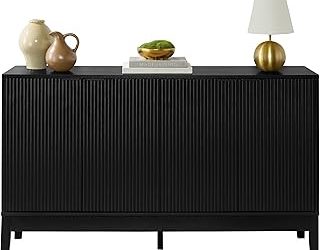
Decofy Fluted 48″ 5-Drawer Chest
Fluted fronts have quietly become the defining texture of 2026 bedroom furniture, and Decofy executes it cleanly with rounded edges that are forgiving of hips and shins in the dark. Five generous drawers and a 48-inch height make it a balanced choice for a primary bedroom or a wide hallway.
Garvee 5-Drawer 43.3″ Dresser
At 43.3 inches this is the most approachable height in our lineup, meaning every drawer stays within comfortable reach and the top remains a genuinely usable surface for a lamp and a book. It’s the sensible choice for anyone who wants vertical storage without sacrificing an accessible nightstand-height ledge.
Sweetcrispy 8-Drawer Fabric Tower
The steel frame and fabric bins make this the lightest and easiest to assemble of the group, and the wood top keeps it from looking purely utilitarian. It’s an excellent closet or guest-room solution, though fabric drawers won’t hold their shape under heavy denim the way rigid boxes will.
Frequently Asked Questions
Does a dresser really affect sleep quality?
Indirectly, but meaningfully. Reducing visible clutter shortens the psychological transition into rest, and a dresser that opens silently prevents the micro-arousals that fragment a partner’s sleep cycle during early-morning dressing.
How tall is too tall?
Above about 55 inches, stability risk rises and the top surface becomes unusable for most people. For rooms with standard eight-foot ceilings, 43 to 50 inches is the practical range.
Are fluted fronts durable?
Yes, though the grooves collect dust and need a dry brush rather than a cloth. Avoid abrasive cleaners, which can wear the finish unevenly along the ridges.
How long does assembly take?
Budget 60 to 120 minutes for a five-to-seven-drawer wood model with a helper, and roughly 30 minutes for a fabric tower. Do the wall anchoring the same day — not “later.”
Final Thoughts
For maximum storage in minimum square footage, the Aitjunz 55″ 7-drawer is the clear winner, while the Furniway walnut dresser is our recommendation for shared bedrooms thanks to its quiet, effortless glides. If you’d rather keep every drawer within easy reach, the Garvee 43.3″ model delivers vertical efficiency without the shoulder-height compromise — and a calmer, less cluttered bedroom is worth far more than the modest cost of getting it right.