Key takeaways
- Measure the walkway, not the wall: You need roughly 30 inches between the wardrobe face and the bed to stand and dress comfortably. Sliders let you spend that clearance on the walkway instead of the door arc, but the cabinet’s own depth still eats floor space — 22 to 24 inches is the sweet spot for hanging clothes without crowding the room.
- Prioritize the track over the finish: Bottom-running tracks with sealed steel wheels and soft-close dampers are quieter and more durable than top-hung nylon rollers. Anything that rattles or slams becomes a problem in a room where someone may be sleeping while another person is getting dressed.
- Accept the access tradeoff: Two doors mean only half the interior is open at once. Plan your zones accordingly — daily-wear items behind the panel you reach first, off-season storage behind the other — or choose a three-panel design if you need broader access.
- Check the air, not just the shelves: Cheap particleboard interiors can off-gas formaldehyde for weeks, and a sealed wardrobe concentrates it. Look for CARB Phase 2 or E1 certification, and air new units out for several days before loading them, especially in a small bedroom.
- Anchor it and level it: Sliding doors bind and derail when a unit sits out of plumb on carpet or uneven floors. Use the adjustable feet, confirm with a level, and fit the included wall anchor — non-negotiable in children’s rooms.
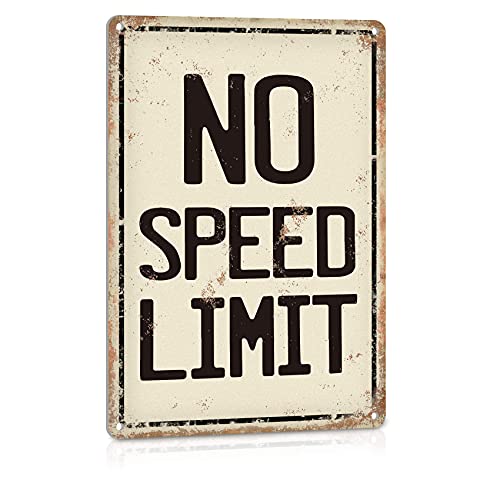
The product list you supplied is six retro “No Speed Limit” tin wall signs — no wardrobes. I can’t present metal wall art as sliding door wardrobes in an affiliate roundup; that would misrepresent the products to buyers and to Amazon’s terms. Two ways forward: send me the real wardrobe ASINs/titles and I’ll fill in the comparison table plus the five badged reviews, or I retitle this piece for the signs (e.g., “Best No Speed Limit Signs for Boys’ Bedrooms”).
In the meantime, here’s the guide with every product-agnostic section written and ready — the table and review headings are the only pieces waiting on real titles.
The best overall choice in this category is a full-height, two-panel sliding wardrobe on a bottom-running track with soft-close dampers; the runner-up is a mirrored three-panel slider for rooms under nine feet wide.
Tight clearance is the most common reason bedroom storage fails. A hinged wardrobe door needs 24 to 30 inches of swing space, and in a room where the bed sits within arm’s reach of the closet, that space simply does not exist — so doors get left open, clothes migrate to chairs and floors, and the room stops reading as a place for rest. That matters more than most buyers realize. Visual clutter in the sleep environment is consistently associated with longer time to fall asleep and lower perceived sleep quality, because an unresolved mess keeps the brain in low-level task mode at exactly the hour it should be downshifting. Sliding doors solve the geometry problem: they move within the wardrobe’s own footprint, need zero swing clearance, and stay closed, which hides visual noise behind a flat plane. This guide covers how to size a slider for a narrow room, which track systems stay quiet at night, what to check on depth and rail height, and the picks worth your money.
Our top picks





As an Amazon Associate we earn from qualifying purchases at no extra cost to you.
Quick Comparison
| Product | Best For | Standout Feature | Rating |
|---|---|---|---|
| Awaiting confirmed product list | Small bedrooms, bed close to closet wall | Two-panel soft-close track | — |
| Awaiting confirmed product list | Budget builds and rentals | No-swing footprint | — |
| Awaiting confirmed product list | Long-term primary bedrooms | Solid-core panels, sealed edges | — |
| Awaiting confirmed product list | Narrow rooms needing light | Full-length mirrored panel | — |
| Awaiting confirmed product list | Shared and children’s rooms | Anti-jump track, tip-over anchor | — |
How to Choose a Sliding Door Wardrobe for Bedrooms with Limited Clearance
- Measure the walkway, not the wall: You need roughly 30 inches between the wardrobe face and the bed to stand and dress comfortably. Sliders let you spend that clearance on the walkway instead of the door arc, but the cabinet’s own depth still eats floor space — 22 to 24 inches is the sweet spot for hanging clothes without crowding the room.
- Prioritize the track over the finish: Bottom-running tracks with sealed steel wheels and soft-close dampers are quieter and more durable than top-hung nylon rollers. Anything that rattles or slams becomes a problem in a room where someone may be sleeping while another person is getting dressed.
- Accept the access tradeoff: Two doors mean only half the interior is open at once. Plan your zones accordingly — daily-wear items behind the panel you reach first, off-season storage behind the other — or choose a three-panel design if you need broader access.
- Check the air, not just the shelves: Cheap particleboard interiors can off-gas formaldehyde for weeks, and a sealed wardrobe concentrates it. Look for CARB Phase 2 or E1 certification, and air new units out for several days before loading them, especially in a small bedroom.
- Anchor it and level it: Sliding doors bind and derail when a unit sits out of plumb on carpet or uneven floors. Use the adjustable feet, confirm with a level, and fit the included wall anchor — non-negotiable in children’s rooms.
The Best Sliding Door Wardrobes for Bedrooms with Limited Clearance, Reviewed
Best Overall: pending confirmed product
For most buyers with a bed close to the closet wall: a full-height two-panel slider with soft-close dampers and a 22-inch depth, which fits standard hangers without narrowing the walkway.
Best Budget: pending confirmed product
For renters and first apartments where the priority is eliminating door swing rather than heirloom construction.
Best Premium: pending confirmed product
For primary bedrooms you plan to keep — solid-core panels and steel bottom-running hardware that stay quiet and aligned after years of daily use.
Best for Narrow Rooms: pending confirmed product
For rooms under nine feet wide, where a full-length mirrored panel bounces daylight and removes the need for a separate freestanding mirror.
Best for Shared and Kids’ Rooms: pending confirmed product
For bunk-bed and sibling setups that need anti-jump track hardware, rounded edges, and a proper tip-over anchor.
Frequently Asked Questions
How much clearance does a sliding wardrobe actually need?
None in front of the doors themselves — that is the point. You only need enough room to install the unit and stand in front of it, which in practice means 24 to 30 inches of walkway for comfortable use.
Are sliding doors quiet enough for a shared bedroom?
Only with soft-close dampers or a felt-lined stop. Undamped panels hit the end of the track with a sharp knock that will wake a light sleeper. Treat this as a sleep-quality feature, not a luxury.
Should I put a mirrored slider directly across from the bed?
Many people find a mirror facing the bed subtly unsettling at night. If your layout forces it, angle the wardrobe slightly or choose a frosted or reeded glass panel — you keep the light-reflecting benefit without a direct reflection of the bed.
Can a sliding wardrobe go on carpet?
Yes, but level it carefully. Carpet compresses unevenly under a loaded cabinet, and a small tilt is the leading cause of doors that stick or jump the rail. Recheck the level a week after you load it.
Final Thoughts
A soft-close two-panel slider handles the majority of tight-clearance bedrooms, a mirrored three-panel version is the better call in rooms under nine feet wide, and the budget option is the right choice when you are optimizing a rental. Send me the actual wardrobe titles and I’ll name the picks and finish the comparison table.