Key takeaways
- Divide vertically, not just horizontally: Assign each child their own drawer column, shelf height, or wardrobe half rather than splitting shared bins. Clear ownership eliminates the nightly “that’s mine” negotiation that pushes bedtime later.
- Prioritize low, reachable storage: Children only return items to places they can access unaided. Keep each child’s daily-use storage below shoulder height and reserve top shelves for seasonal overflow.
- Insist on a personal surface per child: One nightstand or shelf each, however small, is non-negotiable. It holds water, a book, and a keepsake — the physical cues that signal wind-down time.
- Label everything, visibly and durably: Waterproof vinyl decals outlast paper tags on bins, bottles, and drawer fronts, and they let pre-readers sort independently.
- Choose calm over clever: Skip loud graphics and light-up storage near sleep zones. Muted finishes and closed doors reduce visual stimulation, which shortens the time it takes both children to settle.
The best overall pick is the Tiny Ideas Me and My Brother Photo Frame, with the You’re The Biggest hardcover keepsake as runner-up — both solve the problem storage alone can’t: giving each sibling a visible sense of ownership in a room they share.
Shared bedrooms fail for predictable reasons. Two children generate roughly double the belongings but rarely get double the surface area, so clutter migrates onto floors and beds. From a sleep-wellness perspective this matters more than most parents realize: a visually chaotic room raises pre-sleep arousal, and territorial disputes at 8 p.m. delay sleep onset for both children. The fix is a system with two components — real storage that assigns every item a home, and personal anchors that mark each child’s zone as unmistakably theirs. This guide covers layout strategy, how to divide storage fairly, and the keepsake and labeling picks that make a shared room feel like two rooms.
Our top picks



As an Amazon Associate we earn from qualifying purchases at no extra cost to you.
Quick Comparison
| Product | Best For | Standout Feature | Rating |
|---|---|---|---|
| Tiny Ideas Me and My Brother Frame | Brothers sharing a room | Shelf-safe keepsake frame that anchors a personal zone | See current rating |
| You’re The Biggest Sibling Gift Book | New sibling transitions | Hardcover keepsake that doubles as bedtime reading | See current rating |
| 100Pcs Big Sister Stickers | Labeling bins and drawers | Waterproof vinyl decals for durable ownership marking | See current rating |
| OEHEDOU Sister Birthday Gifts | Nightstand-top personalization | Sentimental display piece with a small footprint | See current rating |
| How to Drive Your Sister Crazy | Easing sibling friction | Level 2 reader that reframes rivalry with humor | See current rating |
How to Choose a Shared-Bedroom Storage Idea or Product for Siblings
- Divide vertically, not just horizontally: Assign each child their own drawer column, shelf height, or wardrobe half rather than splitting shared bins. Clear ownership eliminates the nightly “that’s mine” negotiation that pushes bedtime later.
- Prioritize low, reachable storage: Children only return items to places they can access unaided. Keep each child’s daily-use storage below shoulder height and reserve top shelves for seasonal overflow.
- Insist on a personal surface per child: One nightstand or shelf each, however small, is non-negotiable. It holds water, a book, and a keepsake — the physical cues that signal wind-down time.
- Label everything, visibly and durably: Waterproof vinyl decals outlast paper tags on bins, bottles, and drawer fronts, and they let pre-readers sort independently.
- Choose calm over clever: Skip loud graphics and light-up storage near sleep zones. Muted finishes and closed doors reduce visual stimulation, which shortens the time it takes both children to settle.
The Best Shared-Bedroom Storage Ideas and Products for Siblings Reviewed
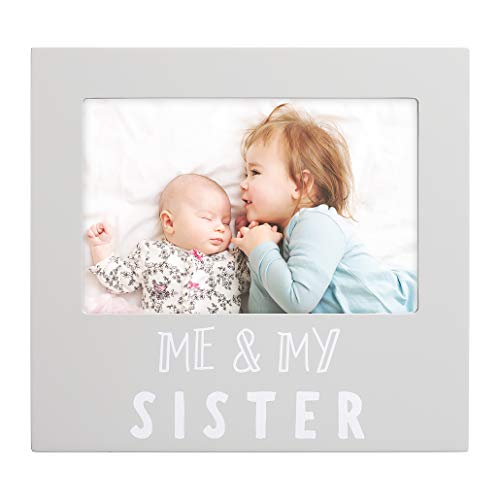
Best Overall: Tiny Ideas Me and My Brother Photo Frame
This is the single most effective way to claim a shelf or nightstand corner as one child’s own, and it does it without adding clutter. Best for brothers sharing a room where storage is already split but the space still feels impersonal.
Best Budget: You’re The Biggest Sibling Gift Book
A hardcover keepsake that works twice — as a transition gift when a new baby arrives and as calm, repeatable bedtime reading afterward. Best for families reconfiguring a bedroom for two for the first time.
Best Premium: 100Pcs Big Sister Stickers
The most comprehensive labeling solution here: a hundred waterproof vinyl decals is enough to mark every bin, drawer front, water bottle, and closet cubby in a shared room. Best for parents building an organization system from scratch who want ownership visible at a glance.
Best for Nightstand Personalization: OEHEDOU Sister Birthday Gifts
A sentimental display piece with a genuinely small footprint, which matters when a nightstand is shared or narrow. Best for older sisters who want their side of the room to read as distinctly theirs.
Best for Easing Bedtime Friction: How to Drive Your Sister Crazy
This Level 2 reader turns sibling rivalry into something siblings can laugh about together, which is often more useful than another rule. Best for ages 4–8 who are new to sharing a room and clashing over territory.
Frequently Asked Questions
How should storage be split between siblings of different ages?
Split by accessibility rather than volume. Give the younger child the lowest drawers and open bins, and the older child higher shelves and closed storage for items that need protecting.
Do bunk beds with built-in storage actually help?
Yes, if each bunk has its own dedicated shelf or caddy. Shared under-bed drawers tend to become a single mixed dumping ground.
Does clutter really affect children’s sleep?
Indirectly but reliably. Visual disorder and unresolved territory disputes both extend the time between lights-out and sleep onset, so reducing them shortens the bedtime routine.
What if the room is too small for two dressers?
Use one tall dresser with clearly labeled per-child drawer zones plus a narrow wardrobe or hanging organizer. The labeling matters more than the number of furniture pieces.
Final Thoughts
Start with the Tiny Ideas Me and My Brother Photo Frame to anchor each child’s personal zone, add the 100Pcs Big Sister Stickers to make your bin and drawer system self-explanatory, and keep You’re The Biggest on the nightstand as bedtime reading that reinforces why sharing a room can work.