Key takeaways
- Find the best orthopedic slippers with real arch support, contoured footbeds, deep heel cups, and adjustable fit for comfortable steps at home every day.
The best orthopedic slippers support your feet from the first step of the morning to the last step at night. A good pair does more than keep your feet warm. It holds the arch in a natural position, cups the heel so the foot does not roll inward, and cushions each step on hard floors.


This guide is a general roundup of the best orthopedic slippers, organized by support feature rather than by one condition. You will find options for firm arch support, adjustable fit, warm closed-toe coverage, hands-free entry, and lightweight indoor and outdoor wear. Every pick below is a slipper with built-in orthopedic support, not a regular slipper and not a shoe with an added insert.
Quick answer: If you want a firm, structured orthopedic footbed in a closed-toe clog, start with the ERGOfoot Orthotic Slippers. If you want a warm, fuzzy slipper with an adjustable fit, the SOLLBEAM Fuzzy House Slippers are a strong match. For a podiatrist-designed footbed with an adjustable strap, look at the Vionic Relax II. For men who want hands-free entry and a wide toe box, the Orthofeet Vito is the most practical pick. For a lightweight, adjustable fuzzy slide with memory foam cushioning, consider the GRITHEIM Orthotic Slippers.
Quick Picks
| Product | Best For | Key Spec |
|---|---|---|
| ERGOfoot Orthotic Slippers | Firm arch support in a closed-toe clog | Orthopedic footbed, deep heel cup, anti-skid rubber sole |
| SOLLBEAM Fuzzy House Slippers | Warm, fuzzy comfort with adjustable fit | Orthotic arch support, heel cup, adjustable strap |
| Vionic Women’s Relax II Slipper | Adjustable podiatrist-designed support | VIO MOTION footbed, contoured arch, deep heel cup, hook-and-loop closure |
| Orthofeet Men’s Vito Hands-Free Slipper | Hands-free entry and a wide toe box | Water-repellent leather, faux fur lining, orthotic insole |
| GRITHEIM Women’s Orthotic Slippers | Lightweight adjustable cushioning | Orthotic arch support, memory foam insole, deep heel cup, EVA sole |
How to Choose
Choosing the best orthopedic slippers starts with understanding how support works inside a house shoe. A firm footbed can feel strange at first and still be the right choice for long hours on hard floors. The sections below explain the features that separate a true orthopedic slipper from a cozy slipper with a soft insole.
Arch Support Shape and Firmness
Arch support is the defining feature of an orthopedic slipper. Look for a footbed that rises under the middle of the foot and holds its shape when you press it with your thumb. A flat foam insole will compress under body weight and lose its contour by the end of the day.
Firmness matters as much as shape. People with low arches or flat feet often need a firmer contour that resists collapsing inward. If you have never worn an orthopedic slipper before, expect a short adjustment period. Wear the new pair for a few hours at home at first, then build up to a full day.
Heel Cup Depth and Stability
A deep heel cup works with the arch to keep the foot aligned. When the heel sits in a defined cup, it is less likely to tilt inward or outward as you walk, which reduces strain through the ankle and along the underside of the foot.
Heel stability also depends on the sole. A slipper with a firm midsole and a rubber outsole will feel more planted on tile, wood, and laminate than a slipper with a thin, flexible sole.
Contoured Footbed Versus Memory Foam
Memory foam and a contoured footbed serve different purposes, and many orthopedic slippers combine both. Memory foam cushions pressure points and adapts to the shape of the foot. A contoured footbed provides structure and holds the arch in place. Cushioning alone does not correct alignment, and structure alone can feel hard without a comfort layer on top.
When you compare models, check whether the support comes from the shape of the footbed itself or only from a soft top layer. A removable insole can be a useful feature here. It lets you check the contour underneath and air out the slipper.
Fit, Width, and Adjustability
Fit is where many orthopedic slippers succeed or fail. A slipper that is too short will push the toes against the front. A slipper that is too wide will let the heel lift with each step, which defeats the purpose of a heel cup. Measure your foot length and compare it with the size chart for the specific model, rather than assuming your usual shoe size will translate directly.
Width deserves the same attention. Extended widths help when feet swell during the day or when a wider forefoot needs more room. Adjustable straps, hook-and-loop closures, and dual side straps help even more, because they let you tighten the slipper in the morning and loosen it later in the day.
Closed-Toe, Open-Toe, and Mule Styles
Orthopedic slippers come in closed-toe clogs, open-toe slides, and backless mules. Each style suits a different home and a different foot. Closed-toe clogs keep the whole foot warm, protect the toes, and usually hold the heel more securely.
Open-toe slides let the toes breathe and are easier to slip on and off. They suit warm rooms and warm seasons, and they work well for feet that feel hot in a closed shoe. Backless mules sit between the two styles. They cover the toes and leave the heel open, which makes entry easy but gives the heel less guidance.
Outsole, Indoor Use, and Outdoor Use
An orthopedic slipper earns its place at home, but many people also step outside in slippers to collect mail, take out recycling, or stand on a porch. A rubber outsole with tread gives traction on wet steps and smooth floors. An EVA midsole absorbs shock and reduces the impact of each step on hard surfaces. A thin fabric sole, by contrast, is best kept indoors.
Check the outsole material and the closure before you plan outdoor use.
Warmth, Lining, and Care
Lining affects comfort through the seasons. Fleece, sherpa fleece, faux fur, and silver fox velvet linings add warmth and a soft feel against bare skin. Fabric and terry linings breathe better and suit warmer rooms. A warm lining is welcome on a cold floor, but it can feel too hot in a heated home, so match the lining to the room temperature where you will wear the slippers most.
Care matters for longevity. Some orthopedic slippers are machine washable, while others need spot cleaning to protect the footbed shape.
The Best Orthopedic Slippers Reviewed
The five slippers below cover the main support needs in a general orthopedic roundup: firm structure, warm adjustable comfort, podiatrist-designed alignment, hands-free entry, and lightweight cushioning. Each one is a slipper with built-in orthopedic support. Read the fit notes carefully, because the right support in the wrong size will not help.
1. ERGOfoot Orthotic Slippers (B0CGYSJ32H)
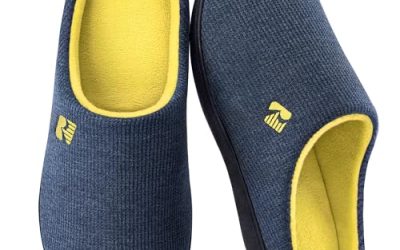
The ERGOfoot Orthotic Slippers are a closed-toe clog built around a firm orthopedic footbed and a deep heel cup. The outer material is polyester, the lining is silver fox velvet, and the outsole is anti-skid rubber for indoor and outdoor use. The sole material is ethylene vinyl acetate, which gives the clog a light feel for a structured slipper.
This pair suits people who want the most shoe-like support in this roundup. The closed toe protects the toes, the clog shape holds the foot well, and the rubber outsole handles hard floors and brief trips outside.
Who should skip it: people who prefer a soft, plush slipper with little structure may find the firm footbed too rigid at first. If you want an open-toe slipper for warm weather, this closed-toe clog is not the right match.
2. SOLLBEAM Fuzzy House Slippers (B083W3H6RC)
The SOLLBEAM Fuzzy House Slippers combine a warm fuzzy upper with an orthotic footbed and a defined heel cup. The arch support sits under the midfoot, the heel cup cradles the back of the heel, and an adjustable strap lets you tune the fit across the instep. The design is an open-toe slide style, so the toes stay uncovered while the arch and heel receive structured support.
This pair suits people who want cozy comfort and real support in the same slipper. The fuzzy upper feels soft against bare skin, the adjustable fit helps when feet swell during the day, and the orthotic heel cup gives the foot a stable base on hard floors.
Who should skip it: people who need toe protection or full coverage in cold rooms should choose a closed-toe model instead. People who need a very firm arch may also find this pair softer than the ERGOfoot clog above, because the fuzzy comfort layer sits on top of the support.
3. Vionic Women’s Relax II Slipper (B0CVCDL2VY)
The Vionic Women’s Relax II Slipper is built on the brand’s VIO MOTION Technology footbed, with contoured arch support, shock-absorbing cushioning, a deep heel cup, and forefoot flexibility. The upper is fabric with a soft, cozy lining, the closure is hook-and-loop for a customized fit, and the outsole is durable synthetic rubber designed for indoor and outdoor wear. The flexible EVA midsole absorbs shock and reduces stress on the feet, ankles, and knees. The design has received the American Podiatric Medical Association Seal of Acceptance, which reflects its alignment-focused construction.
This pair suits people who want a podiatrist-designed footbed in a warm, adjustable slipper.
Who should skip it: this model is made for women, so men should look at the Orthofeet Vito or the ERGOfoot clog instead. People who want a closed heel with full rear coverage may also prefer a clog, because the Relax II is a mule and slide style with an open back in many color options.
4. Orthofeet Men’s Vito Hands-Free Slipper (B0DCHBGCTD)
The Orthofeet Men’s Vito Hands-Free Slipper is a men’s orthopedic slipper with patented hands-free slip-on technology, water-repellent leather, and a plush faux fur lining. The orthotic insole provides arch support and ergonomic cushioning, the toe box is wide and roomy, and the fit is designed to give full support and cushion through the day.
This pair suits men who want to step into a supportive slipper without bending down or using their hands. That hands-free entry helps people with limited mobility, back discomfort, or stiff joints. The wide toe box also helps men with wider feet or feet that swell during the day.
Who should skip it: this model is made for men, so women should look at the Vionic Relax II, the SOLLBEAM fuzzy slippers, or the GRITHEIM slippers below. People who want a lightweight, breathable slipper for warm rooms may find the leather upper and faux fur lining warmer than they need.
5. GRITHEIM Women’s Orthotic Slippers (B09G39ZJDZ)
The GRITHEIM Women’s Orthotic Slippers are a fuzzy, adjustable slide with an orthotic arch support insole, a memory foam pad, and a deep heel cup. The design targets arch support, heel stability, and forefoot comfort in a lightweight package. The upper is fuzzy and soft, the adjustable strap lets you set the fit across the foot, and the EVA sole is light, flexible, and non-slip for indoor use and brief outdoor trips.
This pair suits people who want a light, easy slipper with adjustable support and a soft feel. The fuzzy upper and memory foam cushioning make it comfortable for long periods at home, while the adjustable strap helps the slipper stay in place as feet change size through the day.
Who should skip it: people who need a closed toe, a firm clog, or maximum heel control should choose the ERGOfoot clog or the Orthofeet Vito instead. The open-toe slide style gives less coverage and less rear hold than a closed clog.
What to Check Before You Buy
Before you buy the best orthopedic slippers for your feet, run through a short checklist that covers support, fit, and daily use. First, confirm the slipper is an orthopedic slipper with a molded footbed, not a regular slipper with a soft insole.
Second, measure both feet and use the size chart for the specific model. Feet are rarely the same length, so fit to the longer foot. Third, think about how you will use the slippers. Closed-toe clogs suit cold floors and full coverage. Open-toe slides suit warm rooms and quick entry. Mules suit easy on and off with toe coverage and an open heel.
Fourth, check the outsole and the closure. A rubber outsole with tread is safer on smooth floors and steps. Fifth, consider the lining and the care instructions. A warm fleece or faux fur lining suits winter, while a lighter fabric lining suits a heated home. Finally, plan a short adjustment period. Wear the new slippers for a few hours at home before you commit to a full day. Support should feel firm and unfamiliar at first, not sharp or pinching. If pain persists, talk with a clinician, especially if you have diabetes, poor circulation, numbness, or a foot condition that needs medical care.
FAQ
What makes a slipper orthopedic?
An orthopedic slipper has a molded footbed that supports the arch, a deep heel cup that holds the heel in place, and a stable sole that resists twisting. A regular slipper may feel soft, but it usually has a flat insole that compresses under weight and lets the foot roll inward. Look for a defined arch curve, a cupped heel, and a firm midsole when you compare models.
Are orthopedic slippers good for flat feet?
Orthopedic slippers can help people with flat feet by holding the arch in a more neutral position and reducing inward rolling. A firm contoured footbed is usually more helpful than a soft flat insole for this purpose.
How should orthopedic slippers fit?
Orthopedic slippers should fit snugly enough that the heel stays in the heel cup and the arch lines up with the contour in the footbed. The toes should have room to spread without pressing against the front, and the heel should not lift with each step. Use the size chart for the specific model, measure your foot length, and check the width options. Adjustable straps help fine-tune the fit, especially if your feet swell during the day.
Can I wear orthopedic slippers outside?
Many orthopedic slippers have a rubber outsole that handles brief outdoor use, such as stepping onto a porch, collecting mail, or taking out recycling. They are still house shoes at heart, so they are not a substitute for walking shoes on long walks or uneven ground. Check the outsole material before you plan outdoor wear, and choose a model with a secure fit and good tread if you will step outside often.
How long do orthopedic slippers last?
Orthopedic slippers last as long as the footbed keeps its shape. When the arch flattens, the heel cup feels shallow, or the sole wears smooth, the support is gone even if the upper still looks fine. Replace the slippers when the contour no longer holds, rather than waiting for the upper to wear out.
Bottom Line
The best orthopedic slippers give your feet structured support at home, where you spend more hours on your feet than you may realize. Start with the support feature you need most: a firm contoured footbed, a deep heel cup, an adjustable fit, hands-free entry, or lightweight cushioning. The ERGOfoot Orthotic Slippers lead for firm, closed-toe structure. The SOLLBEAM Fuzzy House Slippers lead for warm, adjustable comfort. The Vionic Relax II leads for podiatrist-designed alignment with an easy strap. The Orthofeet Vito leads for men who want hands-free entry and a wide toe box. The GRITHEIM Orthotic Slippers lead for light, adjustable, fuzzy cushioning.
Choose the pair that matches your arch, your width, your floor, and your climate, measure your feet against the size chart, and give the new pair a few days to settle in. A slipper that holds its shape, cups the heel, and fits well will do more for daily comfort than the softest flat slipper on the shelf.
Disclosure: As an Amazon Associate, we may earn from qualifying purchases.
More from Amazon
Programs that pair well with the guide above. Offers and eligibility are set by Amazon and may change.
Collect the home and kitchen items you want in one registry that guests can shop from.
Create a wedding registrySet up recurring deliveries of everyday items on eligible products. Terms and savings are set by Amazon.
Explore Subscribe & SaveFree shipping on eligible items, Prime Video and more. Eligible new members can start with a free trial.
Start a Prime free trialAudiobooks and podcasts to listen to on the go. Eligible new members can start with a free trial.
Try Audible freeAs an Amazon Associate we earn from qualifying purchases.